

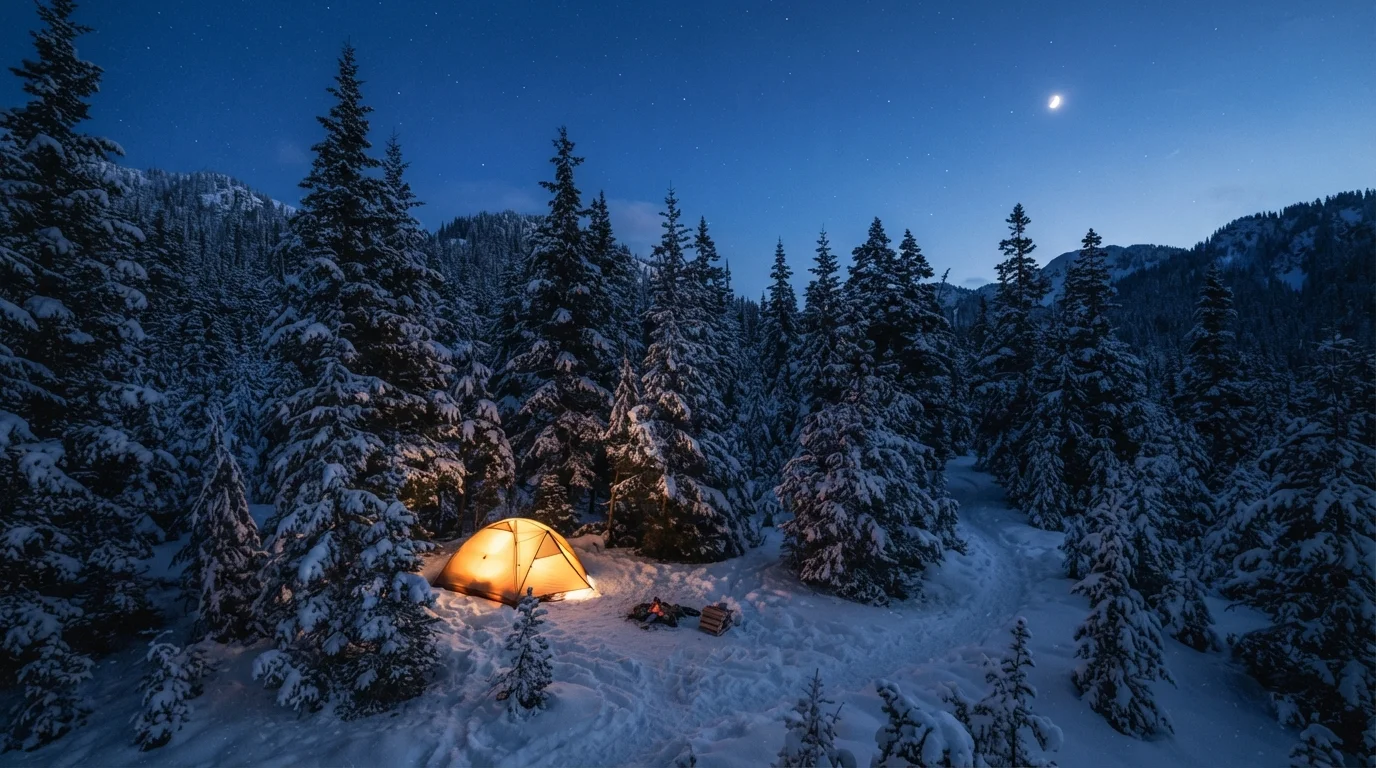
Our Verdict
Winter camping is genuinely demanding and carries real risks that summer camping simply doesn't. But for those who invest in proper gear, learn the foundational skills, and ease in gradually, the rewards - solitude, stunning landscapes, and a deep sense of accomplishment - are hard to match in any other season.
Best suited to outdoor enthusiasts who have solid three-season camping experience, a willingness to invest in appropriate cold-weather gear, and a patient approach to building skills incrementally.
What Makes Winter Camping Different
Winter camping isn't simply summer camping with a heavier jacket. The cold fundamentally changes how your body spends energy, how your gear performs, and how quickly conditions can turn dangerous. Temperatures that seem manageable in dry air become punishing when combined with wind or wet clothing. Unlike a summer overnighter where a forgotten item might cause mild discomfort, a missing insulation layer or wet sleeping bag in sub-freezing temps can escalate into a genuine emergency.
If you're newer to overnights in general, reviewing a campsite checklist for first-timers is a smart starting point before layering in winter-specific considerations. And don't underestimate the role of your vehicle - a reliable, winter-ready car matters when you're driving to remote trailheads; seasonal car maintenance deserves a spot on your pre-trip checklist too.
The Real Advantages of Cold-Weather Overnights
It might seem counterintuitive, but winter offers some of the most compelling reasons to camp. Here's what experienced cold-weather campers consistently point to as the biggest draws.
Near-total solitude in popular outdoor destinations
Campgrounds and backcountry zones that are packed in summer often see just a handful of visitors - or none - in winter. That solitude transforms familiar places into something entirely different and deeply peaceful.
Stunning, photo-worthy winter landscapes
Snow-draped forests, frozen lakes, and clear winter skies offer scenery that simply doesn't exist in warmer months. Many campers cite the visual experience as one of winter camping's most powerful draws.
No bugs, no dust, minimal vegetation obstacles
Mosquitoes, gnats, ticks, and thick undergrowth are non-issues in freezing temperatures, making camp setup and trail travel noticeably cleaner and less frustrating.
Sharper sense of personal accomplishment
Successfully managing a winter overnight - staying warm, cooking hot meals, waking up to a frozen sunrise - carries a satisfaction that's qualitatively different from fair-weather adventures.
Better wildlife observation opportunities
Animal tracks are clearly visible in snow, and many species are more active and easier to spot in winter landscapes with reduced foliage cover.
~50%
Drop in campsite visitation in winter months
National Park Service visitation data consistently shows dramatic drops in backcountry use from December through February, even at highly popular parks.
R-4+
Minimum sleeping pad R-value for winter use
Outdoor industry standards recommend a sleeping pad R-value of at least 4 for cold-ground winter camping, as ground conduction pulls heat rapidly from the body.
The Honest Disadvantages and Risks
No honest assessment of winter camping glosses over its challenges. These aren't reasons to stay home forever - but they are reasons to take preparation seriously.
Hypothermia and frostbite are real, fast-moving dangers
Core body temperature can drop faster than most people expect, especially when wind, wet clothing, or exhaustion are factors. Recognizing early symptoms - shivering, confusion, numbness - and responding quickly is a critical skill.
Gear costs are significantly higher
A quality cold-rated sleeping bag, a four-season tent, an insulated sleeping pad with adequate R-value, and layered clothing systems all represent meaningful investments compared to basic summer gear.
Physical demands are substantially greater
Your body burns considerably more calories staying warm in cold environments. Carrying heavier winter gear over snow-covered terrain is also more physically taxing than summer hiking on clear trails.
Moisture management requires constant attention
Wet gear - whether from sweat, condensation, or precipitation - loses insulating effectiveness rapidly. Managing layers, ventilating properly, and protecting equipment from moisture demands active, ongoing effort.
Shorter daylight hours compress your usable time
Winter days are short. In northern states, you may have only eight to ten hours of daylight, which compresses your hiking window, camp setup time, and emergency response options.
Navigation is significantly harder in snow
Snow obscures trail markers, blurs terrain features, and can make route-finding extremely difficult. Strong map and compass skills - not just GPS reliance - are essential.
Know Before You Go: Avalanche Terrain
If your winter camping route passes through or near avalanche-prone slopes, foundational avalanche safety training is not a nice-to-have - it's a requirement. The American Avalanche Association offers standardized Avalanche Rescue (AIARE) courses across the US. Always check current avalanche forecasts through your regional avalanche center before entering the backcountry in winter. Common wilderness survival myths can also give important context on what NOT to rely on when conditions get serious.
Essential Skills You Need Before You Go
Gear alone won't keep you safe. The skills that underpin winter camping safety are learnable, but they take deliberate practice.
- Moisture management: Sweat is your enemy in the cold. The layering system - moisture-wicking base, insulating mid-layer, wind/waterproof shell - exists specifically to move perspiration away from your skin. Overdressing and sweating on the trail leads to wet insulation that loses its effectiveness.
- Shelter site selection: Avoid low-lying areas where cold air pools overnight. Look for natural windbreaks. If camping in avalanche terrain, formal avalanche awareness training is not optional - it's a prerequisite.
- Navigation: Snow can obscure trails entirely. A map, compass, and the ability to use them are non-negotiable. The Ten Essentials system provides a solid foundation for backcountry preparedness year-round, and becomes even more critical in winter.
- Weather reading: Mountain and wilderness weather is notoriously variable. Beginners frequently underestimate how fast conditions change, which is especially dangerous when temperatures are already below freezing.
Building Up to It: A Sensible Progression
The worst approach to winter camping is treating it as an all-or-nothing leap. A sensible progression looks something like this: start with a single-night car camping trip where your vehicle is close by and bailout is easy. Get comfortable managing your gear, cooking in the cold, and sleeping in winter temperatures. Then try a short overnight hike - a mile or two in - at a lower-elevation site. Only after multiple successful outings should remote or high-elevation winter trips enter the picture.
If you're still figuring out whether extended nights outdoors are for you at all, comparing day hiking versus backpacking can help clarify what level of commitment suits your current pace and lifestyle. And before your first cold-weather trip, cross-check your home too - fall home prep tasks can ensure you're not returning from a weekend in the snow to frozen pipes or a cold house.
This article is for general informational purposes only. Winter camping carries inherent risks including hypothermia and frostbite. Always consult experienced guides or wilderness safety resources and be honest about your current skill level before attempting cold-weather camping in remote or high-elevation environments.
The content on this site is for informational purposes only and is not a substitute for professional advice. Always consult a qualified professional for guidance specific to your situation.