

Option A
Day Hiking
The accessible, low-commitment way to hit the trail.
Best for: Anyone who wants fresh air and scenic views without overnight gear, permits, or extended planning.
Option B
Backpacking
The immersive, multi-night wilderness experience.
Best for: Adventurers ready to carry everything they need and explore terrain beyond the day-trip reach.
What Actually Separates These Two Experiences
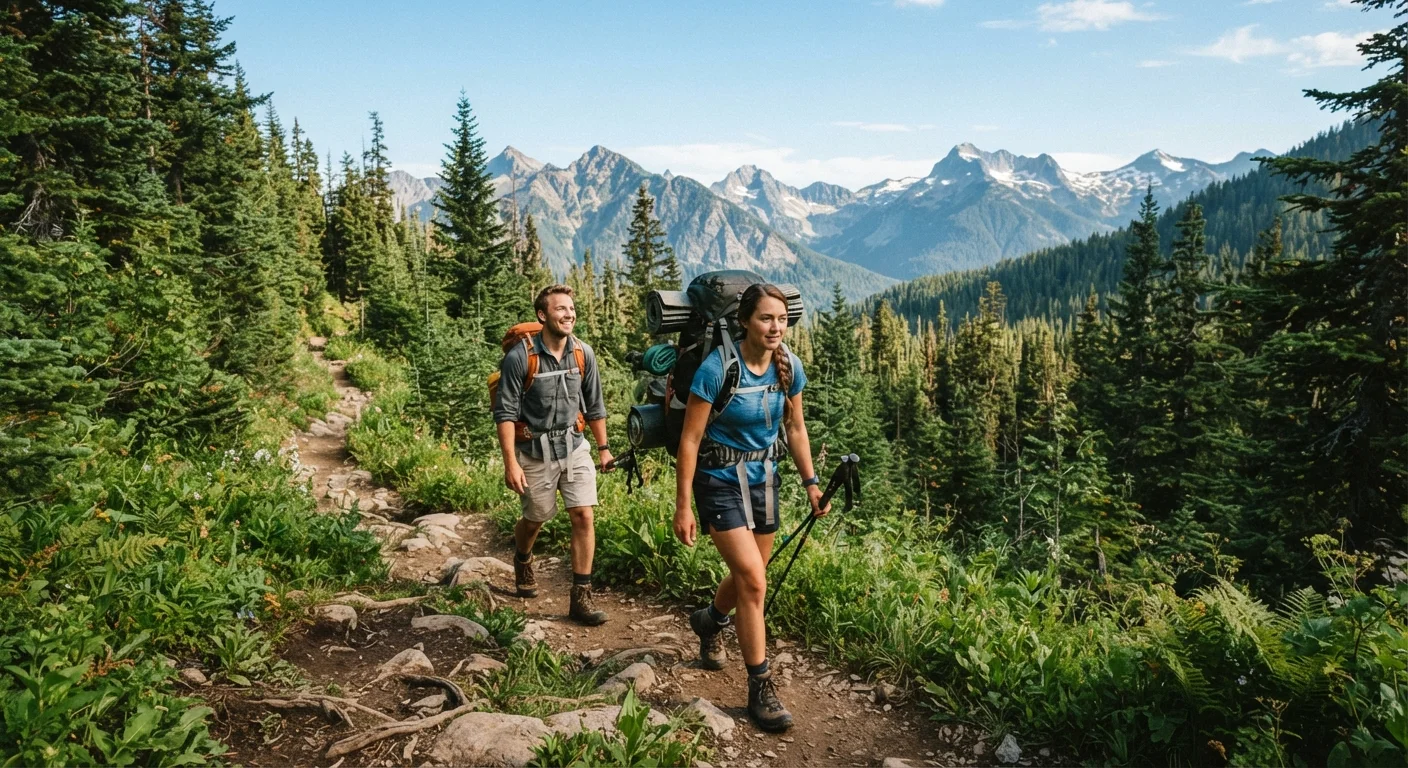
At their core, day hiking and backpacking share the same foundation - you, a trail, and the outdoors. What separates them is scope. A day hike begins and ends at the trailhead within a single outing, usually ranging from one to fifteen miles depending on fitness and terrain. Backpacking means you carry overnight shelter, food, and clothing into the backcountry, spending one or more nights away from the trailhead.
That distinction changes everything: how your body is taxed, what's in your pack, how much planning is involved, and what kind of landscapes you can reach. Neither is better in an absolute sense - they serve different moods, schedules, and ambitions. Understanding the tradeoffs helps you pick the right one for where you are right now.
For readers who are curious about what outdoor activity fits their current fitness level, this guide on outdoor activities across every fitness level is a useful starting point alongside this comparison.
Effort, Fitness, and Physical Demands
Day hiking is remarkably scalable. A gentle two-mile loop through a state park is a day hike. So is a grueling ten-mile ridge scramble with 3,000 feet of elevation gain. That flexibility makes it one of the most accessible outdoor pursuits available to Americans of nearly any age or fitness background.
Backpacking layers extra physical demand on top of hiking: you're covering trail miles while carrying a pack that typically weighs 25 to 45 pounds (or more, depending on gear choices and trip length). The cumulative effort over multiple days, combined with sleeping on the ground and cooking your own meals, means your body needs a stronger baseline before you head out.
| Criterion | Day Hiking | Backpacking |
|---|---|---|
| Trip length | A few hours to a full day | 1-7+ nights |
| Pack weight | 5-15 lbs typical | 25-45+ lbs typical |
| Gear investment | Low to moderate | Moderate to high |
| Permit complexity | Usually minimal | Often required; can be competitive |
| Planning time | Hours to a day | Days to months |
| Fitness requirement | Scalable to any level | Solid baseline needed |
| Destination access | Trailhead-accessible areas | Remote backcountry locations |
Most outdoor educators recommend logging consistent day hikes - including some with a weighted pack - before attempting a first overnight. Building mileage and comfort on familiar terrain pays dividends when you're three days into a remote trail.
Planning, Permits, and Cost
Day hiking is low-friction. For most trailheads in national forests and state parks, you show up, pay a day-use fee if applicable, and go. Some high-traffic destinations (like certain routes in Zion or Rocky Mountain National Parks) require timed-entry reservations, but that's the exception rather than the rule.
Backpacking introduces a more complex planning layer. Popular backcountry areas require wilderness permits - sometimes months in advance through lottery systems. You'll need to plan your route, confirm water sources, understand Leave No Trace principles for waste disposal, and prepare for weather changes that feel more consequential when you're sleeping outside.
Gear Rental Is a Smart First Step
Before committing to a full backpacking kit, consider renting gear from an outdoor outfitter or REI Co-op for your first overnight. Renting lets you test a shelter and sleeping system in real conditions before deciding what to purchase. Many experienced backpackers say they wish they'd tested gear first rather than buying the wrong kit upfront.
Gear cost is the most significant financial difference. A functional day hiker needs sturdy footwear, a small pack, water capacity, and layers - an investment that can stay modest. Backpacking requires a shelter system, sleeping bag rated for overnight temperatures, a sleeping pad, cooking equipment, and a larger, properly fitted pack. If you're planning your first multi-night trip, this beginner's backpacking guide covers what to realistically expect from day one.
59M+
Americans who hike annually
According to the Outdoor Industry Association's participation data, hiking consistently ranks among the most popular outdoor activities in the United States.
~$300-$600
Typical starter backpacking gear cost
Gear review communities broadly estimate a functional beginner backpacking setup - shelter, sleep system, pack, and cooking - ranges from a few hundred to over a thousand dollars depending on choices.
Which Adventure Is Right for You?
The honest answer: start with day hiking if you're new to trails, then let the experience guide you. Many lifelong backpackers discovered the pursuit gradually - a longer day hike here, a car-camping night there, and eventually a short overnight in a backcountry site. There's no rush to escalate, and no shame in being a committed day hiker forever.
If you've already built a solid base of trail miles and you're hungry for the kind of solitude and scenery that only distance can provide, backpacking delivers something genuinely different. Waking up at a high alpine lake you hiked to the day before hits differently than any trailhead photo op.
Planning an overnight in a developed campground is a smart middle step - it introduces camp cooking, sleeping outdoors, and site logistics without backcountry complexity. See our state park camping checklist for a practical rundown. And if you enjoy varied outdoor pursuits, paddle sports offer a completely different kind of adventure worth exploring alongside trail activities.
The content on this site is for informational purposes only and is not a substitute for professional advice. Always consult a qualified professional for guidance specific to your situation.