

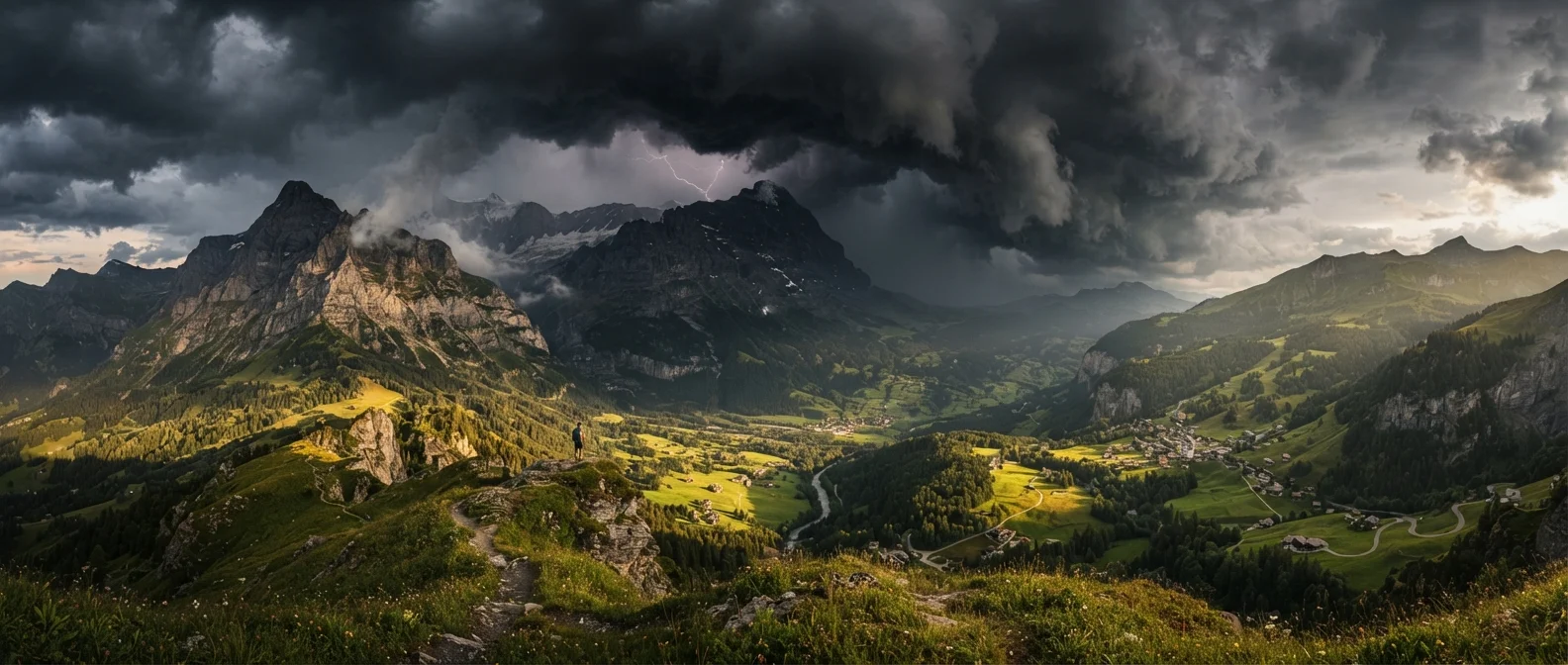
Mountains Play by Different Weather Rules
There's a reason experienced alpinists treat weather with deep respect - the atmosphere behaves in ways at elevation that simply don't match what most of us are used to reading from city weather apps. For beginners, this gap between expectation and reality is where things go wrong fast.
Temperature drops roughly 3.5°F for every 1,000 feet of elevation gain. That means a pleasant 70°F afternoon at the trailhead can feel like a blustery 50°F or colder at the summit - even on the same sunny day. Add wind and moisture, and the effective temperature (wind chill) can be dangerously lower still. Before heading out, check our first-hike preparation guide to build the right foundational habits from day one.
Relying solely on a town or city weather forecast instead of an elevation-specific one.
Why it happens: Weather apps default to the nearest populated location, which is almost always in a valley far below the summit. The conditions shown can be entirely different from those at altitude.
Starting a hike late in the morning, arriving at exposed ridges during peak afternoon thunderstorm hours.
Why it happens: Beginners often underestimate hiking pace or don't know that convective thunderstorms in many mountain ranges build predictably between noon and 3 p.m. during summer months.
Leaving rain gear and insulating layers behind because skies look clear at the trailhead.
Why it happens: Clear morning skies are common in the mountains even on days when afternoon storms are forecasted. Beginners read the current sky rather than the developing forecast.
Ignoring early warning signs like distant thunder, rapid cloud buildup, or sudden wind shifts.
Why it happens: When people are excited and close to a summit goal, they rationalize warning signs as minor or temporary rather than acting on them decisively.
Underestimating how quickly wind transforms a cold but manageable day into a dangerous one.
Why it happens: Hikers at lower elevations rarely experience sustained high winds, so they lack a visceral understanding of how dramatically wind chill accelerates heat loss from the body.
Common Weather Mistakes New Mountain Hikers Make
~3.5°F
Temperature drop per 1,000 feet of elevation
The standard atmospheric lapse rate means summit conditions can be dramatically colder than trailhead readings on the same day.
50%
Of hiking fatalities involve environmental exposure
According to search-and-rescue data reviewed by wilderness safety organizations, weather-related exposure - including hypothermia - is among the leading contributors to hiker fatalities in the US.
Even the most enthusiastic and well-intentioned beginners run into the same weather-related traps. Understanding why these mistakes happen is the first step toward avoiding them on your next adventure.
Afternoon Thunderstorms Are Predictable - and Deadly
In ranges like the Colorado Rockies, afternoon thunderstorms develop on a near-daily basis during summer months. Lightning strikes above treeline are a leading cause of weather-related outdoor fatalities. Being caught on an exposed ridge or summit after midday is one of the most preventable risks in mountain hiking - plan your turnaround time before you leave the trailhead, not when clouds start building.
If you're planning multi-day outings, what to expect on your first backpacking trip covers weather preparedness alongside gear and logistics in a practical beginner-friendly format.
Building Smarter Weather Habits Before and On the Trail
Improving your mountain weather awareness doesn't require a meteorology degree - it requires a few deliberate habits practiced consistently. Start by using mountain- or summit-specific forecast tools rather than generic city forecasts. Resources like the National Weather Service point forecast tool let you enter specific coordinates or peak names for elevation-adjusted predictions.
Learn to recognize cloud types. Anvil-shaped cumulonimbus clouds signal thunderstorm development; lenticular clouds (lens-shaped, hovering over summits) indicate high winds. These visual cues give you real-time data no app can match once you're on the trail. Pairing weather awareness with topo map reading skills makes you a dramatically more self-sufficient hiker.
Adopt a firm turnaround time - ideally at or before noon on summer hikes in ranges prone to afternoon thunderstorms, such as the Rockies, Sierra Nevada, and Cascades. The summit will still be there another day. If cold-weather trips are on your horizon, winter camping realities and risks is worth a read before you commit to an overnight in the mountains.
Tell Someone Your Exact Plan Before You Go
Weather emergencies become survivable or fatal partly based on how quickly rescue can reach you. Always leave a detailed trip plan - trailhead location, intended route, expected return time - with a reliable contact who knows to call for help if you don't check in. This single habit costs nothing and has saved lives.
The content on this site is for informational purposes only and is not a substitute for professional advice. Always consult a qualified professional for guidance specific to your situation.