

Summary
22 items · 2-4 hours spread across a weekend
Why Fall Is the Right Time to Act
Fall maintenance sits in a narrow but critical window. Temperatures are mild enough to work comfortably outdoors, yet conditions are about to turn hostile for any unaddressed vulnerabilities in your home's envelope, mechanical systems, and drainage. Skipping this window often means scrambling during the first cold snap - or absorbing the cost of damage that a timely inspection would have caught.
This checklist is organized into logical work zones so you can move efficiently through your home. Whether you own or rent, most of these tasks either apply directly or signal when to loop in your landlord. For a broader view of how fall fits into the full year, see our annual home maintenance cycle guide.
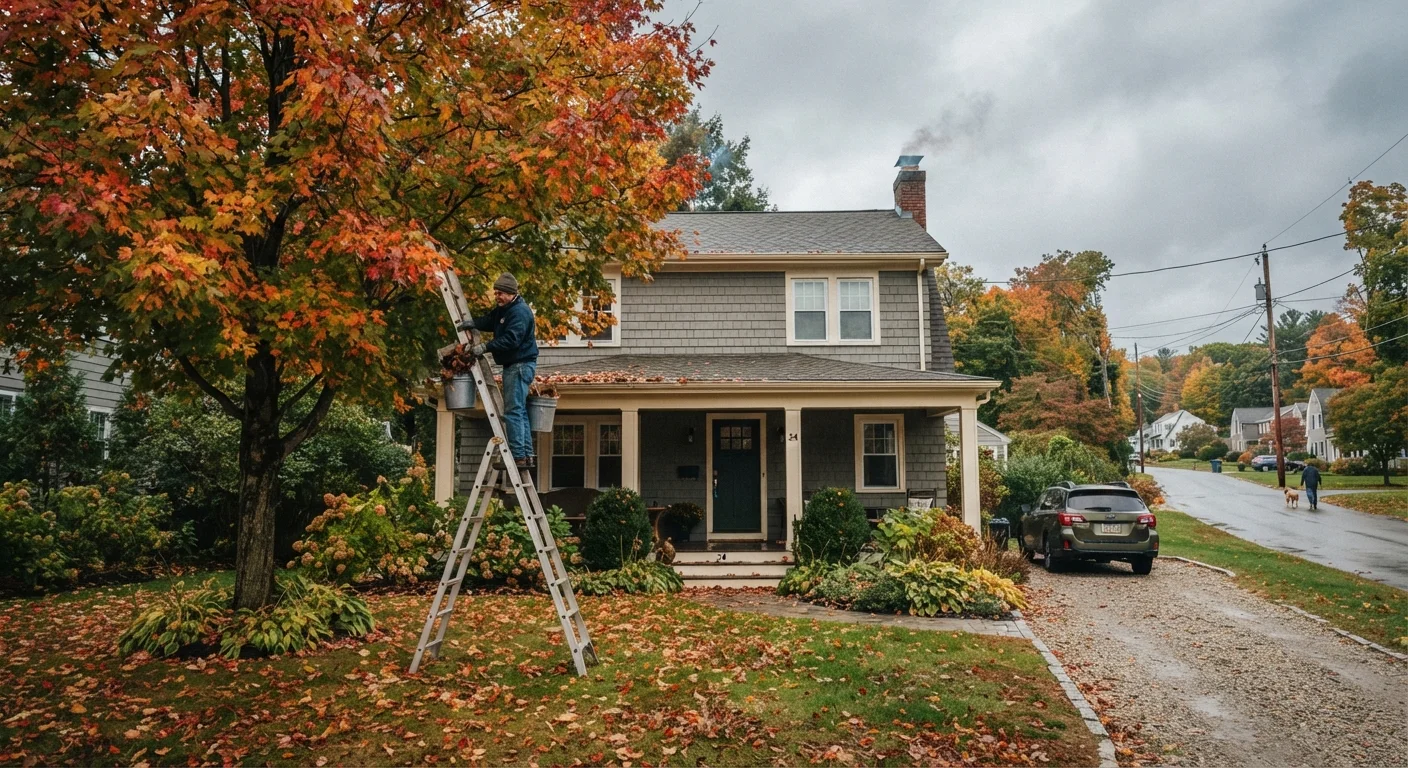
Ladder
Needed for safely accessing gutters and inspecting lower roof sections.
Caulk gun and exterior-grade caulk
Used to seal gaps around window frames, door frames, and roof penetrations.
Weatherstripping
Replaces worn seals on exterior doors to block cold air infiltration.
Furnace filters (correct size for your unit)
Swapping in a fresh filter is one of the fastest heating system maintenance steps.
Garden hose
Used to flush gutters and downspouts after clearing debris by hand.
Pipe insulation foam sleeves
Wraps exposed pipes in unheated spaces to reduce freeze risk.
The Complete Fall Prep Checklist
Work through the groups below in order. The exterior and roof tasks are best done on a dry day with daylight to spare. Interior mechanical checks can happen anytime.
Exterior & Roof
Windows, Doors & Air Sealing
Heating System & Fireplace
Plumbing & Water
Safety Devices
Yard & Outdoor Equipment
Don't Delay Heating System Checks
HVAC technicians and chimney sweeps book up quickly once cold weather arrives. Schedule these appointments in early fall - ideally before temperatures consistently drop below 50°F - to guarantee a slot and avoid mid-winter emergencies. Running a heating system that hasn't been serviced in more than a year can increase the risk of carbon monoxide exposure and reduce efficiency.
When to Call a Professional
Several items on this list - particularly furnace servicing, chimney inspection, and anything involving gas lines - should be handled by a licensed professional rather than attempted as a DIY project. Electrical work inside the panel and any structural concerns on the roof also require a qualified contractor. Attempting these tasks without proper training can create safety hazards and may violate local building codes.
Gas Lines and Electrical Panels: Hands Off
Any maintenance involving your gas supply line, gas furnace components beyond filter replacement, or your home's electrical panel must be performed by a licensed professional. In most US jurisdictions, this work also requires permits and inspections. Attempting these tasks without proper credentials is both a safety hazard and a potential code violation that can affect your homeowner's insurance coverage.
If you've recently moved in and aren't sure which tasks have been done, our guide for new homeowners covers the unglamorous but important items that often get missed in the first few years. And once winter arrives, use our spring walkthrough checklist to assess what cold weather may have revealed.
The content on this site is for informational purposes only and is not a substitute for professional advice. Always consult a qualified professional for guidance specific to your situation.