

Start here
What Backpacking Actually Is (and Isn't)
Next
Gear Basics: What You Actually Need
Then
Planning Your First Route
Before you go
Safety, Weather, and Staying Found
On the trail
What Day One Really Feels Like
What Backpacking Actually Is (and Isn't)
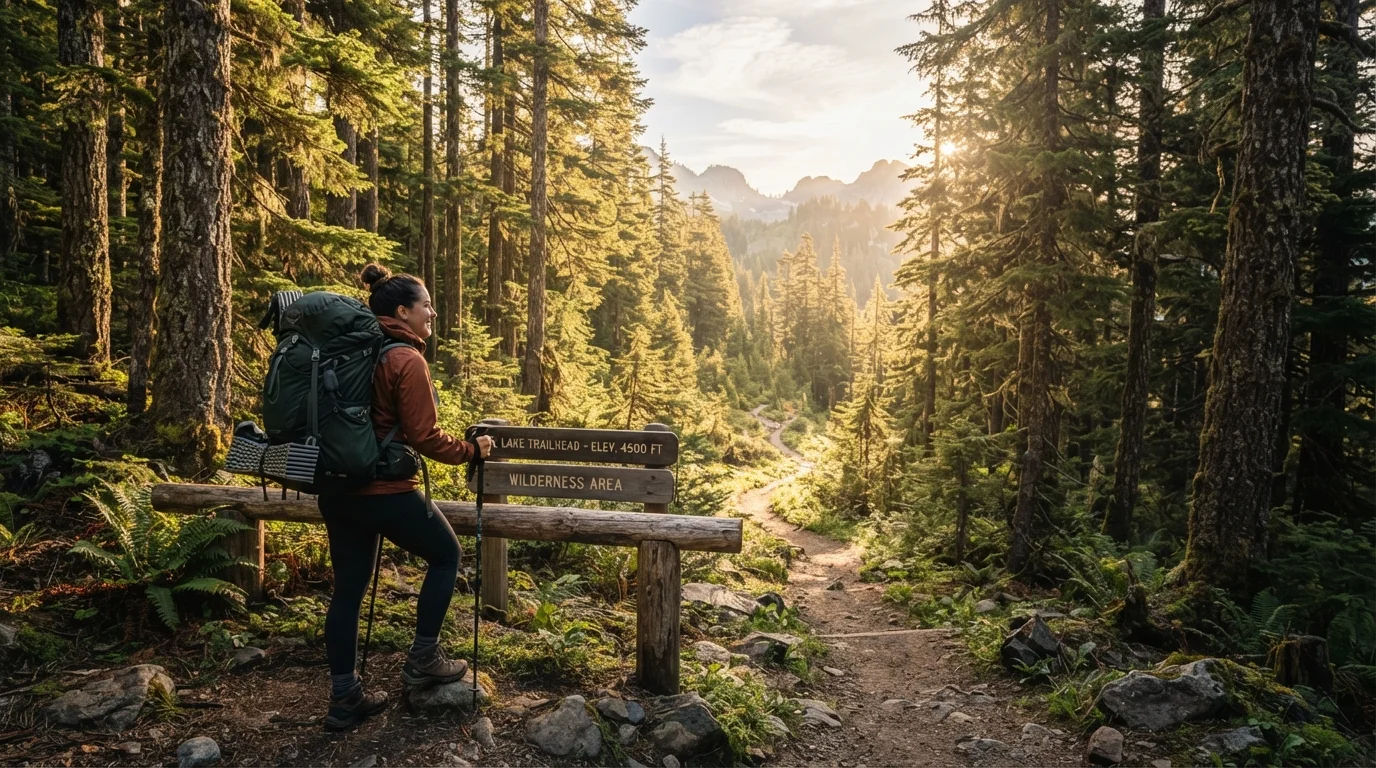
Backpacking is simply overnight hiking - you carry everything you need (shelter, sleep system, food, water, and safety gear) in a single pack on your back. That's it. There's no special certification required, no elite fitness threshold to clear, and no minimum experience level beyond basic common sense and preparation.
What it isn't is a survival challenge or an extreme sport. Most beginners picture rugged, remote terrain; the reality is that thousands of accessible trails across the U.S. are perfect for first-timers. Think well-marked paths in state forests, designated backcountry campsites in national forests, or overnight routes in state parks. If you've ever enjoyed a day hike and thought "I wish I could stay longer," you're already thinking like a backpacker.
If you want to ease into spending a night outdoors before committing to a multi-day carry, our guide to your first state park campout is a great bridge experience.
Backcountry
Undeveloped land away from roads and facilities, typically reached only on foot. Most backpacking trips take place in backcountry areas.
Leave No Trace (LNT)
A set of outdoor ethics principles designed to minimize human impact on natural environments - covering waste disposal, campsite selection, and wildlife interaction.
Topo map
Short for topographic map. It shows elevation changes using contour lines so you can visualize hills, valleys, and ridgelines before you walk them.
Pack weight
The total weight of your backpack once fully loaded with gear, food, and water. Keeping pack weight manageable is one of the most important comfort factors in backpacking.
Sleep system
The combination of sleeping bag and sleeping pad that insulates and cushions you through the night. Together, they determine how warm and comfortable you'll sleep outdoors.
Personal Locator Beacon (PLB)
A handheld emergency device that, when activated, sends a distress signal with your GPS coordinates to search-and-rescue services via satellite.
Gear Basics: What You Actually Need
Gear can feel overwhelming - and gear store price tags can feel alarming - but the core list is shorter than most people expect. The five pillars of a beginner backpacking kit are: a backpack (40-55 liters for a weekend trip), a shelter (tent or tarp), a sleep system (sleeping bag plus pad), a water treatment method (filter or purification tablets), and a food preparation setup (lightweight stove and fuel, or no-cook meals).
Beyond those five, the Ten Essentials system provides a proven checklist covering navigation, sun protection, insulation, illumination, first aid, fire-starting, repair tools, nutrition, hydration, and emergency shelter. Memorize that list and check every item before you leave the trailhead.
Test Your Gear Before the Trail
Set up your tent and sleep system in your backyard or living room at least once before your trip. Discovering a missing tent stake or a confusing stuff-sack system at home is far less stressful than discovering it at a remote campsite after dark. A short shakeout hike - even a day walk with a loaded pack - helps identify hot spots and fit issues while you can still adjust.
Borrowing or renting gear for your first trip is completely legitimate and saves money while you figure out what matters to you. Many outfitters and outdoor clubs offer short-term rentals on packs, tents, and sleep systems.
Planning Your First Route
Route selection is the single most important decision you'll make as a first-timer. A too-ambitious route turns what should be a highlight reel into a sufferfest. Aim for 5-10 total trail miles over one or two nights, with modest elevation gain and a clearly marked path. Well-maintained trails with established campsites reduce variables significantly.
Research your route using official agency websites (National Park Service, U.S. Forest Service, state park portals), topographic maps, and recent trip reports from hiking communities. Check permit requirements early - popular wilderness areas book out months ahead. Share your full itinerary, including trailhead, campsites, and expected return time, with someone who isn't going.
Water source locations matter enormously. Identify reliable streams, lakes, or springs along your route in advance, and know how far apart they are so you can plan how much to carry between them.
Safety, Weather, and Staying Found
Outdoor safety isn't about fear - it's about making good decisions before you need them. Three areas deserve extra attention for beginners: navigation, weather, and communication.
On navigation: download offline maps before you leave cell range, carry a paper topo map as a backup, and know how to read both. A GPS device or phone app is useful, but batteries die - paper doesn't.
On weather: mountain and wilderness conditions shift faster than forecast models predict. Beginners routinely underestimate how quickly weather changes at elevation, which can turn a warm afternoon into a cold, wet emergency. Check forecasts the morning of your departure and pack a rain layer regardless of the sky you see at the trailhead.
On communication: cell service disappears quickly on most backcountry routes. Consider a personal locator beacon (PLB) or satellite messenger for added safety on longer or more remote trips. They are not mandatory for short, well-traveled routes, but they provide real peace of mind.
Tell Someone Your Full Plan
Before every backcountry trip, give a trusted contact your trailhead location, planned campsites, and expected return time. Agree on when they should call for help if they haven't heard from you. This simple step has saved lives and costs nothing. Search-and-rescue teams consistently cite the absence of a trip plan as a factor that delays emergency response.
What Day One Really Feels Like
Here's the honest truth about your first backpacking day: the pack will feel heavier than you expected, your feet will feel it by mile three, and there will probably be a moment where you wonder why you thought this was a good idea. That moment is completely normal, and it passes.
What replaces it - usually right around the time you reach camp, drop your pack, and take in the view - is something harder to describe. A mix of accomplishment, quiet, and presence that's genuinely difficult to manufacture in daily life. Cooking a simple meal outdoors after carrying it all day tastes better than it has any right to. Sleeping under a sky with no light pollution is its own reward.
The physical learning curve is real but short. Most people feel dramatically more capable on day two than day one. Start small, go at your own pace, and resist comparing your experience to social media highlights. Your first trip doesn't need to be epic - it just needs to happen. The trail will take care of the rest.
If you're curious about other accessible ways to enjoy the outdoors while you build your outdoor skill set, birdwatching is one of the most low-barrier outdoor pursuits in the country and pairs beautifully with a hiking habit.
Ten Essentials Backcountry Safety Guide
A deep dive into the Ten Essentials system - what each item is, why it matters, and how to select appropriate options for your trip length and terrain.
U.S. Forest Service Recreation Finder
The official federal tool for locating trails, campgrounds, and permit information across national forests and grasslands throughout the United States.
State Park Overnight Camping Checklist
A practical checklist covering reservations, gear, food storage, and campground etiquette - ideal for beginners planning their first overnight stay outdoors.
Frequently Asked Questions
A reasonable base fitness level helps, but you don't need to be an athlete. Choose a short, flat-to-moderate route of 5-8 miles total for your first outing. Regular walking or light hiking in the weeks before your trip makes the experience noticeably more enjoyable.
A common guideline is to keep your loaded pack under 20-25% of your body weight. For most beginners, that means targeting 25-35 pounds including food and water. Overpacking is the most common first-timer mistake, so audit every item before you go.
Many popular wilderness areas and national parks require overnight permits, which can sell out months in advance. Always check with the managing agency - typically the National Park Service or U.S. Forest Service - well before your planned trip date.
Lightweight, calorie-dense foods work best: instant oatmeal, nut butter packets, dried fruit, jerky, instant rice or noodles, and freeze-dried meals. Plan roughly 1.5-2 pounds of food per person per day and pack out all waste.
Yes, when approached with proper preparation. Choose a well-traveled, clearly marked trail, tell someone your itinerary, carry a map and navigation tools, and understand basic first aid. Starting with a group or guided trip adds an extra layer of confidence.
Car camping means sleeping near your vehicle with access to a cooler, chairs, and larger gear. Backpacking means carrying everything on your back to a remote campsite. Backpacking trades convenience for solitude and a deeper connection with the landscape.
The content on this site is for informational purposes only and is not a substitute for professional advice. Always consult a qualified professional for guidance specific to your situation.