

The Gap Between Looking Fine and Feeling Right
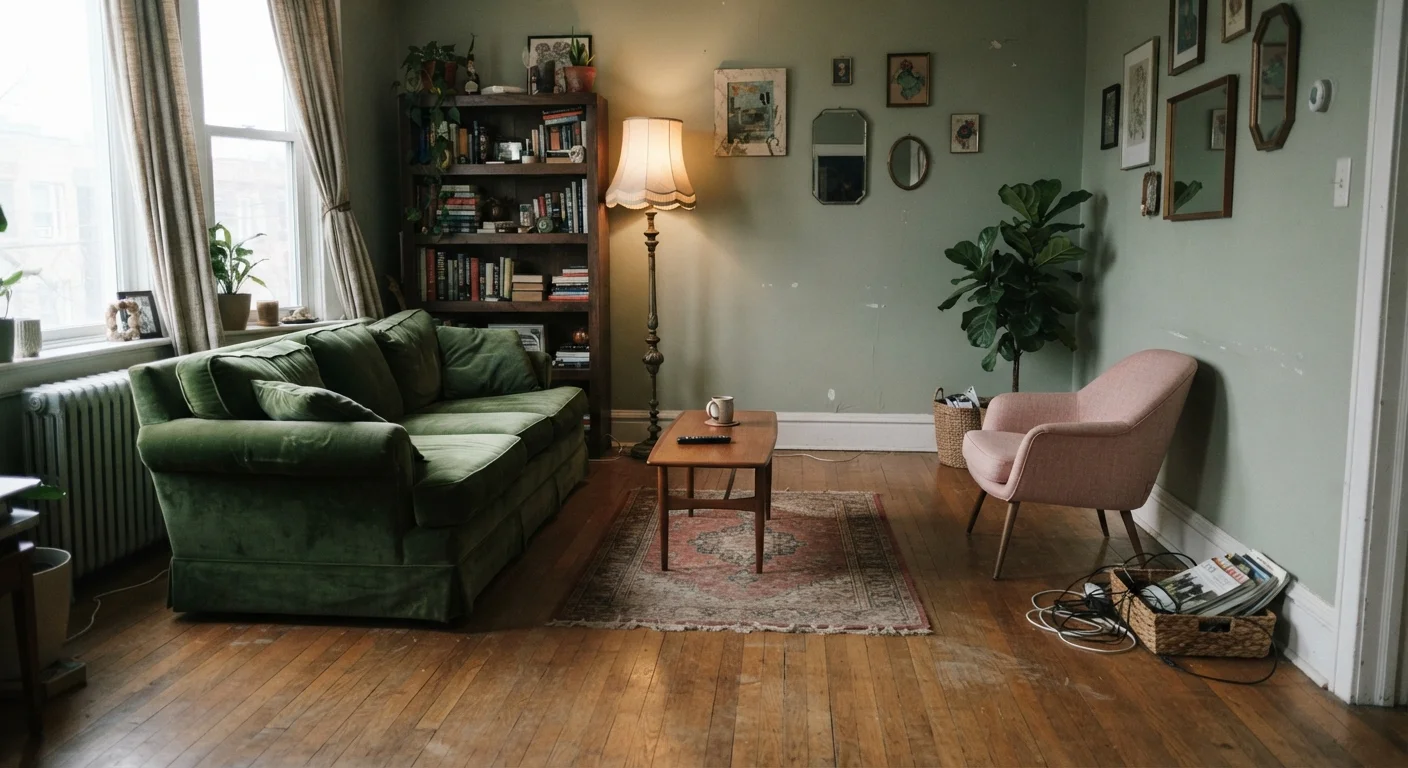
Most homeowners have experienced it: a room is clean, furnished, and decorated - yet something feels persistently wrong. Guests can't name it. You can't name it. But the discomfort is real. In interior design, that nagging feeling almost always has a structural cause, not a stylistic one. The fix is rarely a new throw pillow; it's usually a foundational adjustment to proportion, light, or flow.
Understanding why rooms feel off is the first step toward rooms that feel genuinely comfortable. The mistakes below are common across homes at every budget level - and most can be corrected without major expense or renovation. For a broader look at how popular design advice can steer you wrong, see decorating myths that lead homeowners astray.
Furniture pushed against every wall, leaving a hollow center.
Why it happens: Pushing furniture to the perimeter feels logical - it seems to 'open up' the room - but it actually creates a disconnected, waiting-room effect with dead space in the middle.
A rug that is too small for the furniture grouping it anchors.
Why it happens: Undersized rugs are one of the most frequent missteps in furnished rooms. Shoppers often choose a size that looks large in a store but floats awkwardly once placed beneath a full sofa-and-chair arrangement.
No clear focal point for the eye to settle on.
Why it happens: When every element in a room competes equally for attention - multiple bold prints, competing accent walls, or evenly distributed décor - the eye scans constantly and never rests, which registers as vague unease.
Relying on a single overhead light source for the entire room.
Why it happens: Most rooms come with one ceiling fixture, and adding additional lighting requires extra effort and expense that many homeowners defer indefinitely.
Mixing scales without intention - pairing oversized and undersized pieces randomly.
Why it happens: Furniture is often purchased at different times, making it easy to end up with a delicate side table next to a hulking sectional, or a towering bookcase beside low-profile seating.
Color temperature mismatches between paint, lighting, and furnishings.
Why it happens: Paint chips are evaluated under store lighting, bulbs are chosen for brightness rather than warmth, and furniture is selected in a showroom with different light entirely - producing clashes that only appear once everything is home.
How to Start Diagnosing Your Own Space
Before rearranging a single piece of furniture, spend five minutes observing how you actually move through the room. Where do you naturally stop walking? Where does your eye land first - and is that where you want it to land? These simple questions surface most layout problems faster than any design checklist.
Don't Rearrange Without Measuring First
Moving heavy furniture to test a layout theory can damage flooring and strain your back. Before shifting anything substantial, use masking tape on the floor to map out proposed footprints, or try a free room-planning tool online. Knowing dimensions in advance prevents the frustrating cycle of moving the same sofa three times in an afternoon.
Lighting is often the last thing homeowners adjust but the first thing that changes how a room registers emotionally. A room lit only by a central overhead fixture tends to feel flat and slightly institutional regardless of the furniture. Adding a floor lamp, table lamp, or wall sconce creates visual depth through shadow variation - something a single ceiling light cannot provide. For a deeper look at how color choices interact with light across the day, the piece on warm-toned vs. cool-toned interiors is worth reading alongside this one.
If your room is compact, the same principles apply - scale and flow matter even more in smaller footprints. The guide to decorating a small apartment covers layout strategies that prevent the cramped, off-balance feeling that often plagues tighter spaces. And if you're ready to physically rearrange, the room layout planning checklist helps you measure and evaluate before moving anything heavy.
The content on this site is for informational purposes only and is not a substitute for professional advice. Always consult a qualified professional for guidance specific to your situation.