

Why These Three Methods Get Confused
Caulking, weatherstripping, and draft-proofing are all ways to seal gaps in your home - but they address different gaps, in different materials, in different locations. Using the wrong method means the problem persists, and you may end up redoing the work sooner than expected.
The confusion is understandable: all three reduce air infiltration, lower heating and cooling costs, and are part of any good fall home prep routine. But knowing which tool applies where makes each job faster and more effective.
| Best use for caulk | Stationary joints and cracks between hard surfaces |
| Best use for weatherstripping | Moving parts: door edges, window sashes, attic hatches |
| Draft-proofing scope | Whole-home strategy using multiple sealing methods |
| Typical caulk lifespan | 5-10 years depending on product type and exposure |
| Weatherstripping inspection frequency | Annually, ideally before heating season |
| Common high-leakage areas | Rim joists, recessed lights, electrical outlets on exterior walls (U.S. Department of Energy guidance on home air sealing) |
Caulk: For Stationary Gaps in Hard Surfaces
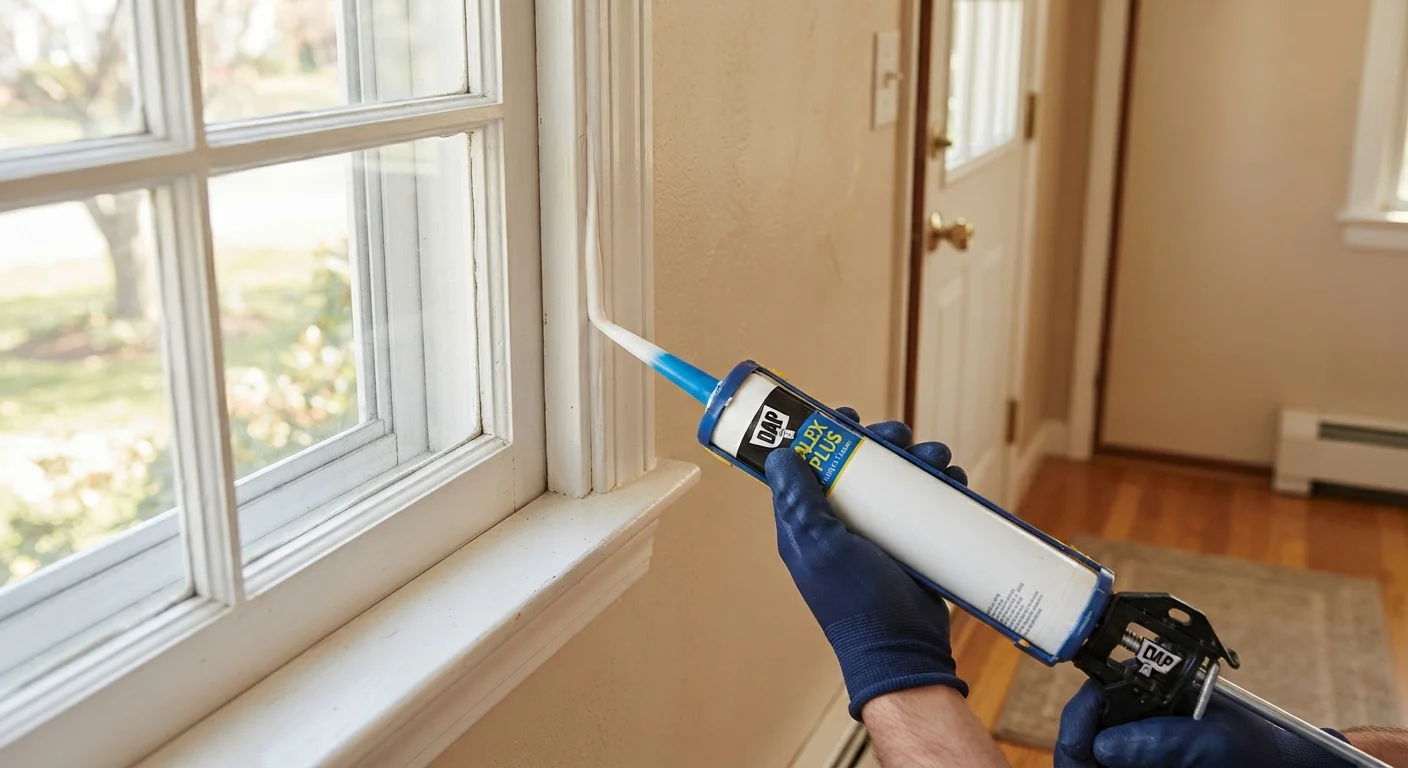
What it is: Caulk is a flexible sealant - typically silicone, latex, or a hybrid - applied in a continuous bead to fill cracks and joints between stationary surfaces.
Where it belongs:
- Around window and door frames where the frame meets the wall
- Where baseboards, crown molding, or trim meet walls
- Along the sill plate where a house's framing meets the foundation
- Around pipe and wire penetrations through walls, floors, or ceilings
- At interior corners in non-wet rooms (wet areas use specific bath caulk)
Where it does not belong: Caulk is not designed for surfaces that move relative to each other, like door edges or operable window sashes. Apply it there and it will crack or pull away within a season. For tile joints specifically, there are important differences between caulk and grout - see caulk vs. grout explained for guidance on that distinction.
Caulk
A flexible, paste-like sealant applied to fill stationary cracks or joints between building materials. It cures into a durable, slightly elastic seal that resists air and moisture.
Weatherstripping
A compressible sealing material attached to the frame or edge of a moving door or window. It creates an airtight seal when the door or window is closed by being compressed against the opposing surface.
Air Infiltration
The uncontrolled movement of outdoor air into a building through gaps, cracks, and openings in the building envelope. Excess infiltration increases heating and cooling costs.
Rim Joist
The board that caps the ends of floor joists around the perimeter of a home's floor frame, just above the foundation. It is a common source of significant air leakage in older homes.
Building Envelope
The physical boundary between conditioned interior space and the outdoor environment, including walls, roof, foundation, windows, and doors. Sealing this boundary is the goal of draft-proofing.
Door Sweep
A weatherstripping component attached to the bottom of an exterior door that presses against the threshold to block air, light, insects, and moisture from entering under the door.
Weatherstripping: For Moving Parts and Active Seals
What it is: Weatherstripping is a compressible seal - available in foam tape, V-strip (tension seal), door sweeps, or reinforced rubber - applied to the moving parts of doors and windows so that when closed, the gap is compressed shut.
Where it belongs:
- Along the top and sides of exterior door frames (the door stop or jamb)
- On the bottom edge of doors, using a door sweep or door shoe
- Around operable window sashes - where the sash meets the frame when locked
- On attic hatch covers and pull-down stair openings
Key distinction: Weatherstripping works under compression and must be replaced when it loses resilience or shows visible gaps even when the door or window is fully closed. Unlike caulk, it is not permanent and typically needs inspection each fall. A well-sealed building envelope also takes load off your HVAC system - something covered in depth in common HVAC upkeep mistakes.
Draft-Proofing: The Broader Strategy
What it is: Draft-proofing is not a single product - it's a whole-home approach to locating and sealing every pathway where outdoor air enters uninvited. Caulk and weatherstripping are both tools within a draft-proofing effort, but draft-proofing also includes:
- Installing foam gaskets behind electrical outlets and switch plates on exterior walls
- Sealing around recessed lighting fixtures in insulated ceilings
- Adding covers or dampers to fireplace flues when not in use
- Sealing the rim joist area in basements and crawl spaces
- Addressing the attic floor, where warm air escapes most significantly
This broader picture connects closely to insulation choices - draft-proofing stops air movement, while insulation slows heat transfer. They work together. For a full breakdown of where each type of insulation fits, see home insulation types and R-values.
When to Call a Professional
Caulking and weatherstripping are generally safe DIY tasks for most homeowners. However, sealing around gas lines, electrical panels, or structural penetrations should be evaluated by a licensed contractor. Similarly, if you suspect significant air leakage but can't locate the source, a professional energy auditor can conduct a blower door test to pinpoint problem areas precisely.
For a full season-by-season checklist that includes all three of these methods, the seasonal home maintenance reference is a useful companion guide.
The content on this site is for informational purposes only and is not a substitute for professional advice. Always consult a qualified professional for guidance specific to your situation.