

Why Small HVAC Habits Have Big Consequences
Most homeowners know they should change the air filter - but HVAC maintenance goes well beyond that single task. The system that heats and cools your home is a finely balanced mechanism: airflow, pressure, refrigerant, drainage, and filtration all interact. A misstep in one area quietly degrades the others.
The stakes are real. HVAC systems represent one of the largest energy loads in a typical home, and a neglected system doesn't just run less efficiently - it wears out faster. Repair costs for preventable failures (blower motor burnout, frozen coils, water damage from clogged drains) can run into the hundreds or thousands of dollars. Catching bad habits early is almost always cheaper than fixing the results.
This is also a dimension of home upkeep that fits neatly into a broader seasonal rhythm. For context on what to tackle - and when - see our full seasonal maintenance guide.
Choosing the highest MERV-rated filter available, assuming it provides the best air quality and protection.
Why it happens: Marketing often emphasizes filtration power without explaining the trade-off. Homeowners assume a denser filter catches more and is therefore always better.
Closing supply or return vents in unused rooms to save energy.
Why it happens: It seems logical that less air delivery means less work for the system, but HVAC systems are sized and calibrated for the home's total duct volume.
Changing the air filter only once or twice a year regardless of actual conditions.
Why it happens: Many homeowners recall a rough guideline from years ago and apply it universally, without accounting for pets, dust levels, or how often the system runs.
Neglecting the evaporator coil and condensate drain line as part of routine maintenance.
Why it happens: These components are inside the air handler and out of sight, so they rarely come to mind until a problem - like water pooling near the unit - makes them impossible to ignore.
Setting the thermostat fan to 'ON' instead of 'AUTO' continuously.
Why it happens: Homeowners sometimes believe constant fan circulation improves air quality or distributes temperature more evenly throughout the home.
The Filter and Vent Mistakes That Quietly Hurt Your System
Two of the most damaging HVAC errors involve components homeowners interact with regularly: filters and vents. Because these are accessible and seemingly simple, people often make changes with good intentions that backfire.
High-MERV Filters Can Damage Your System
Filters rated MERV 13 and above are designed for commercial or medical-grade applications. Installed in a standard residential system without modification, they restrict airflow so severely that they can freeze the evaporator coil or burn out the blower motor. Always verify filter compatibility with your specific system model before upgrading filtration.
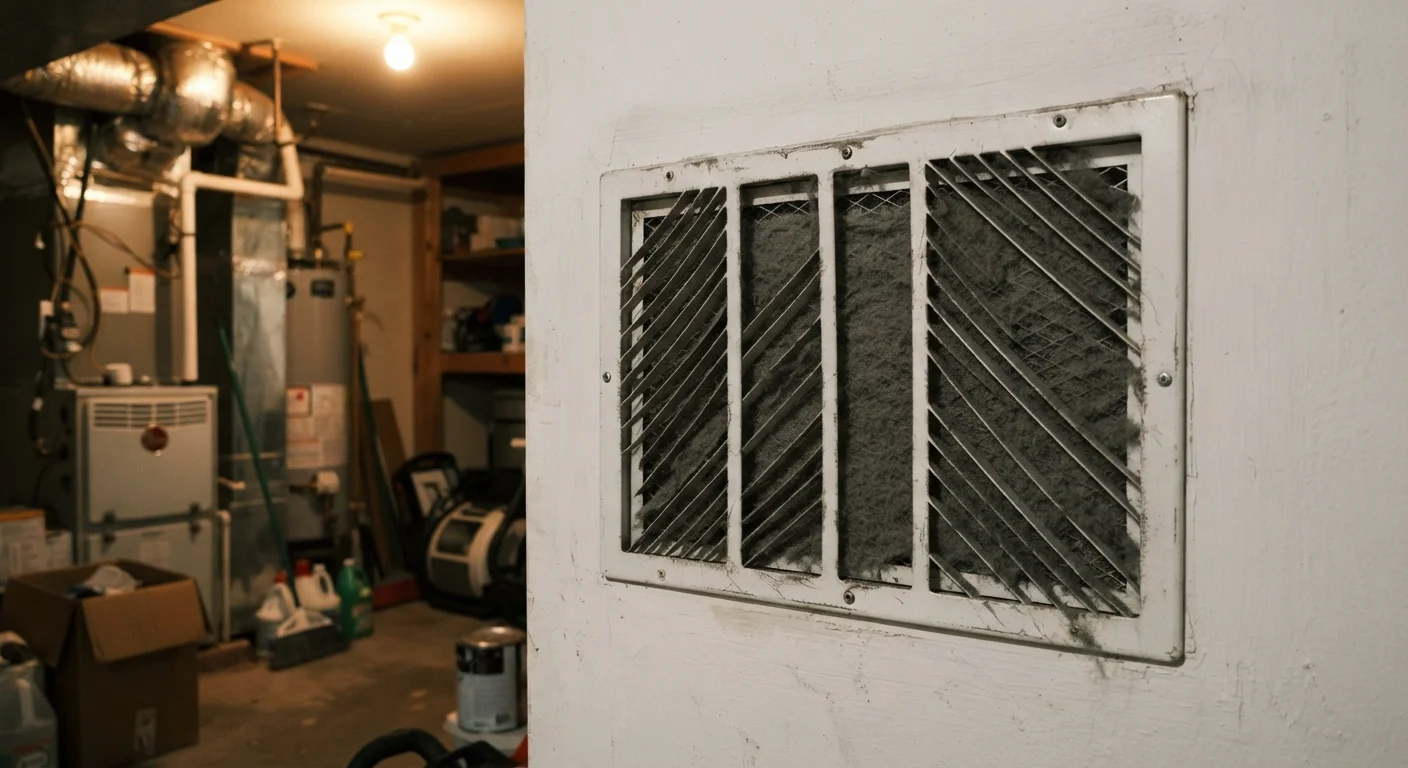
Airflow is the lifespan of your HVAC system. Anything that restricts it - an overly dense filter, a closed vent, an obstructed return grille blocked by furniture - puts strain on the blower motor and reduces the system's ability to condition air properly. Return grilles (the larger vents that pull air back to the air handler) are especially easy to accidentally block with rugs or sofas. Keep a clear path of at least 6-12 inches around return air grilles at all times.
For a related look at how air sealing interacts with your home's ventilation, our article on caulking, weatherstripping, and draft-proofing explains how each method affects airflow differently.
What to Do Instead: Building Better HVAC Habits
The good news is that most HVAC problems caused by homeowner habits are entirely preventable with a few consistent practices. Start by logging your filter changes - a simple sticky note on the air handler with the date works fine. Schedule an annual professional tune-up that includes coil cleaning, refrigerant check, and condensate drain inspection. These visits catch problems while they're still minor.
5-15%
Energy waste from a clogged or mismatched filter
The U.S. Department of Energy notes that replacing a dirty, clogged filter can lower an air conditioner's energy consumption by 5-15%.
1-3 months
Recommended filter change interval for most homes
Industry guidance from HVAC professionals generally places the standard replacement window at 30-90 days depending on filter type, occupancy, and pet ownership.
If your home has rooms that feel noticeably hotter or colder than others, resist the urge to close vents as a fix. Instead, ask an HVAC technician about balancing dampers inside the ductwork, or whether zoning controls might be appropriate. These are the right solutions to uneven temperature distribution - not blocking airflow at the register level.
New homeowners in particular tend to underestimate how many background systems require regular attention. Our article on tasks new homeowners most commonly overlook covers several of these unglamorous but critical habits in more detail.
The content on this site is for informational purposes only and is not a substitute for professional advice. Always consult a qualified professional for guidance specific to your situation.