Why Weather Changes Everything About Driving
Most drivers learn the rules of the road in fair conditions - clear skies, dry pavement, and predictable traffic. But weather strips away those assumptions fast. Rain reduces tire traction and increases stopping distances. Snow and ice transform familiar roads into hazardous surfaces. Fog collapses the visual field you rely on to make split-second decisions.
The core challenge isn't just slowing down. It's recognizing that your car handles differently, your senses are less reliable, and other drivers may be making errors around you. Adjusting for weather means rethinking speed, space, signaling, and situational awareness all at once.
For newer drivers especially, adverse conditions can be disorienting. See our road safety foundation for new drivers for broader context on building safe habits before conditions get challenging.
Rain: Traction Loss, Hydroplaning, and Visibility
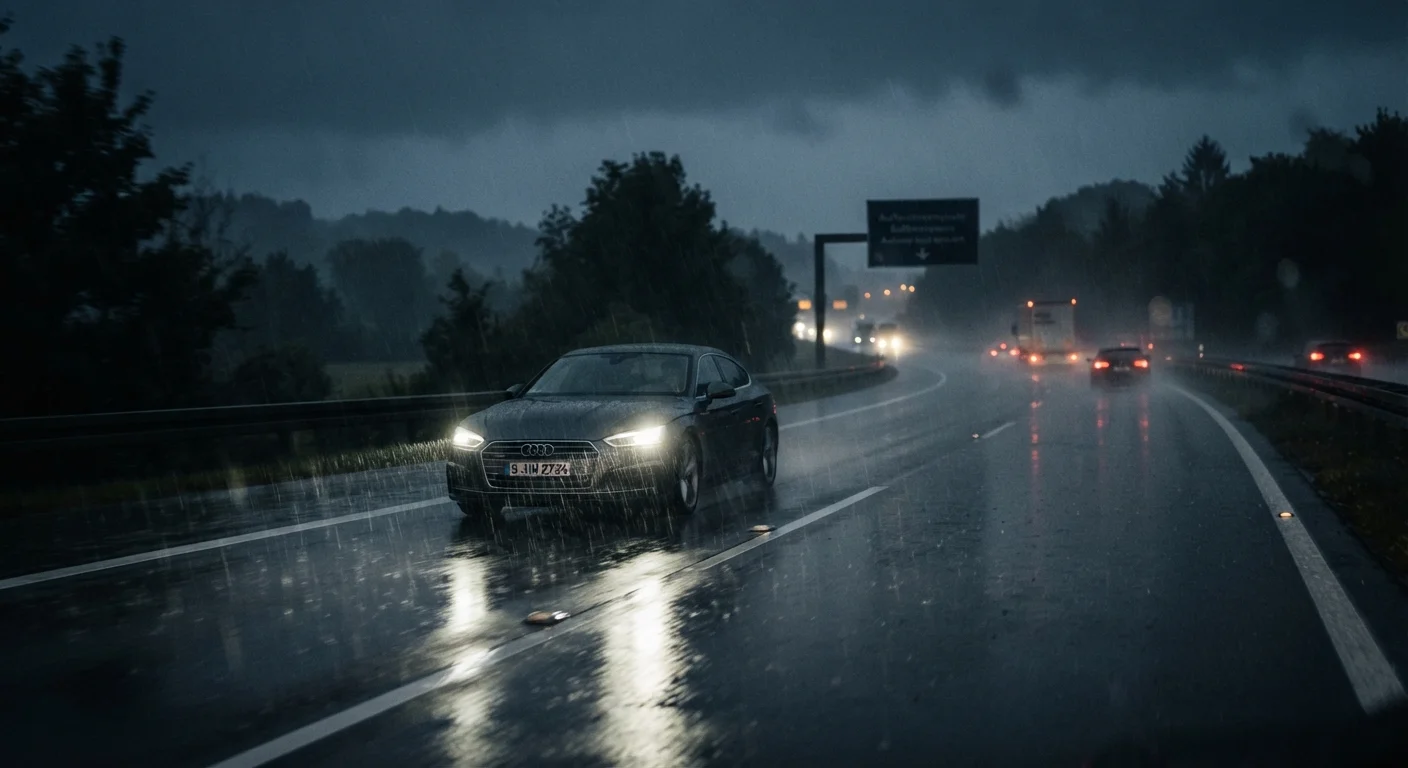
Rain is the most common weather hazard US drivers face, yet its dangers are routinely underestimated. The first 10-15 minutes of rainfall are often the most dangerous - water mixes with oil residue on the road surface, creating a slick layer before it washes away.
Hydroplaning occurs when a tire rides on a film of water rather than gripping the pavement. It can happen at highway speeds without warning. If your vehicle begins to hydroplane, ease off the accelerator gently - do not brake hard or jerk the wheel, as both can cause a spin. Keeping your tires properly inflated and in good condition significantly reduces this risk. Our guide on tire pressure and why it matters explains what to check and how often.
21%
Weather-related crash share on US roads
According to the Federal Highway Administration, approximately 21% of all vehicle crashes in the US are weather-related, with wet pavement accounting for the largest portion.
2x
Stopping distance increase on wet pavement
Highway safety educators commonly note that stopping distances can roughly double on rain-soaked roads compared to dry conditions at the same speed.
In heavy rain, use low-beam headlights to improve your visibility to other drivers. Pull your following distance out to at least four seconds - double the typical dry-road guideline.
Snow, Ice, and the Winter Road Challenge
Snow-covered roads are visually obvious. Black ice - a thin, nearly transparent glaze that forms on bridges, overpasses, and shaded pavement - often is not. Both demand the same core discipline: smooth, gradual inputs. Accelerate slowly, brake early, and steer gently. Abrupt movements break traction before you have time to react.
If your vehicle skids, stay calm. For a rear-wheel skid, steer in the direction the rear is sliding. For a front-wheel skid, ease off the gas and let steering control return as traction recovers. Anti-lock braking systems (ABS) are standard on modern vehicles - apply firm, steady pressure rather than pumping the brake pedal.
Before winter arrives, ensure your wipers, defrost systems, and lights are all functioning. The seasonal car maintenance guide covers what to inspect before temperatures drop.
Keep a Winter Kit in Your Vehicle
A small kit with an ice scraper, snow brush, traction mat, and jumper cables can make a meaningful difference if you get stuck or your windshield ices over unexpectedly. Store it in your trunk before the first cold snap, not after. A charged phone and a basic first-aid kit round out a practical winter preparedness setup.
Fog: When You Can't See Far Enough to Stop
Fog creates a deceptive sense of safety. Speeds that feel manageable can leave you unable to stop before reaching an obstacle you didn't see in time. This is sometimes called the overdriving your headlights problem - your stopping distance exceeds your sight distance.
Use low-beam headlights in fog, never high beams. High beams scatter off suspended water droplets and bounce light back into your eyes, worsening visibility. If your vehicle has dedicated fog lights, use them. Reduce speed meaningfully - not just slightly - and increase following distance considerably.
In dense fog, use the road's right edge markings as a guide rather than the center line, which can draw you toward oncoming traffic. If visibility drops to near zero, pull safely off the road, turn on your hazard lights, and wait it out. Continuing to drive when you cannot see is rarely justified by any schedule.
Low-visibility driving shares many challenges with night driving. Our article on night driving challenges explores how reduced sightlines change your risk exposure after dark.
Building Weather-Ready Driving Habits
The most effective safety measure is preparation before you leave. Check forecasts for your route, ensure your vehicle's fluids and lights are in order, and give yourself extra time so speed pressure doesn't override good judgment. Rushing in bad weather is one of the most reliable ways to create a serious incident.
Maintain awareness of what other drivers are doing. In adverse conditions, reaction chains - where one vehicle brakes suddenly and triggers a series of collisions - are more common. Increasing your following distance gives you a buffer not just from the car ahead, but from the unpredictability of the full traffic environment. For more on managing your field of view, see our guide on blind spot awareness.
Finally, know when not to drive. If conditions are severe - ice storm, whiteout, flooding - the best decision may simply be to delay your trip. No destination is worth an unrecoverable risk.
The content on this site is for informational purposes only and is not a substitute for professional advice. Always consult a qualified professional for guidance specific to your situation.