Where Blind Spots Actually Exist Around Your Vehicle
Most drivers are taught about blind spots early in their training, yet the concept is frequently reduced to a single vague warning rather than a precise understanding of geometry. In practice, a standard passenger car has multiple distinct blind zones, each posing its own risk depending on the driving situation.
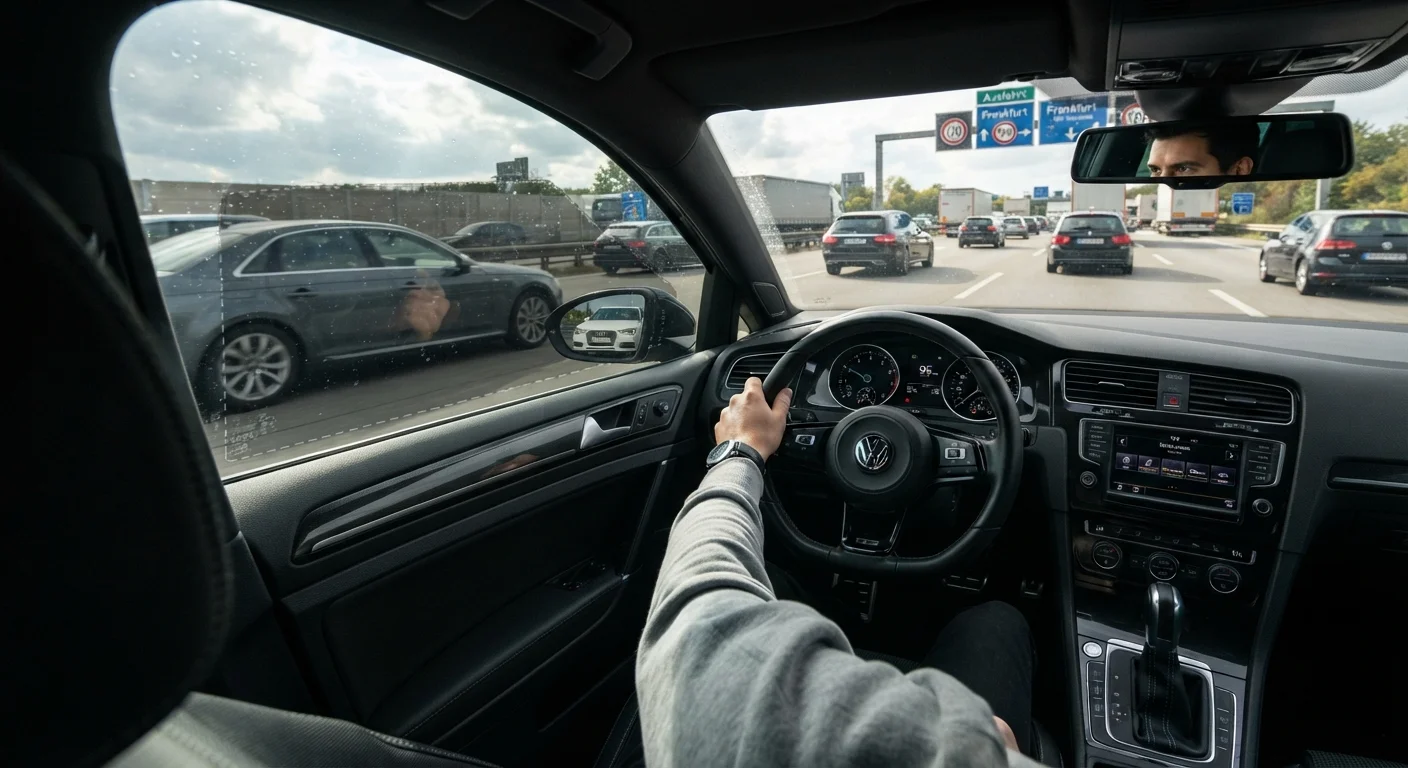
The rear-quarter blind spots are the most widely discussed. These are the areas that sit roughly alongside your rear doors and behind the B-pillar (the vertical frame between the front and rear side windows). Even with mirrors properly adjusted, a vehicle traveling in an adjacent lane can sit entirely within this zone - invisible until you physically turn to look.
Additional blind spots that receive less attention include:
- The area directly behind the vehicle when reversing, which extends beyond what even a wide-angle rearview mirror captures.
- Front-corner zones near the hood - particularly relevant when creeping out of a parking lot or driveway with obstructed sightlines.
- The immediate side of the vehicle at low speeds, where a cyclist or pedestrian standing close to the car may not be visible in any mirror.
Understanding these zones as specific, mappable areas - not a general concept - is the first step toward consistently accounting for them.
~840,000
Annual blind spot crashes in the US
The National Highway Traffic Safety Administration (NHTSA) has estimated that hundreds of thousands of crashes per year in the United States involve blind spot-related lane changes.
~300 ft
Rear blind zone length for large trucks
The Federal Motor Carrier Safety Administration notes that large commercial trucks can have rear blind zones extending approximately 30 feet or more behind the vehicle.
2019
Year backup cameras became federally required on US new vehicles
As of May 2018, all new passenger vehicles sold in the United States were required by federal regulation to include a rearview camera, addressing one of the most dangerous blind zones.
Why Mirrors Have Inherent Limitations
Mirrors work by reflecting light from a fixed angle. Because they are mounted at specific points on your vehicle's body, they can only capture what falls within a narrow cone of reflection. The human eye, even scanning mirrors rapidly, cannot monitor all angles simultaneously.
Standard mirror configurations leave the rear-quarter zones uncovered for a structural reason: the side mirrors are aimed rearward along the side of the car, and the rearview mirror is aimed straight back through the rear window. The gap between these two coverage areas is precisely where the most common lane-change blind spot sits.
“The over-reliance on mirrors without supplementing them with a physical check of the blind spot zone is one of the most persistent and correctable habits we see in drivers at every experience level.”
— National Safety Council, US nonprofit focused on eliminating preventable deaths and injuries
Adjusting mirrors outward - so only a sliver of your own car's body appears at the inner edge of each side mirror - can meaningfully reduce the rear-quarter blind spot compared to the traditional inward-angled position many drivers learned. However, it does not eliminate the zone entirely, and it may reduce coverage of the area directly alongside your rear bumper.
This is why a head check (briefly turning your head to look over your shoulder before changing lanes) remains the most reliable method of clearing a blind spot. It takes less than a second and provides direct visual confirmation that mirrors simply cannot.
For related visibility challenges that compound the blind spot problem, see our article on night driving challenges - reduced lighting makes these zones even harder to manage after dark.
Technology Helps - But Doesn't Replace Awareness
Modern vehicles increasingly include blind spot monitoring (BSM) systems, which use radar or camera sensors mounted in the rear bumper to detect vehicles in adjacent lanes. When a vehicle enters the monitored zone, a warning light illuminates in or near the side mirror, sometimes accompanied by an audible alert if you engage a turn signal.
These systems represent a genuine safety advancement, but drivers should understand their limitations:
- Sensor coverage angles vary between manufacturers and trim levels. Not all BSM systems monitor the same zone size.
- Most systems are designed primarily to detect passenger vehicles at highway speeds, and may be less reliable at detecting motorcycles, bicycles, or fast-approaching vehicles in certain scenarios.
- Adverse weather - heavy rain, snow, or mud obscuring sensors - can reduce system effectiveness. See our guidance on driving in rain, snow, and fog for how conditions affect vehicle systems.
Test Your Own Blind Spot Coverage
In a safe, stationary setting such as a parked lot, have a second person slowly walk from behind your vehicle alongside the driver's side while you watch only your mirrors. Note the point at which they disappear and reappear - this gives you a direct, personal understanding of exactly where your blind zone begins and ends. Repeat on the passenger side.
Rearview cameras, now required on new US vehicles, address the rear blind zone during reversing but are inactive during forward driving. Surround-view camera systems, available on some vehicles, offer a wider picture at low speeds but are also not designed for highway lane-change detection.
The safest approach treats technology as a backup confirmation tool, not a primary source of awareness. Drivers who rely entirely on alerts rather than developing consistent checking habits are more vulnerable when conditions cause systems to underperform.
If you're building foundational driving skills, our first-year road safety guide covers how to develop these habits from the start.
Practical Habits That Reduce Blind Spot Risk
Awareness of blind spot geometry translates directly into safer driving behavior. A few consistent habits significantly reduce the risk that a vehicle or vulnerable road user will go undetected in your blind zone:
- Always perform a head check before changing lanes. Signal, check mirrors, then briefly turn your head to look directly into the blind zone before committing to the move. This sequence should become automatic regardless of how long you have been driving.
- Minimize time spent in other drivers' blind spots. When traveling alongside a larger vehicle - particularly trucks and SUVs - either move ahead or fall back enough to be visible in their mirrors. A general rule: if you cannot see the truck driver's face in their mirror, they likely cannot see you.
- Check mirrors frequently and systematically. Developing a scan pattern - rearview mirror, driver-side mirror, passenger-side mirror, road ahead - every 5-8 seconds keeps your mental model of surrounding traffic current.
- Slow down before lane changes in heavy traffic. Reducing speed gives you more time to complete a thorough check and reduces the consequences if a vehicle is present in the blind zone.
Lane changes and merges are among the highest-risk maneuvers for blind spot collisions. Our article on highway merging explains how to read traffic gaps and execute the maneuver safely.
This article is for general informational and educational purposes only. Always follow local traffic laws and consult qualified driving instruction for personalized guidance.
Frequently Asked Questions
Even correctly set mirrors cover only a portion of the space around your vehicle. The rear-quarter zones - the areas just behind and to the side of each rear door - fall outside both the side-mirror and rearview-mirror fields of view. Physics and the fixed mounting positions of mirrors make full coverage impossible without supplemental technology or a physical head check.
The primary blind spots are the rear-quarter zones on the driver's side and passenger's side. Secondary blind spots include the area directly behind the trunk when reversing, the front corners when pulling out of a tight space, and the space immediately beside the front doors at low speeds - particularly relevant for cyclists and pedestrians.
Blind spot monitoring systems are a useful safety aid, but most manufacturers and safety experts recommend treating them as a supplement rather than a replacement for physical checks. Sensors can have latency, limited detection angles, and may not reliably detect motorcycles, cyclists, or fast-approaching vehicles in all conditions.
A commonly recommended method is to position each side mirror so the rear corner of your own vehicle is just barely visible at the inside edge of the mirror frame. This angles the mirrors outward compared to the traditional setting, reducing overlap with the rearview mirror and widening lateral coverage. A head check is still necessary even with this adjustment.
Yes. Larger, taller vehicles generally have more extensive blind zones - particularly at the rear when reversing and along the sides due to wider body dimensions. This is one reason backup cameras are now federally required on new vehicles sold in the United States, and why drivers of large vehicles benefit from extra caution.
The content on this site is for informational purposes only and is not a substitute for professional advice. Always consult a qualified professional for guidance specific to your situation.