Why Night Driving Is More Dangerous Than It Feels
Most drivers feel experienced enough behind the wheel that nighttime doesn't register as a special challenge. That confidence can be misplaced. According to the National Safety Council, roughly half of all traffic fatalities occur at night, even though nighttime accounts for a much smaller share of total driving miles. The math is stark: driving after dark carries a disproportionate risk that familiarity tends to mask.
The reasons aren't mysterious. Your eyes don't perform the same job in darkness as they do in daylight. Depth perception diminishes, color contrast collapses, and your ability to judge another vehicle's speed or distance becomes less reliable. Add in the physiological pull toward drowsiness after dusk - compounded if you've had a full day - and the challenge compounds quickly.
The list below walks through the specific hazards that catch drivers off guard, and what you can do to account for each one.
Your headlights cover less road than you think
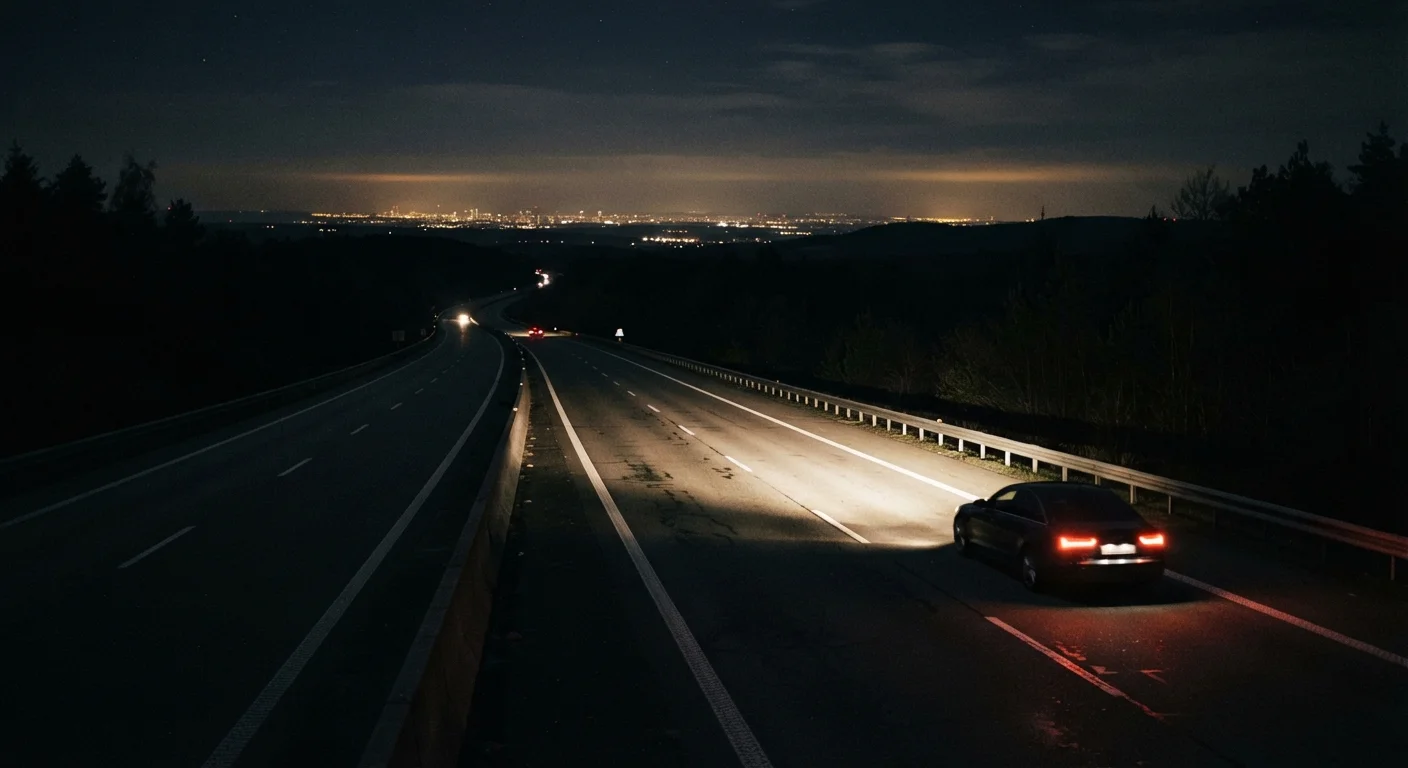
Standard low-beam headlights typically illuminate about 160 feet ahead. At 60 mph, your stopping distance can exceed 200 feet. That gap - where you're traveling faster than your lights reveal - is called overdriving your headlights, and it's one of the most common and underappreciated night driving errors.
Reducing speed after dark so that your stopping distance stays within your visible range is one of the simplest risk-reduction steps available. Equally important: keep your headlights clean and properly aimed. Clouded or misaligned headlights can reduce effective illumination by more than 50 percent. This is a straightforward maintenance task covered in most routine vehicle inspections. See our car maintenance hub for guidance on keeping lights and other safety systems in working order.
At 60 mph, your stopping distance can exceed what your headlights actually reveal ahead.
Oncoming glare disrupts vision longer than most drivers realize
When a bright oncoming vehicle hits your eyes, the temporary loss of contrast sensitivity - sometimes called glare recovery - can last several seconds. During that window, hazards in your lane may be effectively invisible. Older drivers tend to experience longer glare recovery times due to normal changes in the eye's lens.
Practical countermeasures include shifting your gaze slightly right toward the lane line rather than looking directly into oncoming headlights, and ensuring your own windshield is clean inside and out. Interior smear on the windshield scatters oncoming light dramatically, worsening glare even when the glass appears clear during the day.
Glare recovery after a bright oncoming vehicle can render hazards invisible for several critical seconds.
Fatigue peaks in ways tied directly to darkness
The body's circadian rhythm - its internal clock - naturally promotes sleepiness after midnight and again in the early-to-mid afternoon. Driving during these windows means working against a biological pressure toward reduced alertness, regardless of how much sleep you had the night before.
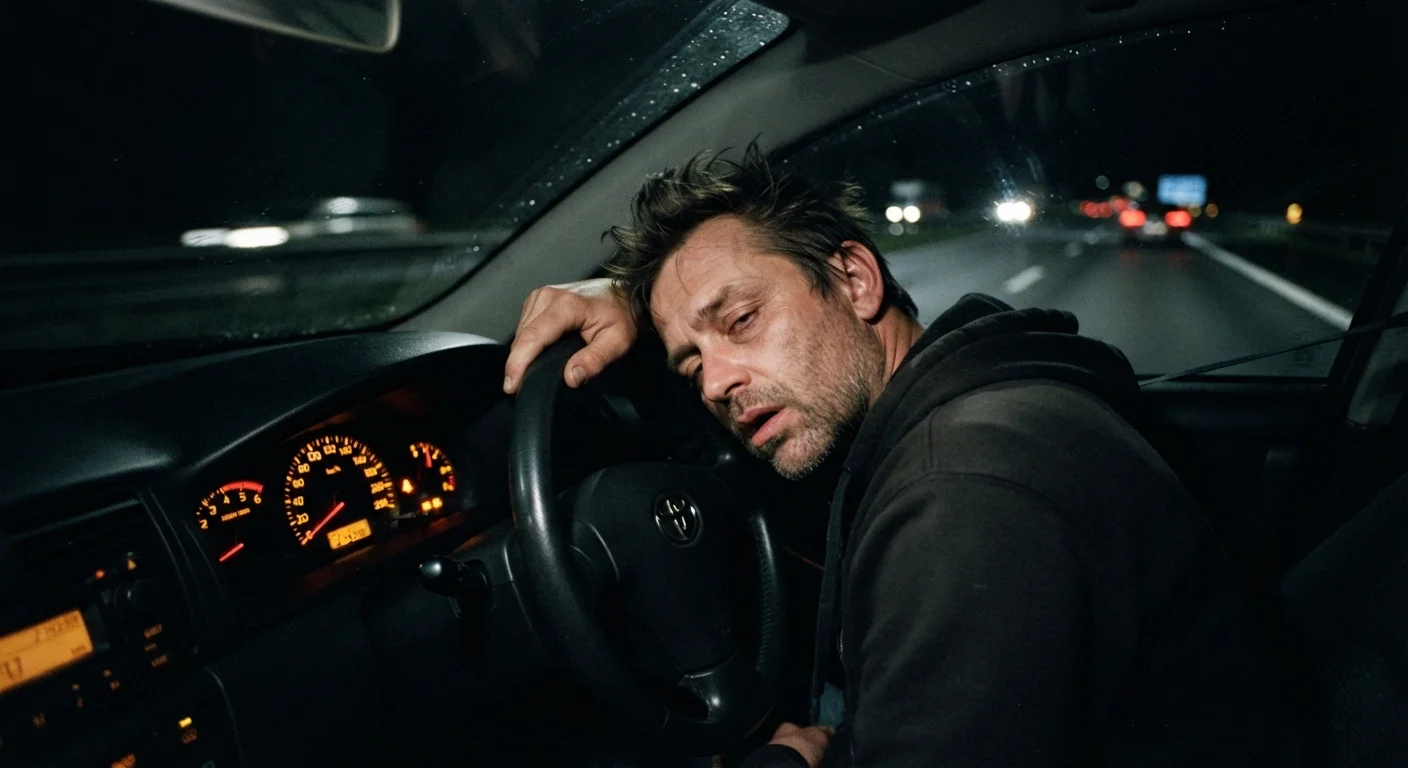
Drowsiness degrades reaction time, narrows attention, and increases the likelihood of microsleeps - brief, involuntary lapses in consciousness that can last several seconds. The risks of drowsy driving are well documented and often underappreciated. Strategies like taking a break every two hours and traveling with a passenger who can share driving duties reduce but do not eliminate this risk.
Microsleeps - involuntary lapses lasting seconds - can occur even when a driver feels only mildly tired.
Pedestrians and cyclists are dramatically harder to detect
In daylight, a pedestrian at a crosswalk is hard to miss. At night, a person in dark clothing may not be visible until they're within 50 feet of your vehicle - well inside your stopping distance at highway speeds. Cyclists present a similar challenge, especially on roads without dedicated lanes or adequate street lighting.
Urban environments add complexity: city driving demands include higher pedestrian density and more unpredictable crossing behavior. Scanning intersections deliberately, slowing through crosswalks, and avoiding the assumption that no one is there just because you can't see anyone are habits that pay dividends after dark.
A pedestrian in dark clothing may not be visible until they're within your minimum stopping distance.
Blind spots and lane changes become riskier without daylight context
During the day, peripheral motion, color contrast, and environmental context all help you sense nearby vehicles even before you check your mirrors. At night, those ambient cues shrink. You're more dependent on mirrors and direct checks - precisely when it's easier to miss a vehicle running without adequate lighting or tucked into your blind spot.
This is why the guidance in our article on why mirrors alone aren't enough applies with extra force after dark. Deliberate head checks and a cautious lane-change approach aren't just good practice - at night, they compensate for the environmental cues you've lost.
At night, the ambient cues that help detect nearby vehicles during the day largely disappear.
Distraction hits harder when your visual bandwidth is already strained
When visibility is reduced, your brain is working harder to process what's in front of you. Any additional cognitive load - a phone conversation, a navigation screen, background noise requiring attention - draws from the same limited resource pool. Research on cognitive distraction behind the wheel shows that even hands-free calls meaningfully reduce situational awareness. At night, when that awareness is already constrained by darkness, the cost of distraction rises further.
Treating nighttime driving as a higher-demand task - and managing in-car distractions accordingly - reflects an accurate understanding of the environment, not excessive caution.
Cognitive distraction compounds the visual strain of night driving, reducing situational awareness when you can least afford it.
Building Safer Night Driving Habits
Night driving doesn't require avoiding the road - it requires adjusting to the road. The challenges above share a common thread: they all narrow your margin for error. Increasing following distance, as explored in our guide on safe following distances, becomes even more important after dark when reaction time is under pressure from both visibility limits and fatigue.
Adjust Your Speed and Following Distance at Night
A practical rule of thumb: slow down enough after dark that your stopping distance stays within the range your headlights illuminate. Increase your following distance beyond the standard three-second rule, particularly on unlit roads or in unfamiliar areas. These two adjustments together give you more time to respond to hazards that appear with far less warning than they would in daylight.
If drowsiness is a factor, don't push through. Our companion piece on drowsy driving risks explains how impairment from fatigue mirrors alcohol's effect on judgment and reaction time. Pulling over when genuinely tired is a decision, not a weakness.
This article is for general informational purposes only. Always use your own judgment and observe all applicable traffic laws when driving.
The content on this site is for informational purposes only and is not a substitute for professional advice. Always consult a qualified professional for guidance specific to your situation.