

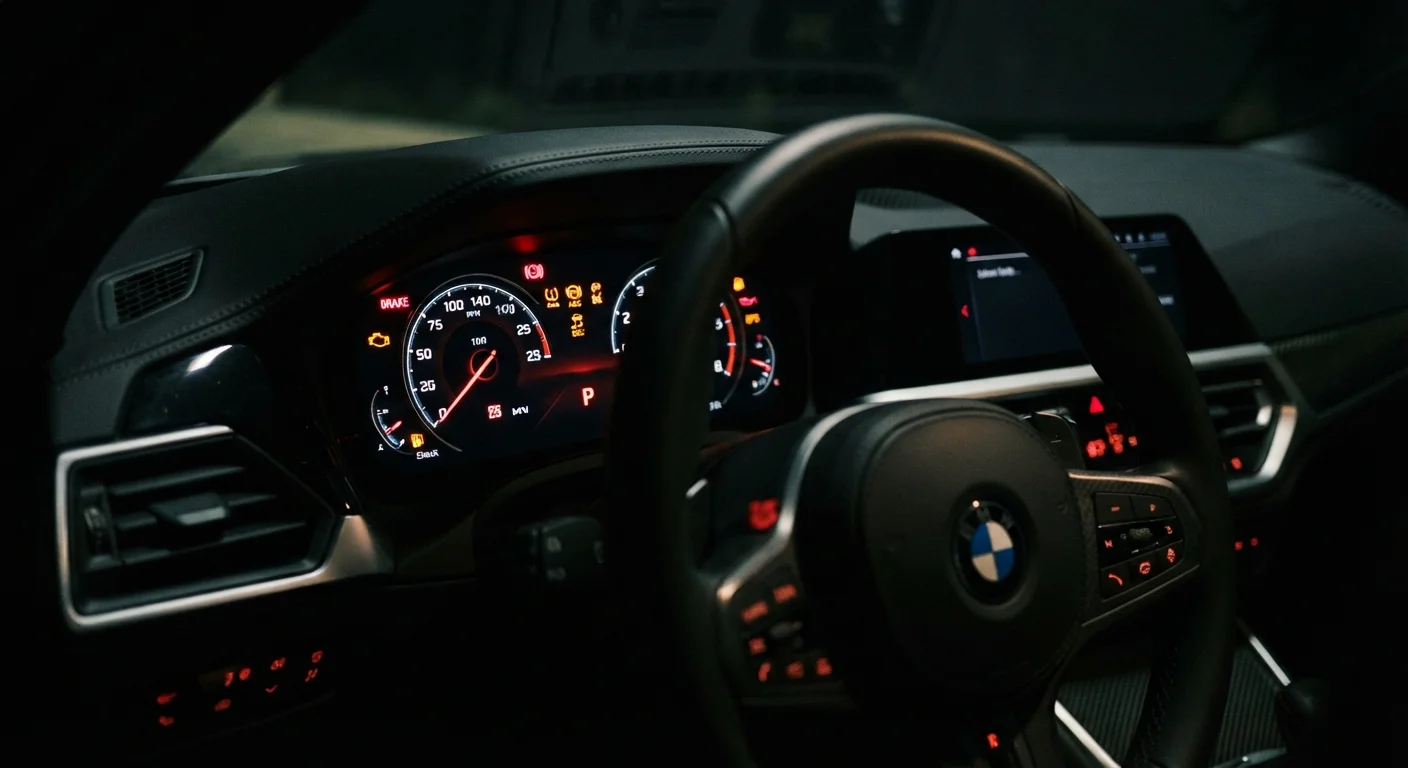
The Color Code: What Red, Amber, and Green Actually Mean
Modern vehicles use a standardized color system to signal urgency. Understanding the hierarchy before you even look at the symbol is the first step to responding correctly.
| Red light meaning | Stop or seek immediate attention |
| Amber light meaning | Service needed soon - monitor closely |
| Green/Blue light meaning | System active - informational only |
| TPMS requirement (US) | Mandatory on all new passenger vehicles since 2008 (NHTSA Federal Motor Vehicle Safety Standard No. 138) |
| OBD-II port requirement (US) | Required on all passenger vehicles sold since 1996 (US EPA and CARB mandate) |
| Number of potential check engine codes | Thousands of manufacturer-specific and generic codes (SAE International OBD-II standard) |
- Red indicates a serious or potentially dangerous condition. Pull over safely as soon as possible and investigate before driving further.
- Amber or yellow signals a system fault that needs attention soon - typically within the next day or two - but does not usually require you to stop immediately.
- Green or blue are status indicators, not warnings. They confirm that a system (like high beams or a turn signal) is currently active.
Some manufacturers also use white for informational messages. Check your owner's manual for model-specific variations, as color assignments are not universal across all makes.
The Lights That Demand Immediate Action
Certain warning lights indicate conditions that can cause engine damage, brake failure, or loss of vehicle control if ignored. If any of the following appear, treat them seriously.
OBD-II
On-Board Diagnostics, second generation - a standardized diagnostic port found on all US passenger vehicles sold after 1996. Mechanics and scan tools use it to read fault codes that trigger the check engine light.
TPMS
Tire Pressure Monitoring System. A federal requirement on US vehicles since 2008 that alerts the driver when one or more tires drops significantly below recommended pressure.
Fault Code
A numeric or alphanumeric code stored by the vehicle's computer when a sensor detects an out-of-range condition. Also called a DTC (Diagnostic Trouble Code), it helps mechanics pinpoint the source of a warning light.
Charging System
The combination of the alternator, battery, and voltage regulator that keeps a vehicle's electrical systems powered while the engine runs and maintains battery charge.
Idle
The condition of an engine running at its minimum stable speed, typically while the vehicle is stationary and not under load. Some warning lights only appear at idle due to low-speed pressure or sensor behavior.
- Oil Pressure Warning (red oil can symbol)
- Indicates critically low oil pressure. Driving with this illuminated can cause permanent engine damage within minutes. Pull over, turn off the engine, and check oil level only after the engine has cooled.
- Engine Temperature (red thermometer or wave symbol)
- The engine is overheating. Continued driving risks a warped cylinder head or blown head gasket - expensive failures. For early warning signs before the gauge spikes, see our guide on cooling system warning signs.
- Battery / Charging System (red battery symbol)
- The charging system is not maintaining battery voltage. You may have limited driving time before the vehicle loses power entirely - minimize electrical use and head to a shop promptly.
- Brake Warning Light (red circle with exclamation or "BRAKE" text)
- Could indicate low brake fluid, a hydraulic system fault, or that the parking brake is engaged. If the parking brake is off and the light remains on, have brakes inspected immediately.
Your Owner's Manual Is the Authoritative Source
Warning light symbols are largely standardized, but their exact meaning can vary by manufacturer and model year. Some vehicles use the same symbol for different systems, or add model-specific lights not covered in general guides. Keep your owner's manual in the glove compartment, or download a digital version from your manufacturer's website, so you can cross-reference any unfamiliar light on the spot.
Amber Lights: Attention Required, Not Panic
Amber lights flag conditions that won't necessarily strand you today but will worsen - and grow more expensive - if left unaddressed.
- Check Engine (engine outline symbol): This single light can represent dozens of different fault codes, from a loose gas cap to a misfiring cylinder. A mechanic or auto parts store can read the stored code with an OBD-II scanner. Before visiting a shop, our guide on reading a mechanic's estimate can help you understand the paperwork you'll receive.
- Tire Pressure (TPMS - horseshoe with exclamation mark): One or more tires is significantly under-inflated. Check pressures when tires are cold, and inflate to the specification found on the driver's door jamb sticker - not the number printed on the tire sidewall.
- Traction Control / Stability (car with skid lines): If illuminated and staying on (rather than flashing during a slippery moment), it may indicate a sensor fault in the stability control system.
- Transmission Temperature: Transmission fluid is overheating, often due to towing, heavy load, or low fluid levels. Allow the vehicle to cool and have fluid levels checked.
~1 in 3
US vehicles driving with a check engine light on
According to CarMD's Vehicle Health Index data, a significant share of vehicles on the road carry an active check engine light at any given time.
2008
Year TPMS became mandatory on all US new passenger vehicles
The NHTSA mandated Tire Pressure Monitoring Systems under Federal Motor Vehicle Safety Standard No. 138 to reduce tire-related crashes.
What Happens When You Ignore Warning Lights
Dismissing a warning light rarely makes the underlying problem disappear - it typically allows it to escalate. A check engine light triggered by a faulty oxygen sensor, left unaddressed, can eventually damage a catalytic converter, turning a straightforward repair into a significantly more expensive one.
Similarly, ignoring low tire pressure affects fuel economy, handling precision, and tire longevity all at once. Understanding how vehicle systems interact with road safety makes it easier to see why dashboard alerts are worth acting on promptly.
If a warning light appears and then disappears, document when it occurred and mention it at your next service appointment. Intermittent faults often have stored diagnostic codes even after the light clears. If you notice unfamiliar fluid under your parked car alongside a dashboard warning, the two symptoms together give a mechanic valuable diagnostic context.
This article is for general informational purposes only. Specific warning light meanings can vary by vehicle make, model, and year. Always consult your owner's manual and a qualified mechanic for diagnosis and repair decisions.
The content on this site is for informational purposes only and is not a substitute for professional advice. Always consult a qualified professional for guidance specific to your situation.