

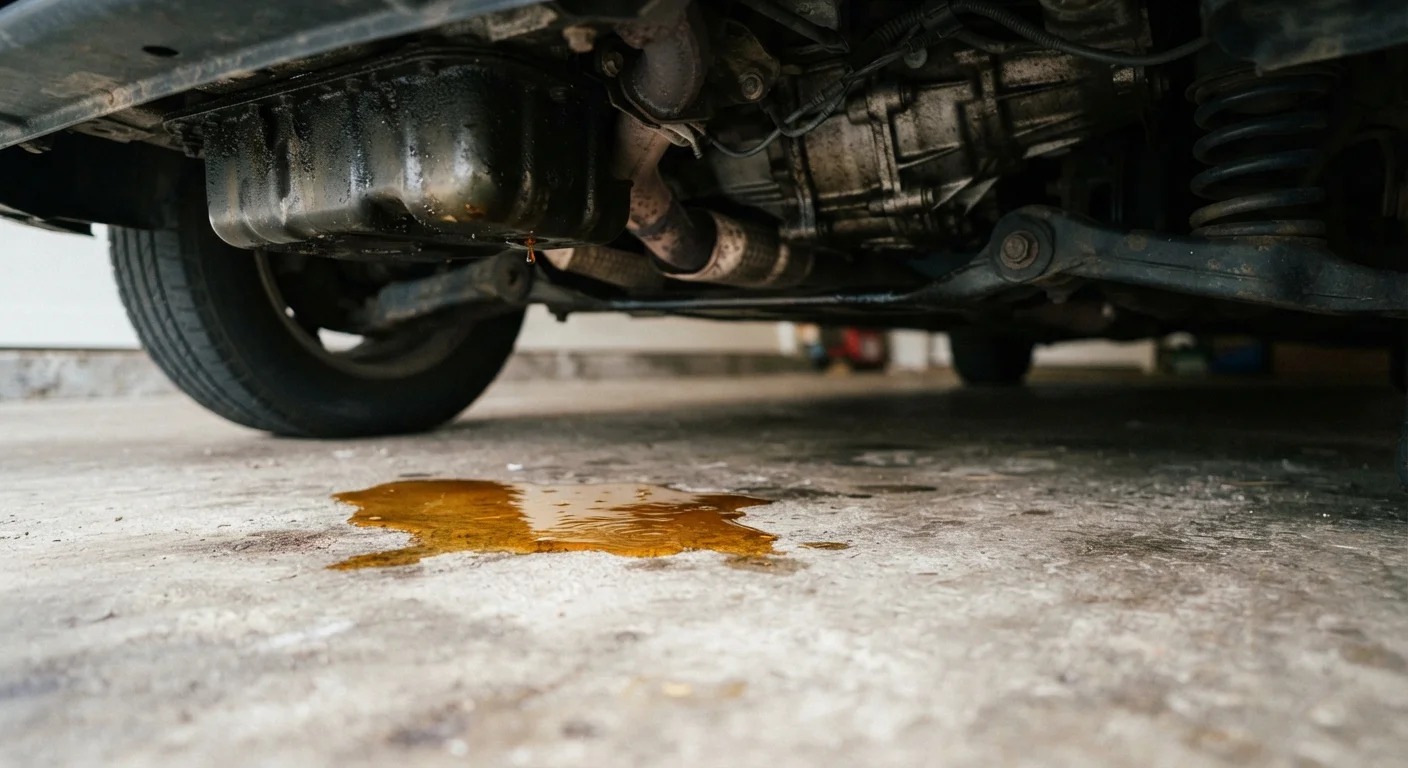
Start With Where the Puddle Forms
Location is your first diagnostic clue. The fluid dripping under your car roughly corresponds to what's directly above it. A puddle near the front center often points to engine oil, coolant, or power steering fluid. One forming under the middle of the car may suggest a transmission or fuel issue. A rear drip is more likely brake fluid or differential oil.
Before assuming the worst, check one more variable: is it actually water? If you've been running the air conditioning, a clear, odorless puddle under the front passenger area is almost certainly condensation draining from the AC evaporator. That's completely normal. Similarly, a small amount of water dripping from the exhaust pipe on a cold morning is just water vapor condensing as the engine warms up - not a sign of damage.
Identifying Fluids by Color and Consistency
Color and texture narrow the field considerably. Use a piece of white cardboard or a paper towel to capture a sample if the leak is active.
Coolant (antifreeze)
A fluid circulated through the engine and radiator to regulate operating temperature. It prevents both overheating in summer and freezing in winter. Common colors include green, orange, and pink depending on formulation.
Brake fluid
A hydraulic fluid that transfers force from the brake pedal to the brake calipers or drums. It is typically clear to light brown and is safety-critical - any leak should be inspected immediately by a qualified mechanic.
Transmission fluid
A lubricating and hydraulic fluid used in automatic and manual transmissions. It is typically red or reddish-brown and helps protect gears and enable smooth shifting.
AC condensation
Water that collects on the air conditioning evaporator core inside the car as warm, humid air is cooled. This water drains harmlessly under the vehicle and is not a sign of a leak.
- Clear or light blue: Likely windshield washer fluid. Low urgency unless the reservoir empties completely.
- Bright green, orange, or pink: Coolant (antifreeze). Sweet smell, slippery feel. Even a small coolant leak can lead to overheating - address it promptly. See signs your cooling system is struggling for early warnings.
- Light brown to black: Engine oil. Fresh oil is amber; older oil darkens. An oily residue with a slightly burnt smell beneath the engine bay warrants a mechanic visit.
- Red or dark reddish-brown: Transmission fluid or power steering fluid. Both are slippery and have a slightly sweet or petroleum smell.
- Clear to light brown, near a wheel: Brake fluid. This is a safety-critical fluid - even a minor brake fluid leak requires immediate professional inspection. Do not delay.
- Clear and fuel-smelling: Gasoline or diesel. Highly flammable. Do not start the vehicle; seek professional service right away.
~77%
Of vehicles on US roads have a maintenance issue
According to the Car Care Council, roughly three out of four vehicles inspected at national car care events have at least one maintenance or safety need.
#1
Most commonly neglected fluid check
Engine oil is the most frequently checked fluid by DIY drivers, yet low coolant is among the most common causes of roadside overheating incidents reported by motor clubs.
If your dashboard warning lights have already illuminated, that context matters too - decoded dashboard warning lights can help you cross-reference what you're seeing.
What to Do Next
Once you've made a reasonable identification, act accordingly. Not every leak demands emergency roadside action, but none should be permanently ignored.
- Check fluid levels: Under the hood, verify your oil, coolant reservoir, brake fluid reservoir, and transmission dipstick (if accessible). A noticeably low level confirms an active leak rather than an old drip or spill.
- Note the drip rate: A slow seep is different from an active stream. A few drops over several hours is far less urgent than a steady flow.
- Don't top off and ignore: Repeatedly refilling a leaking fluid delays diagnosis and can mask a worsening problem.
- Know when to stop driving: Brake fluid leaks, fuel leaks, and significant coolant loss are not drive-and-hope situations. Have the vehicle towed or inspected before further use.
When to Stop Driving Immediately
If you identify the leak as brake fluid, gasoline, or a rapidly growing coolant puddle, do not drive the vehicle further until it has been inspected by a qualified mechanic. Driving with compromised brakes or a fuel leak poses serious safety risks. When in doubt, have the vehicle towed rather than risking a breakdown or accident en route.
Moisture problems aren't unique to vehicles - if you've noticed unexplained dampness elsewhere, basement and crawl space moisture risks explores how moisture behaves in different contexts and what it can silently damage over time.
The content on this site is for informational purposes only and is not a substitute for professional advice. Always consult a qualified professional for guidance specific to your situation.