
What the Numbers on Your Speedometer Actually Mean
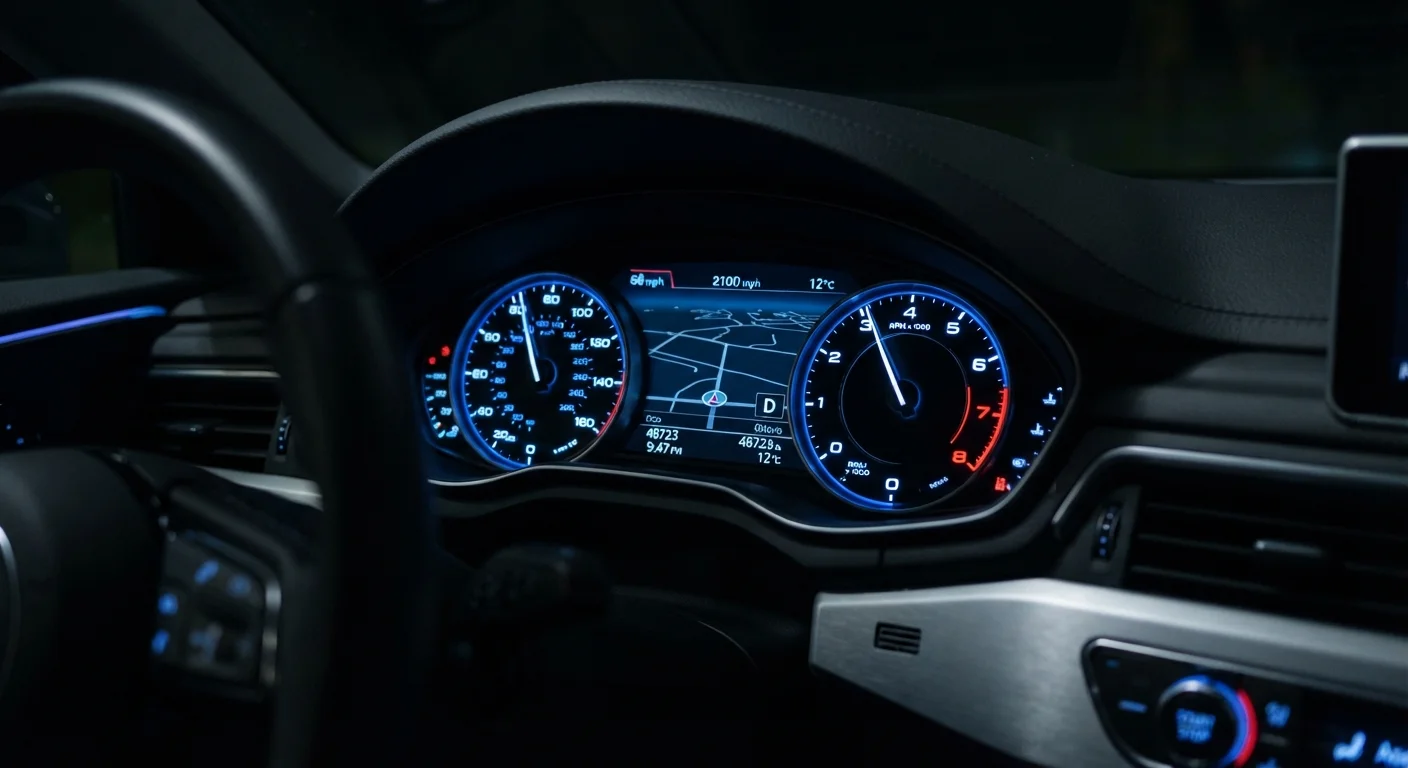
The numbers on your speedometer - typically ranging from 0 to 120 mph or higher on US vehicles - represent your current vehicle speed in miles per hour. At any given moment, the needle's position tells you exactly how fast you're moving relative to the ground.
Understanding that number matters because speed limits posted on US roads are legal maximums under ideal conditions, not targets. A sign reading 65 mph means you may not exceed 65 mph - it does not mean 65 mph is always safe. In heavy rain, dense fog, or stop-and-go traffic, traveling well below that posted limit is often the appropriate choice.
For a broader picture of how road signage communicates safety information, see our guide to US road signs, which covers how shapes, colors, and numbers work together to keep drivers informed.
~29%
Traffic fatalities involving speeding
The National Highway Traffic Safety Administration (NHTSA) consistently reports that speeding is a factor in roughly 29% of all US traffic fatalities annually.
4x
Stopping distance increase when speed doubles
Due to the physics of kinetic energy, doubling vehicle speed quadruples the distance required to bring a vehicle to a complete stop under typical conditions.
Speed, Stopping Distance, and Why They're Directly Linked
One of the most underappreciated aspects of your speedometer reading is what it implies about your stopping distance. Physics dictates that stopping distance increases with the square of your speed - meaning doubling your speed quadruples the distance needed to stop. At 30 mph on dry pavement, a typical passenger vehicle may need roughly 75 feet to come to a complete stop. At 60 mph, that figure more than doubles.
This relationship is why engineers and safety advocates emphasize that even modest speed reductions have meaningful safety benefits. Driving 5 mph under a highway speed limit during adverse weather conditions is not timid - it's informed.
Match Your Speed to Conditions, Not Just the Sign
A posted speed limit reflects safe travel under normal, dry conditions with good visibility. Whenever conditions deteriorate - rain, fog, ice, heavy traffic - reduce your speed below the posted limit accordingly. Emergency stopping distances increase significantly even with modest speed increases, so a conservative cushion can be the difference between a close call and a collision.
Your tires are a critical variable in this equation. A speedometer reading doesn't account for tire wear or inflation, both of which affect how quickly your vehicle can shed speed. Our article on tire pressure and road safety explains how PSI affects handling and braking in practical terms.
The Tachometer: Your Engine Speed Gauge Explained
Many drivers glance at the tachometer - the RPM (revolutions per minute) gauge usually positioned next to the speedometer - without fully understanding what it measures. The tachometer does not display vehicle speed. It displays how fast your engine's crankshaft is spinning.
In everyday driving, the tachometer helps you use your engine efficiently. In a manual transmission vehicle, it guides gear shifts: revving too high wastes fuel and stresses the engine, while lugging at too-low RPMs strains it differently. In automatic vehicles, the tachometer can reveal when the transmission is working harder than normal - for example, while towing or climbing a steep grade.
The red zone on the tachometer marks the engine's RPM limit. Sustained operation in this range risks engine damage. Routine driving should keep the needle well within the normal operating band. If you notice unusual readings, see our dashboard warning lights guide for related instrument cluster signals that may warrant attention.
Speedometer vs. Tachometer: A Quick Distinction
The speedometer measures how fast your vehicle is moving (mph). The tachometer measures how fast your engine is spinning (RPM). Both are displayed on the instrument cluster, but they provide fundamentally different information. Confusing the two is common among newer drivers, but understanding each gauge's purpose helps you interpret your vehicle's behavior more accurately.
Putting It All Together: Driving to Conditions, Not Just the Number
Safe driving means using your speedometer as one input among several - not as the sole arbiter of appropriate speed. Posted limits, weather, visibility, road surface, traffic density, and your vehicle's condition all factor into what speed is genuinely safe at any given moment.
Keeping your vehicle in sound mechanical condition also ensures the speed displayed on your speedometer translates accurately to your stopping and handling capability. Checking your tire sidewall ratings and maintaining your vehicle per manufacturer guidelines - covered in our car maintenance hub - gives you confidence that what your gauges show reflects real-world performance.
Ultimately, the speedometer is a tool for self-awareness on the road. Using it well means reading the number, understanding what it demands of your vehicle's braking and handling systems, and adjusting for the conditions around you.
Frequently Asked Questions
Most manufacturers intentionally calibrate speedometers to read slightly higher than actual vehicle speed - typically within a few mph. This conservative approach means drivers are less likely to unknowingly exceed speed limits. GPS-based speed readings are generally more accurate because they measure real-world ground speed.
The red zone on a tachometer indicates RPM levels where engine stress becomes damaging. Operating the engine in the red zone for extended periods can cause mechanical wear or failure. Under normal driving, shifting gears before reaching the red zone is standard practice.
In most US states, driving unreasonably slowly in a way that impedes traffic can be a traffic violation. However, slowing down appropriately in hazardous conditions - rain, fog, construction zones - is both legal and expected. The posted limit is a maximum, not a minimum.
Yes. Posted signs in school zones and construction zones indicate temporary, reduced speed limits that replace the standard limit while those conditions are active. Fines for speeding in these zones are often higher than standard penalties. Always watch for posted signs when approaching these areas.
Yes. Tire condition directly affects braking distance, meaning the speed that was safe to stop from yesterday may not be safe today on degraded tires. Maintaining proper tire condition and inflation is essential to translating your speedometer reading into actual road safety.
The content on this site is for informational purposes only and is not a substitute for professional advice. Always consult a qualified professional for guidance specific to your situation.