

Start here
What a Repair Estimate Actually Is
Next
Breaking Down the Line Items
Then
Common Jargon Decoded
When you're ready
Questions Worth Asking Before You Sign
What a Repair Estimate Actually Is
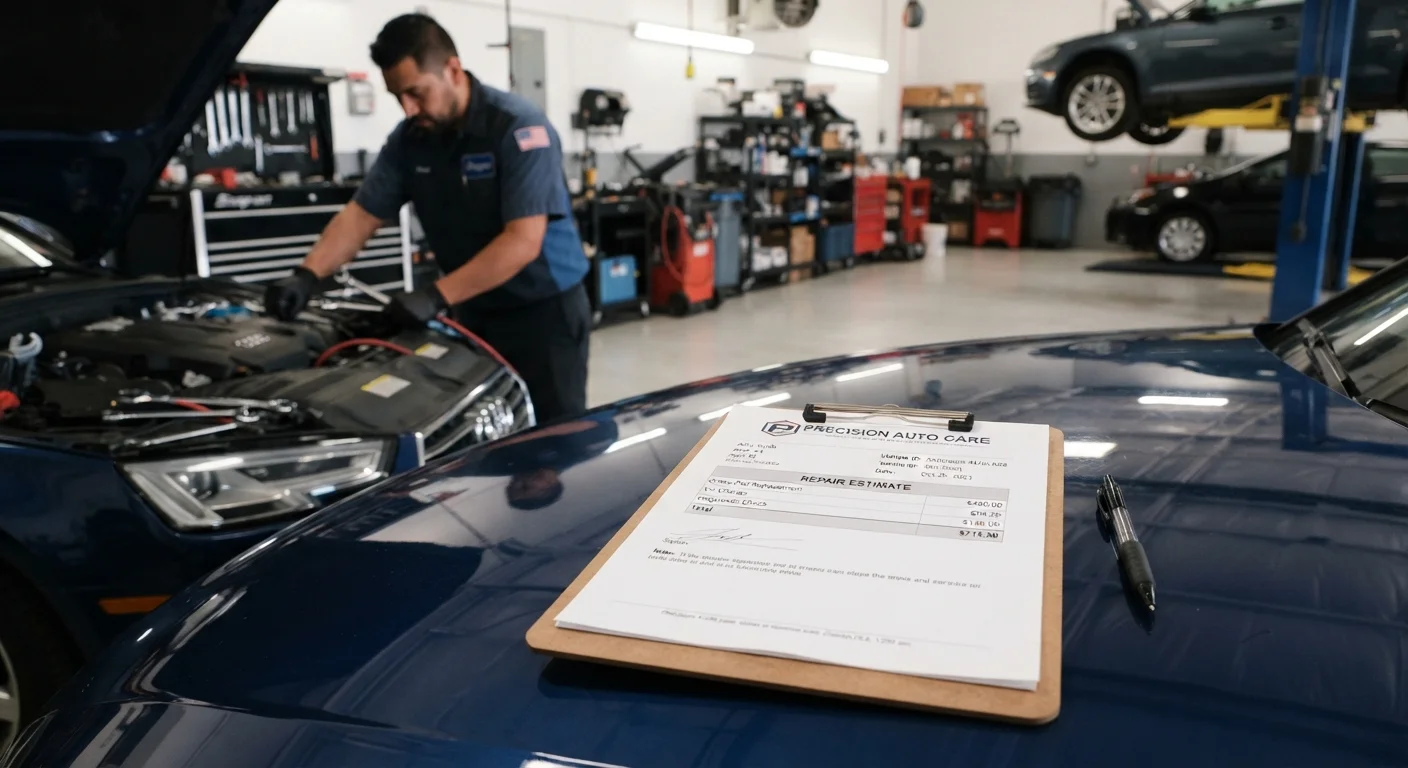
A mechanic's estimate is a documented breakdown of the expected costs to diagnose or repair your vehicle. It is not a final invoice - it is a starting point for an informed conversation between you and the shop. Most states require shops to provide a written estimate before work begins, and to get your authorization before exceeding the quoted amount by more than a specified margin.
Estimates typically arrive in one of two forms: a written quote prepared before any disassembly, based on the described symptoms, or a post-diagnostic estimate generated after a technician has inspected the vehicle. The second type is generally more accurate because it reflects what was actually found. Understanding this distinction helps set realistic expectations from the start.
For a broader look at how hidden costs accumulate across purchases, see how extra charges can quietly inflate what you pay.
OEM Parts
Parts made by or for the original vehicle manufacturer. They are designed to match factory specifications exactly.
Aftermarket Parts
Parts made by third-party manufacturers rather than the original automaker. Quality and fitment can vary widely between suppliers.
Flat Rate Labor
A billing method where labor is charged based on a published standard time for a given job, not the actual time the technician spent.
Core Charge
A refundable deposit collected when you buy a remanufactured part, returned to you when the old part is given back to the supplier.
Sublet Work
Repairs a shop sends to an outside specialist because it lacks the equipment or certification to do that work in-house.
Diagnostic Fee
A charge for the technician's time and tools used to identify what is wrong with your vehicle before any repair begins.
Breaking Down the Line Items
Nearly every repair estimate organizes charges into three categories: parts, labor, and shop fees. Knowing what each covers prevents confusion when totals don't match your mental math.
- Parts: The cost of physical components - sensors, belts, filters, gaskets, and so on. Parts may be listed with a markup above wholesale cost, which is standard practice. The estimate should specify whether parts are OEM (Original Equipment Manufacturer) or aftermarket.
- Labor: Charged as a flat rate in hours multiplied by the shop's hourly rate. A job might be billed as 1.5 labor hours at $120/hr regardless of whether the tech finishes in 45 minutes or two hours. This flat-rate system comes from published labor time guides used industry-wide.
- Shop supplies or environmental fees: A line item covering incidentals like rags, cleaning solvents, or hazardous waste disposal for fluids. These are often a small percentage of the total but should appear on the estimate - not surface for the first time on the final bill.
Always Request a Written Estimate
A verbal quote is difficult to dispute later. Request a printed or emailed estimate before any work begins, and keep a copy. If the shop revises the estimate after a teardown, ask for the updated version in writing before authorizing additional work.
If any line reads only as a lump sum with no breakdown, ask the service advisor to itemize it. Transparency at the estimate stage protects both parties.
Common Jargon Decoded
Repair paperwork leans heavily on industry shorthand. These are the terms most likely to appear on a standard estimate:
OEM Parts
Parts made by or for the original vehicle manufacturer. They are designed to match factory specifications exactly.
Aftermarket Parts
Parts made by third-party manufacturers rather than the original automaker. Quality and fitment can vary widely between suppliers.
Flat Rate Labor
A billing method where labor is charged based on a published standard time for a given job, not the actual time the technician spent.
Core Charge
A refundable deposit collected when you buy a remanufactured part, returned to you when the old part is given back to the supplier.
Sublet Work
Repairs a shop sends to an outside specialist because it lacks the equipment or certification to do that work in-house.
Diagnostic Fee
A charge for the technician's time and tools used to identify what is wrong with your vehicle before any repair begins.
- R&R (Remove and Replace)
- The tech removes the old part and installs a new one - straightforward swap work.
- R&I (Remove and Install)
- The part is removed temporarily to access something behind it, then reinstalled. You pay labor but not a new part.
- Diagnostic / Diag Fee
- The charge for identifying what's wrong. Some shops credit this fee toward the repair cost if you authorize the work.
- Sublet
- Work the shop sends to a specialist (like a transmission rebuilder or alignment facility). The shop may mark up sublet labor.
- Core Charge
- A refundable deposit on parts that can be remanufactured - alternators and starters often carry one. You get it back when the old part is returned.
Familiarity with terminology also helps when reading other documents. If you find specs and technical language confusing in other contexts, decoding numbers and specs in plain language follows a similar approach.
Questions Worth Asking Before You Sign
An estimate is an opening, not a closed door. Asking the right questions before authorizing work can save you from unexpected costs and help you make a genuinely informed decision.
- Are these parts OEM or aftermarket? Either can be appropriate depending on the vehicle's age and your priorities, but you deserve to know which you're paying for.
- What happens if the repair reveals additional problems? Ask whether the shop will contact you before proceeding with work beyond the estimate scope. In most states they're required to, but confirming this expectation upfront is good practice.
- Is the diagnostic fee applied to the repair? Many shops credit it; some do not. Know before the tech touches the car.
- What warranty comes with parts and labor? Repair warranties vary widely. Some shops offer 12 months or 12,000 miles; others offer less. Get the terms in writing. For more on how to evaluate warranty language, understanding warranty and coverage terms covers the key questions to ask.
Don't Approve Work Based on Verbal Quotes Alone
If a service advisor calls with an updated cost after disassembly, ask for the revised estimate sent by email or text before you say yes. Verbal approvals can be difficult to verify if a billing dispute arises later. Many state consumer protection laws require written authorization for significant cost increases.
For tasks you're considering handling yourself before visiting a shop, what everyday drivers can safely do at home outlines which maintenance jobs are genuinely manageable without a professional and which carry real risks.
This article is for general informational purposes only and does not constitute legal or professional automotive advice. Regulations regarding repair estimates vary by state. Consult your state's consumer protection agency or a qualified professional for guidance specific to your situation.
Frequently Asked Questions
In most US states, a written estimate creates an obligation for the shop to notify you and get approval before exceeding it by more than a set percentage. Rules vary by state, so check your local consumer protection guidelines. Always get your estimate in writing before work begins.
Flat rate labor means the shop charges a fixed number of hours for a job based on an industry time guide - regardless of how long it actually takes. This is standard practice across most repair shops in the US.
Many shops allow customer-supplied parts, but some decline or will not warranty labor on parts they did not source. Ask the shop directly before purchasing parts separately, since a failed customer-supplied part may still cost you additional labor to replace.
A diagnostic fee covers the technician's time to identify the problem using tools and testing. Some shops waive it if you proceed with the repair; others charge it regardless. Confirm the shop's policy upfront to avoid an unexpected charge.
OEM (Original Equipment Manufacturer) parts are made by or for the vehicle's manufacturer, while aftermarket parts come from third-party suppliers. Both can be quality options, but fitment and warranty coverage may differ. Ask which type is being used on your vehicle.
Estimates are based on visible symptoms; a teardown can reveal additional damage not apparent before disassembly. Shops are generally required to contact you for approval before proceeding with unanticipated work that significantly increases the cost.
The content on this site is for informational purposes only and is not a substitute for professional advice. Always consult a qualified professional for guidance specific to your situation.