

Why Early Detection Matters
Engine overheating is one of the most damaging things that can happen to a vehicle. Sustained high temperatures can warp cylinder heads, blow head gaskets, and seize engine components - repairs that routinely run into thousands of dollars. The frustrating reality is that most drivers don't notice trouble until the temperature gauge climbs into the danger zone, by which point the system has often already been under stress for some time.
Your cooling system communicates through a range of subtle cues long before that needle moves. Learning to read those signals - coolant levels, unusual smells, sounds under the hood, and heater behavior - gives you the opportunity to intervene early, when fixes are typically far simpler and less expensive. See our dashboard warning lights guide for context on how instrumentation fits into the broader picture of vehicle health monitoring.
A Sweet or Syrupy Smell Near the Engine
Coolant contains ethylene glycol, which has a distinctively sweet odor. If you notice a sugary, almost maple-like smell coming from the engine bay - especially after driving - it often indicates a coolant leak somewhere in the system. The leak may be external (visible on the ground or on hoses) or internal, such as a failing head gasket allowing coolant to seep where it shouldn't.
Don't dismiss this smell as harmless. Even a small coolant leak reduces the system's ability to regulate engine temperature effectively over time.
A sweet smell near the engine is a classic early sign of a coolant leak.
Low or Disappearing Coolant Level
Coolant doesn't evaporate under normal conditions. If you check your coolant reservoir (always when the engine is cold) and notice the level has dropped noticeably since the last time you looked, the system is losing fluid somewhere. This might be an external leak from a cracked hose, a loose clamp, or a failing radiator - or an internal leak that burns coolant through the combustion chamber.
Repeatedly topping off coolant without finding the source is treating a symptom, not a cause. A pressure test from a mechanic can locate leaks that aren't visually obvious.
Coolant doesn't simply evaporate - a dropping level almost always means a leak exists.
The Heater Blowing Cold Air
Your car's heater uses engine coolant as its heat source. When the heater suddenly blows lukewarm or cold air despite the engine being fully warmed up, it can indicate a low coolant level, a blocked heater core, or air trapped in the cooling system. Each of these conditions also affects how effectively coolant circulates through the engine itself.
This symptom is easy to mistake for a simple comfort issue, but it's often one of the earliest signs that coolant flow is compromised.
Cold air from a warm engine's heater often points to a coolant circulation problem.
A Fluctuating or Slowly Climbing Temperature Gauge
Most temperature gauges sit steadily near the midpoint once the engine reaches operating temperature. If yours creeps higher than usual, dips back down, then climbs again - or gradually trends higher over multiple trips - the cooling system is working harder than it should. Common causes include a sticking thermostat, a partially clogged radiator, or a water pump that isn't circulating coolant efficiently.
A gauge that climbs when you're idling but drops when you accelerate often points to a failing radiator fan. Either way, an intermittent pattern warrants attention before it becomes a consistent one.
A temperature gauge that wanders above its normal midpoint is a critical early warning sign.
Visible Steam or Coolant Residue Around the Engine
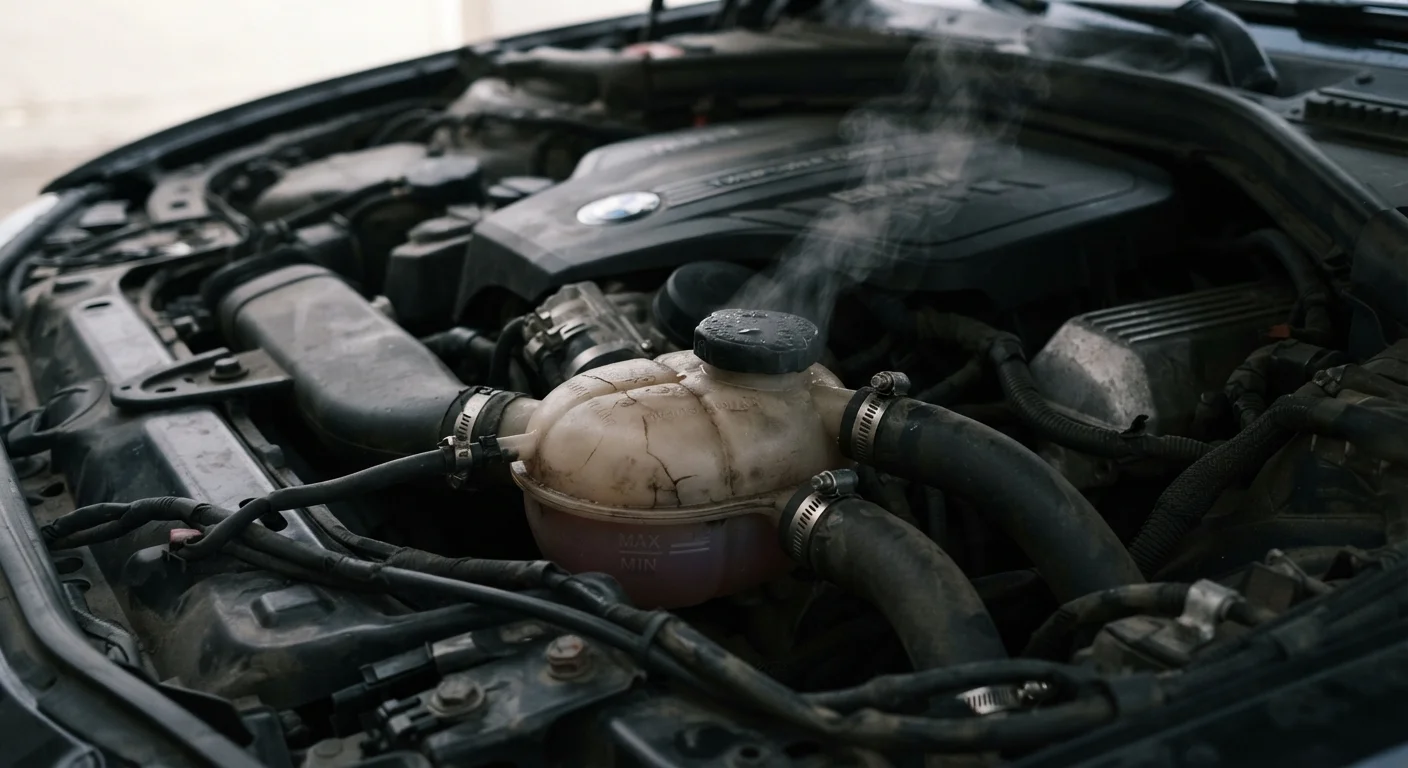
White steam or vapor coming from the engine bay - distinct from normal exhaust condensation on a cold morning - suggests coolant is contacting hot engine surfaces. Dried coolant residue often appears as a crusty, whitish or greenish deposit around hose connections, the radiator cap, or along the engine block seams.
These deposits are evidence of past or ongoing leaks. Even if the leak seems minor, residue buildup near electrical components or belts can create secondary problems over time.
Coolant residue around hose connections or the radiator cap is evidence of an active or recent leak.
White Smoke From the Exhaust
A small amount of white vapor from the exhaust on a cold start is usually condensation burning off - normal and harmless. Persistent white smoke that continues after the engine warms up, however, is a different matter. This often signals that coolant is entering the combustion chamber, typically through a failing head gasket or a cracked engine block. You may also notice a sweet smell from the exhaust pipe itself.
This is one of the more serious warning signs on this list. If white exhaust smoke is consistent and accompanied by other symptoms, a mechanic should inspect the vehicle promptly.
Persistent white exhaust smoke after warm-up is a serious indicator of internal coolant loss.
When to Act and When to Call a Professional
Not every cooling system symptom means you need to pull over immediately, but none of them should be ignored. A heater that blows cold air or a slightly fluctuating gauge might give you a short window to reach a shop safely. However, visible steam from the hood, a sharp drop in coolant level, or any gauge reading approaching the red zone are reasons to stop driving as soon as it is safe to do so - continuing to drive an overheating engine can cause irreversible damage within minutes.
Make Coolant Checks Part of Your Routine
Checking your coolant level takes less than a minute and should be part of a regular under-hood inspection - every few weeks or before any long road trip. Look at the reservoir markings with the engine cold, and note the color: fresh coolant is typically bright green, orange, or pink depending on the type. Murky, rusty, or oily-looking coolant suggests it's due for a flush or that contamination may be present.
For seasonal context on how temperature extremes stress your cooling system differently, seasonal vehicle maintenance guidance is worth reviewing before summer heat or winter cold sets in. And if you notice unfamiliar fluid under your parked car, learn how to identify it by color and location before assuming the worst.
This article is for general informational purposes only. Cooling system issues vary by vehicle make, model, and condition. Consult a qualified mechanic for diagnosis and repair guidance specific to your vehicle.
The content on this site is for informational purposes only and is not a substitute for professional advice. Always consult a qualified professional for guidance specific to your situation.