

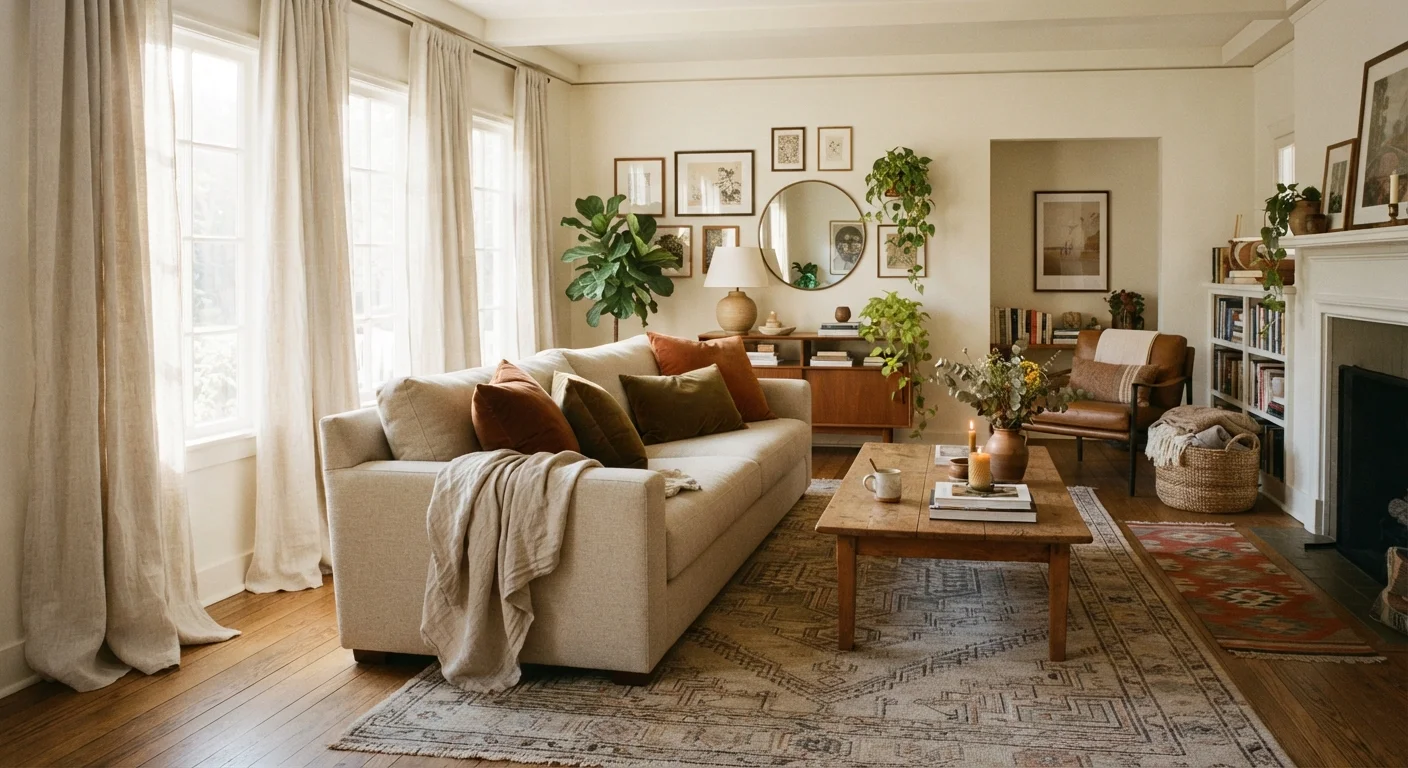
Why Textile Layering Works
Layering textiles is one of the most effective - and most accessible - tools in interior design. Unlike paint or furniture, fabrics can be introduced gradually, repositioned, and swapped out with minimal cost or commitment. More importantly, they do something no hard surface can: they add warmth, acoustic softness, and tactile comfort that make a room feel genuinely lived-in.
The principle draws on the same logic discussed in core interior design concepts - specifically, the idea that a room needs contrast in scale, surface, and material to feel balanced. When every surface is smooth and hard, a room looks sterile. When textiles are stacked thoughtfully - a nubby rug beneath a velvet sofa draped with a loosely woven throw - the eye has somewhere to travel and the body has something to enjoy.
65%
Homeowners prioritizing comfort in decor
A Houzz survey found that comfort - including soft furnishings - consistently ranks among the top priorities for US homeowners undertaking interior updates.
3-5 layers
Recommended textile layers per room
Interior design educators commonly recommend between three and five distinct textile elements to achieve depth without visual overload in a standard living or bedroom space.
Start From the Ground Up: Rugs
A rug is always the first textile decision in a room because it defines zones, anchors furniture, and sets the tonal foundation everything else responds to. As a rule of thumb, size up rather than down: a rug that's too small floats awkwardly and makes a room feel disconnected. In a living room, all front legs of seating should sit on the rug; in a bedroom, the rug should extend at least 18-24 inches beyond each side of the bed.
For layering specifically, consider placing a smaller, higher-texture rug - a Moroccan shag, a jute runner, or a flatweave - on top of a larger, lower-pile foundation rug. This technique adds visual interest without requiring a single expensive statement piece. Natural fiber rugs (sisal, jute, seagrass) work particularly well as base layers because their neutral tone and rough texture contrast with almost everything placed above them.
Try the Layered Rug Technique First
If you're new to textile layering, a layered rug arrangement is the lowest-risk place to start. Place a smaller accent rug over a larger neutral base rug to instantly add dimension. Because both rugs rest on the floor, the combination is easy to adjust or undo without any lasting commitment to the room's design.
Upholstery, Throws, and Cushions
Once the floor is anchored, move to upholstered pieces. Sofa and chair fabric should generally be in the mid-range of your texture spectrum - substantial enough to hold its form, but not so dominant that it overpowers the cushions and throws you'll add on top.
Throws are the most flexible layer: they can be folded over a sofa arm, draped casually across a chair, or stacked in a basket. Choose throws in fabrics that differ meaningfully from your upholstery - a linen sofa benefits from a chunky knit throw, while a bouclé chair looks interesting paired with a lightweight cotton or silk-blend blanket.
Cushions work best in odd numbers (three or five per sofa) and benefit from variation in size as well as texture. A 22-inch square velvet cushion anchors the arrangement; a 16-inch lumbar in a contrasting weave adds scale variation; a round or bolster cushion in a third texture breaks the expected pattern. Keep color relationships intentional - referencing the principles of color theory can help you combine hues without the arrangement looking accidental.
When building a cushion arrangement, choose fabrics first and colors second. A mix of velvet, linen, and a woven texture in the same color family reads as sophisticated layering rather than a mismatched pile.
Texture variation keeps the eye engaged even when a palette is tightly controlled, creating depth without introducing color risk.
Fold throws in thirds lengthwise before draping them - this creates a more intentional, tailored look than a casual toss and prevents them from slipping off furniture within hours.
The folded drape mimics the way professional stylists and interior photographers position soft furnishings for a polished but relaxed finish.
Window Treatments as a Textile Layer
Curtains are often treated as an afterthought, but they occupy a significant portion of a room's visual field and represent a full textile layer in their own right. Sheer panels filter light and soften a room's perimeter without blocking the view; heavier lined drapes add thermal mass and a sense of enclosure. Layering both - sheers behind heavier panels - gives you flexible light control and genuine textural contrast.
Hang curtain rods close to the ceiling and extend them 6-12 inches beyond the window frame on each side. This makes windows appear taller and wider, an especially useful technique in smaller apartments and compact spaces. For further guidance on choosing between curtains and blinds - and when to combine them - see our curtains vs. blinds comparison.
Avoid Flammable Fabric Near Heat Sources
When layering curtains or drapes near radiators, fireplaces, or heating vents, check that fabrics are rated appropriate for proximity to heat. Lightweight sheers in particular can be a fire risk if placed too close to an open flame or uncovered heating element. Always maintain the clearance distances recommended by the appliance or fixture manufacturer.
Balancing Texture, Pattern, and Weight
The risk in layering is visual noise. The goal is variety with coherence - each textile should be distinct enough to register as its own element, but related enough to the others that the room reads as intentional rather than chaotic.
A practical framework: vary texture freely (smooth, rough, nubby, sheer, plush), but limit pattern. If your rug has a strong geometric pattern, keep cushion fabrics mostly solid or subtly textured. If your curtains carry a large-scale print, the rug and cushions should be quieter. This is the same compositional logic that makes eclectic interiors feel cohesive rather than chaotic - contrast is controlled, not random.
Weight also matters. Balance heavy, dense fabrics (wool, velvet, canvas) with lighter, airier ones (linen, muslin, silk blends). A room filled entirely with heavy textiles will feel oppressive; all lightweight fabrics can feel insubstantial and cold.
Pattern Scale Is a Relative Concept
What counts as 'large scale' depends on the size of the room and the piece the pattern is on. A bold print that reads as large on a cushion may read as medium-scale on a floor-length curtain panel. When in doubt, lay fabric samples together in the actual space before committing - colors and pattern sizes look different under different lighting conditions.
Common Mistakes and How to Avoid Them
The most frequent error is using too many competing patterns at the same scale. Patterns work together when they vary in scale - a large floral, a medium stripe, and a small geometric can coexist; three medium-scale prints typically fight for attention.
A close second is under-sizing rugs and curtains. Both elements need to be generous to function as anchors. A small rug and short curtains undermine even a well-composed textile arrangement by making the room feel unfinished.
Finally, avoid neglecting seasonal rotation. Textiles are one of the few design elements that can be practically changed with the season - lighter linens and cottons in spring and summer, heavier wools and velvets in fall and winter. This keeps a room feeling current and well-tended without any permanent changes.
Don't Skip Care Label Research
Layering works best when every textile can actually be maintained. Before purchasing throws, cushion covers, or rugs, confirm the care requirements - some wool and silk blends are dry-clean only, which increases long-term cost significantly. In high-traffic rooms or homes with pets and children, prioritize machine-washable fabrics for any layer that will need frequent cleaning.
The content on this site is for informational purposes only and is not a substitute for professional advice. Always consult a qualified professional for guidance specific to your situation.