

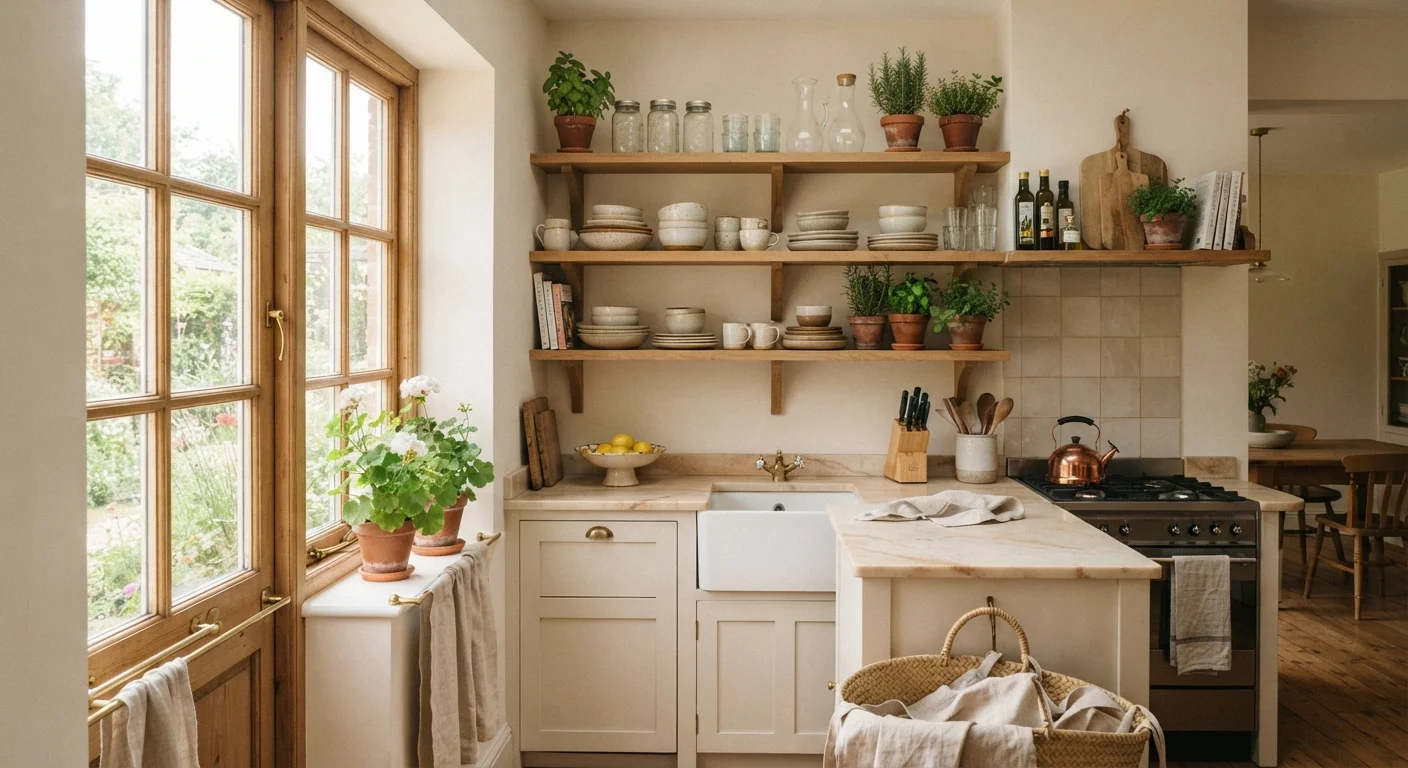
Our Verdict
Open shelving delivers genuine visual appeal and a sense of openness, but it demands more ongoing attention than closed cabinetry. The difference between a kitchen that looks like a design magazine and one that looks cluttered largely comes down to daily habits. If easy aesthetics and low-effort storage are priorities, open shelves may frustrate more than they inspire.
Homeowners who enjoy curating a display, cook with a limited and well-organized set of dishes, and are willing to clean shelves and their contents regularly.
Why Open Shelving Keeps Winning Over Homeowners
Open kitchen shelving has sustained its popularity well beyond a passing trend. The appeal is straightforward: removing cabinet doors visually expands a kitchen, invites personality into an otherwise utilitarian space, and makes everyday items easier to grab without opening and closing doors. For smaller kitchens especially, open shelves can reduce the visual weight of upper cabinetry and make walls feel taller. See how similar thinking applies in compact apartment design.
There's also a practical argument. When everything is visible, you're less likely to lose track of what you own, and guests can find a glass without asking. Some homeowners find that visibility actually encourages them to keep things tidier - a kind of enforced discipline that closed cabinets never provide.
Makes small kitchens feel more open and airy
Removing upper cabinet doors reduces visual bulk, helping narrow or low-ceilinged kitchens feel less closed-in. This effect is especially noticeable when shelves are painted the same color as the wall behind them.
Everything is visible and easy to access
Frequently used dishes, glasses, and pantry staples are reachable without opening doors. This can genuinely speed up meal prep and reduce the frustration of hunting through deep cabinets.
Encourages intentional, curated ownership
When storage is visible, most homeowners naturally keep fewer, more cohesive items. Over time, this can reduce kitchen clutter more effectively than adding more closed storage.
Lower upfront cost than full cabinet replacement
Floating shelves typically cost significantly less than installing new upper cabinets. This makes them an accessible option for renters (where removable hardware is used) and budget-conscious homeowners alike.
Easy to adapt and restyle over time
Unlike fixed cabinetry, open shelves can be reconfigured, swapped out, or removed with relatively little effort, making them a lower-commitment design choice.
The Daily Reality: What Open Shelves Actually Demand
Design photos almost never show grease film. In an active cooking kitchen, airborne oil particles settle on surfaces - including every dish, glass, and decorative object on your shelves. Depending on how often you cook and your ventilation setup, items may need wiping down weekly. Dust compounds this: even in kitchens where frying is rare, open shelves collect fine particles faster than interior cabinet surfaces ever would.
Organization is the other daily variable. Unlike a cabinet where imperfect stacking disappears behind a door, open shelving puts every misaligned mug on display. Homeowners who thrive with open shelves tend to own fewer kitchen items - a deliberate, curated collection rather than a full cabinet's worth accumulated over years. If your current cabinets are stuffed, open shelves will expose that immediately.
Grease and dust accumulate on exposed items
In an active cooking kitchen, airborne grease settles on everything within reach of the stove. Items left unwashed for a week or two can develop a tacky film that requires more than a quick rinse.
Clutter and disorganization are always on display
There is nowhere to hide a messy stack of mismatched containers or a collection of rarely-used appliances. Open shelves reward discipline and penalize the normal entropy of a busy household.
Not ideal for large or mismatched dish collections
Homeowners with varied, utilitarian kitchenware often find open shelves make the space look chaotic rather than styled. Achieving visual cohesion typically requires editing down or replacing items.
Items near the stove may sustain grease or heat damage
Objects stored close to cooking zones - even decorative ones - are exposed to steam, splatter, and heat cycling that can fade finishes, warp wood, or dull ceramics over time.
Reduced storage capacity compared to deep upper cabinets
Standard floating shelves offer less volume than full-depth upper cabinets. Homeowners who rely on that storage will need to compensate elsewhere, such as in lower cabinets, a pantry, or a separate storage unit.
Those thinking about broader spatial trade-offs in the home may find similar honesty useful in articles like open-plan living trade-offs.
Installation and Cost Considerations
Floating shelf installation ranges from a straightforward weekend DIY project to a job requiring professional help, depending on wall construction. Solid wood floating shelves on drywall with studs can often be a manageable DIY task. Tile backsplash walls, plaster, or walls without conveniently placed studs complicate things significantly. The shelf bracket system matters too: concealed rod brackets distribute weight differently than visible L-brackets, and load capacity should always be verified before loading shelves with heavy ceramics or cast iron.
Check Wall Type Before You Drill
Drywall, plaster, masonry, and tile each require different anchoring approaches for safe shelf installation. Shelves loaded with dishes can exceed 40 pounds - well beyond what a basic drywall anchor can safely support without hitting a stud. If you're unsure of your wall construction or stud spacing, consulting a handyperson or contractor before installing is a reasonable precaution. Improper installation can result in a shelf failing and damaging walls, flooring, or anyone nearby.
Material choices affect both cost and durability. Solid hardwood holds up well but commands a higher price; MDF with a painted finish costs less but can swell if exposed to prolonged moisture near a sink. Reclaimed wood is popular for its character but requires sealing to resist kitchen grime. Budget for finishing, mounting hardware, and - if walls need patching after a potential change of mind - repair costs too.
9-12 inches
Typical open kitchen shelf depth
Most kitchen floating shelves are installed at 9 to 12 inches deep - enough for standard dinner plates and glasses, but shallower than the 12-13 inch depth of many upper cabinets.
50 lbs
Common per-shelf load limit for DIY installs
Load capacity varies by bracket type, wall anchor, and stud placement; always verify manufacturer specifications before loading shelves with heavy items like cast iron or full dishware sets.
Styling That Holds Up Beyond the First Week
The gap between open shelves in a staged photo and open shelves six months into daily life often comes down to how the styling was approached at the start. Arrangements that work long-term tend to prioritize function first: frequently used items at accessible heights, rarely used items higher up, and enough negative space so adding or removing one thing doesn't disrupt the whole composition. For deeper guidance on arrangements that resist entropy, see bookshelf styling principles that hold up.
Color consistency helps considerably. A shelf mixing white dishes, patterned mugs, and colorful plastic containers will always look busy. Editing down to a common palette - even imperfectly - creates visual calm that survives a hectic Tuesday morning. Hooks, small bins, and baskets can handle less photogenic essentials while keeping the overall display intentional.
The content on this site is for informational purposes only and is not a substitute for professional advice. Always consult a qualified professional for guidance specific to your situation.