

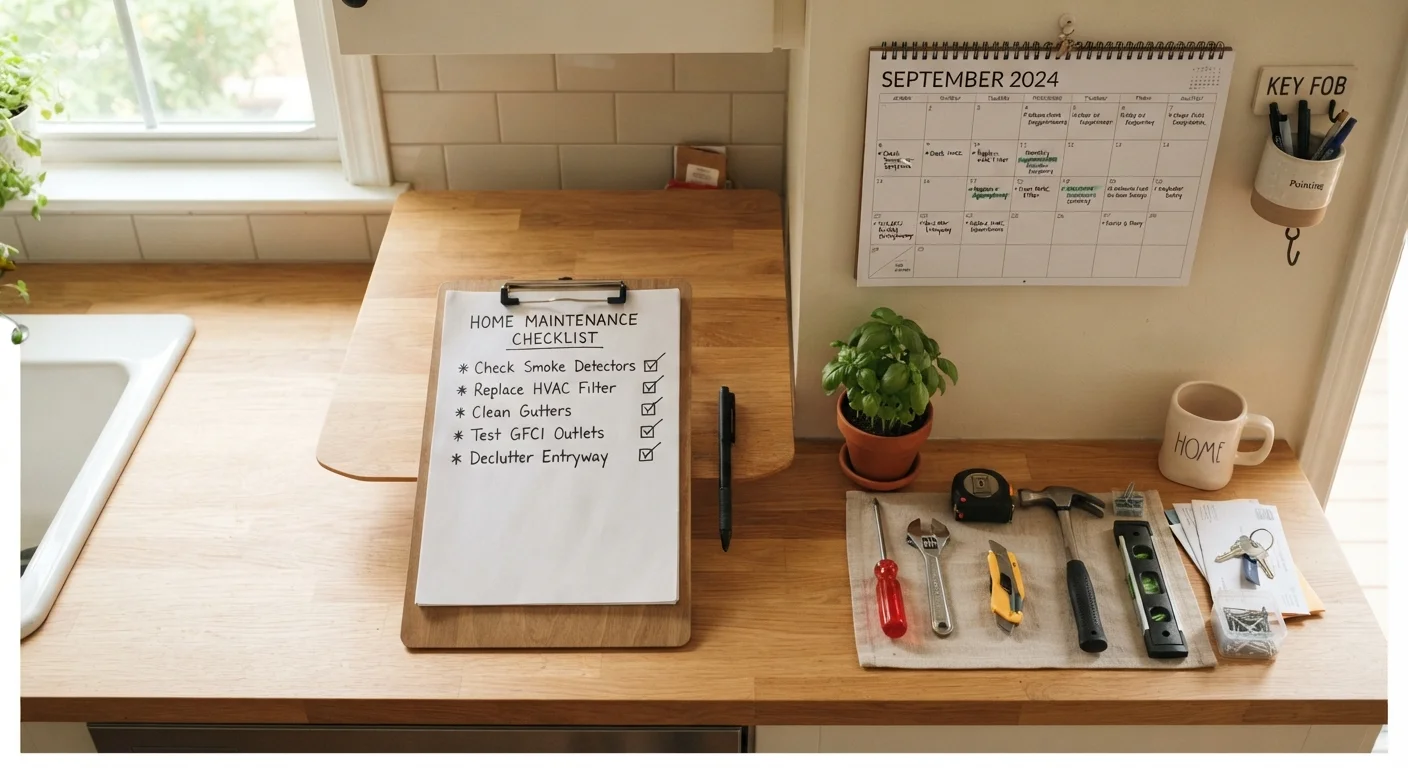
Why a Schedule Matters More Than a To-Do List
Most homeowners already know maintenance needs to happen - the challenge is timing and follow-through. A to-do list captures tasks once and gets forgotten. A schedule assigns each task a recurring interval, so nothing silently lapses for years while damage quietly accumulates.
The logic behind scheduling is straightforward: different home systems wear on different timelines. An HVAC filter clogs in weeks. A water heater anode rod degrades over years. A roof can develop vulnerabilities over a decade. Without a structured cadence, homeowners tend to react to failures rather than prevent them.
Deferred maintenance compounds costs in predictable ways - a $15 fix ignored for two years can become a $1,500 repair. The schedule's value isn't just organizational; it's financial.
~1%
Annual home maintenance budget guideline
A widely cited general rule of thumb suggests setting aside roughly 1% of a home's purchase price per year for maintenance - though actual needs vary significantly by home age, size, and region.
35%
Of homeowners who don't follow a maintenance schedule
According to a 2019 survey by the American Housing Survey, a significant share of owner-occupied households report no regular maintenance routine, leaving systems to fail reactively rather than preventively.
The Four Frequency Tiers That Structure Any Schedule
A practical home maintenance schedule isn't a single list - it's layered by how often each task needs attention. Most schedules use four tiers:
- Monthly: Quick checks that catch fast-moving issues early. Examples include inspecting under sinks for moisture, testing smoke and carbon monoxide detectors, and checking HVAC filters.
- Quarterly: Slightly deeper reviews on a three-month cycle. Changing HVAC filters (for most households), flushing sediment from the water heater's drain valve, and checking caulk around tubs and windows fall here.
- Seasonal: Tasks tied to weather transitions - clearing gutters before fall rains, testing the air conditioning before summer, checking weatherstripping before winter. See our season-by-season maintenance cycle for a full breakdown.
- Annual: Once-a-year inspections for systems with longer wear cycles, such as the roof, attic insulation, electrical panel, and major appliances.
Batching tasks within these tiers keeps the workload manageable - rather than scrambling weekly, most homeowners complete a short monthly check and one or two deeper sessions per season.
Start With a Simple Seasonal Walkthrough
If you don't have a schedule yet, the easiest entry point is a brief exterior and interior walkthrough at each season change - four times a year. Note anything that looks worn, leaking, or out of place. Over time, these notes become the foundation of your full schedule. You don't need a perfect system on day one.
Thinking in Systems, Not Just Tasks
One of the most useful mental models for home maintenance is organizing by system rather than by room. Your home is really a collection of interdependent systems - structural, mechanical, plumbing, electrical, and envelope (the outer shell that keeps weather out). Each has its own wear rate and failure signature.
For example, plumbing maintenance isn't just about fixing drips. It includes monitoring water pressure, watching for slow drains that signal buildup, and knowing where your main shutoff is. Our guide on plumbing upkeep that doesn't require a wrench covers the habits most homeowners can manage without professional tools.
Water heaters are another system where schedule design matters. Tankless and traditional water heaters have very different maintenance cadences - knowing which type you have changes what goes on your schedule and when.
New homeowners especially benefit from thinking this way. There's a predictable set of systems that first-time owners overlook entirely in the early years - from dryer vents to water shutoff valves.
Who Does What: Owners vs. Renters
A home maintenance schedule looks different depending on whether you own or rent. Owners are responsible for the full scope - structure, systems, appliances, and exterior. Renters typically hold a much narrower set of obligations, but that set is real and worth understanding.
Common renter responsibilities include keeping drains free of blockages, replacing light bulbs and HVAC filters where specified in the lease, reporting damage or leaks promptly, and maintaining reasonable cleanliness to prevent pest or mold issues. Structural repairs, appliance servicing, and major mechanical work almost always fall to the landlord.
Knowing the boundary matters before you spend money on tasks that aren't yours - or before you assume something is covered when it isn't. Our explainer on what home maintenance is actually a renter's responsibility walks through the typical split in plain terms.
When specific repairs require licensed trades - electrical, gas, structural - neither owners nor renters should attempt them without professional help. Our guide on when to DIY and when to call a professional can help you draw that line clearly.
Frequently Asked Questions
Frequency depends on the task and system involved. Some items - like checking smoke detector batteries or inspecting for leaks under sinks - are worth doing monthly. HVAC filters typically need attention every one to three months, while roofs and gutters are usually inspected seasonally or annually.
A basic schedule covers HVAC filter changes, gutter cleaning, smoke and carbon monoxide detector checks, water heater inspection, caulk and weatherstripping checks, and a seasonal walkthrough of the exterior. More thorough schedules also include plumbing pressure checks and appliance reviews.
Renters are typically responsible for a narrower set of tasks - things like replacing light bulbs, keeping drains clear, and notifying landlords of issues promptly. Structural, mechanical, and major appliance maintenance usually falls to the landlord. Knowing the split matters before you spend time or money on tasks that aren't yours.
A widely cited general guideline suggests budgeting roughly 1% of a home's purchase price annually for maintenance, though this varies considerably by home age, size, and local climate. Older homes and those in harsh climates often require more. This is general educational context - actual costs will vary for every household.
Deferred maintenance tends to compound. A minor roof flashing issue, for example, can allow water infiltration that damages insulation, drywall, and framing over time. Small upkeep costs now typically prevent much larger repair bills later.
The content on this site is for informational purposes only and is not a substitute for professional advice. Always consult a qualified professional for guidance specific to your situation.