

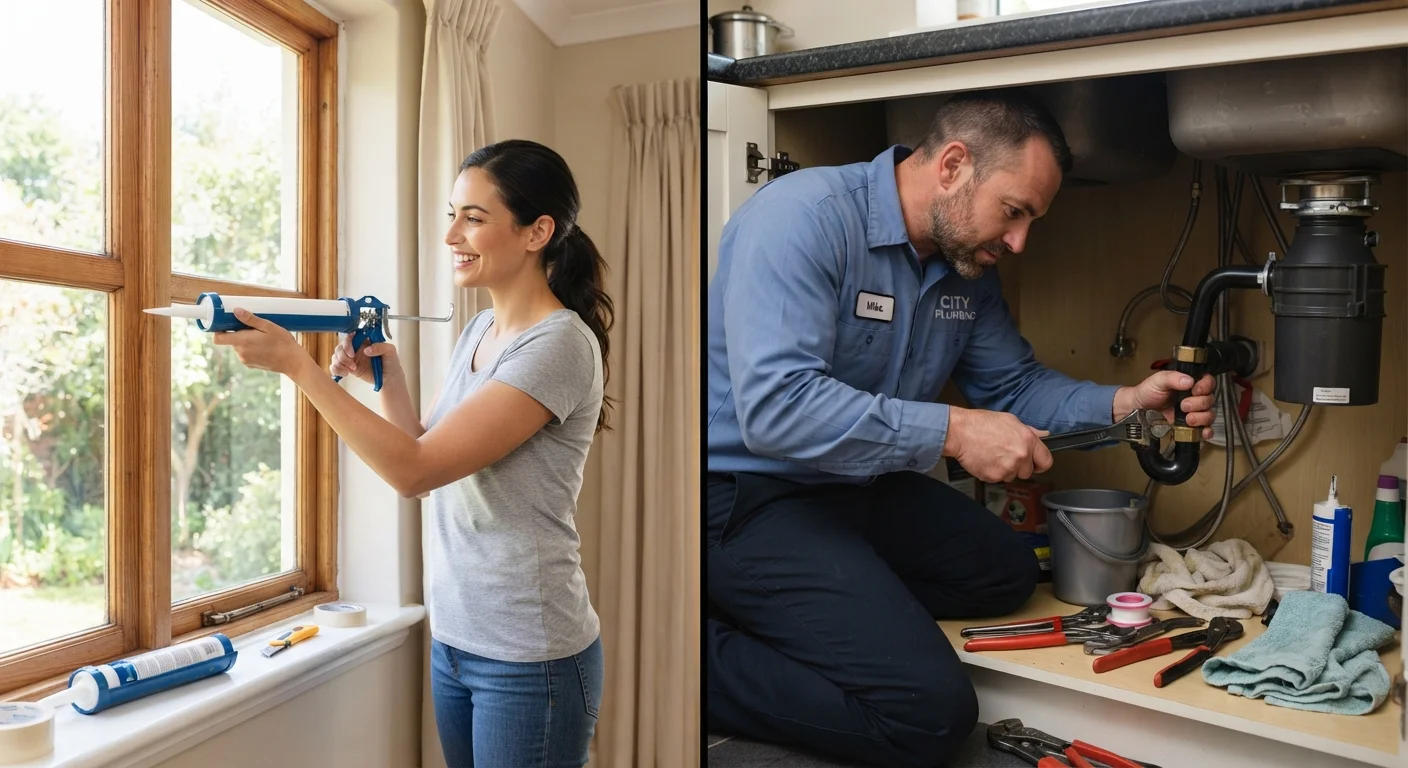
Our Verdict
DIY home maintenance is a genuinely valuable skill for low-risk, cosmetic, and routine tasks - it saves money and builds confidence. But electrical systems, gas lines, structural elements, and major plumbing are areas where licensing, permits, and professional accountability exist for good reason. Matching the task to the right approach protects your home, your safety, and your wallet.
| Best for | Recommended |
|---|---|
| Confident, tool-equipped homeowners handling routine upkeep | DIY |
| Any work involving electrical panels, gas lines, or load-bearing structures | Licensed Professional |
| Renters unsure of their maintenance responsibilities | Consult Landlord First |
| Projects that require permits or inspections under local code | Licensed Professional |
The Core Question: Risk Level and Skill Match
Every home repair sits somewhere on a spectrum - from tasks any careful adult can handle to jobs that require years of training and a government-issued license. The decision to DIY or call a pro hinges on two factors: the risk of getting it wrong and whether your skills honestly match the job.
Low-risk tasks are those where a mistake is visible, correctable, and unlikely to harm anyone. Patching a small drywall hole, re-caulking a tub surround, replacing a doorknob, or repainting a room all fit this profile. See our guide to drywall repair for a clear example of how damage type determines difficulty.
High-risk tasks, by contrast, involve systems where errors can cause fire, flooding, structural failure, or serious injury. Electrical panels, gas appliances, roof framing, and load-bearing walls belong in this category - regardless of how many tutorial videos exist online.
Assess Honestly Before You Start
Pull up a reliable how-to resource and read the entire process before buying materials or picking up a tool. If any step requires equipment you don't own, knowledge you'd have to acquire on the fly, or involves shutting off a main supply line, take that as a signal to price out professional help first. A quote costs nothing and gives you a useful benchmark.
What You Can Safely Do Yourself
A well-prepared homeowner can confidently handle a long list of maintenance tasks without professional help:
- Cosmetic repairs: Spackling nail holes, touching up paint, replacing broken tile in non-wet areas
- Weatherproofing: Installing door sweeps, replacing weatherstripping, caulking around windows
- Fixture swaps: Swapping a showerhead, replacing a faucet aerator, installing a new toilet seat
- Basic landscaping maintenance: Cleaning gutters (single-story), reseeding lawn patches, pruning shrubs
- Minor plumbing: Unclogging a drain, replacing a toilet flapper, tightening supply line connections
Staying consistent with these tasks is easier when you have a plan. A home maintenance schedule helps you spot problems early, before they escalate into professional-level repairs.
~35%
DIY repairs that worsen the original problem
Industry estimates from home inspection and contractor associations suggest roughly one in three DIY repairs requires follow-up professional correction.
$1,000-$3,500
Average cost to correct unpermitted electrical work
According to HomeAdvisor cost data, rewiring or correcting unpermitted electrical upgrades typically costs significantly more than the original permitted job would have.
When You Should Call a Licensed Professional
Some tasks look approachable on the surface but carry serious consequences if handled incorrectly. The following categories almost always warrant a licensed professional:
- Electrical work beyond basic swaps: Breaker panel upgrades, new circuit installation, and anything inside the walls. Even replacing a light switch can create hazards if wiring is outdated. Our article on DIY electrical misconceptions explains where common beliefs go wrong.
- Gas lines and appliances: Any work involving gas supply lines, connections, or venting requires a licensed plumber or HVAC technician in most states.
- Structural changes: Removing walls, adding load-bearing beams, or modifying a roof structure requires engineering knowledge and typically a building permit.
- Major plumbing: Replacing a water heater, repiping supply lines, or connecting to municipal sewer all involve code compliance and often require licensed contractors.
Don't Let Cost Alone Drive the Decision
Choosing DIY purely to save money on a job that genuinely requires a pro is one of the most common - and costly - mistakes homeowners make. A failed DIY electrical repair, a gas leak from an improperly fitted connection, or an unpermitted structural change can result in expenses and legal complications that far exceed the original contractor quote. When in doubt, get a professional assessment before proceeding.
Before hiring anyone, verify credentials carefully. Our checklist on what to verify before hiring a contractor walks through license checks, insurance, and references.
The Permit Question: When Official Approval Is Required
Permits exist to ensure work meets minimum safety standards and gets inspected by a qualified official. Skipping a required permit isn't just a technicality - it can void your homeowner's insurance on a claim, create problems during a home sale, and expose you to fines or mandatory tear-out of completed work.
Generally, permits are required for structural additions, electrical panel work, HVAC replacement, significant plumbing changes, and any new construction. Minor repairs and like-for-like replacements often don't require one, but rules vary significantly by municipality. Our article on when permits are required breaks down the typical thresholds and why the stakes are higher than most homeowners assume.
Renters face an additional layer of complexity: even a permitted repair is not yours to authorize. Check with your landlord first, and review our guide on renter maintenance responsibilities to understand what's typically your obligation versus the property owner's.
This article is for general informational purposes only. Always verify local codes, permit requirements, and licensing rules with the appropriate authorities in your area before beginning any home repair or improvement project.
The content on this site is for informational purposes only and is not a substitute for professional advice. Always consult a qualified professional for guidance specific to your situation.