

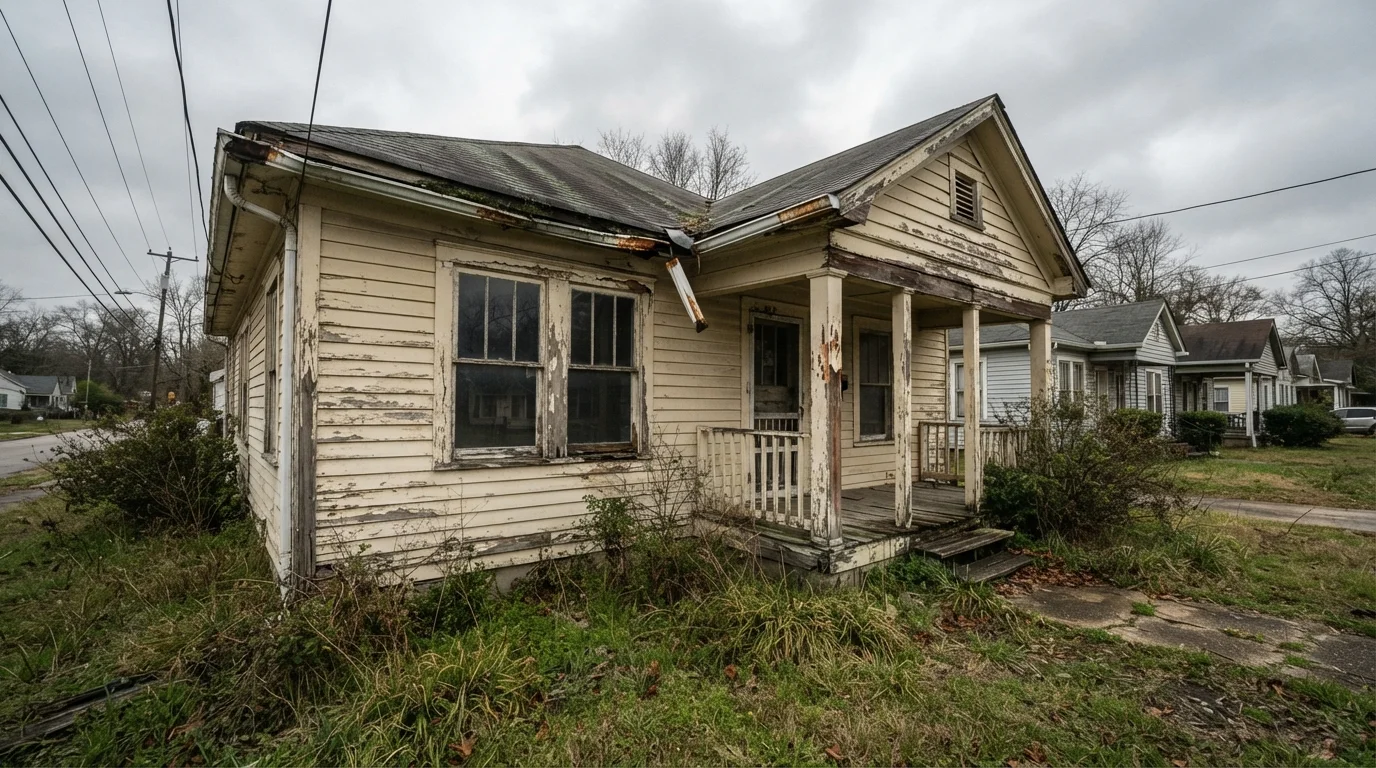
How Neglect Compounds: The Core Mechanism
Most home damage doesn't arrive suddenly - it compounds. A small failure in one component stresses adjacent components, and what begins as a $200 caulking job can quietly evolve into a $6,000 subfloor replacement if water has been infiltrating for two winters. This is the essential dynamic behind deferred maintenance: time amplifies severity.
Think of it as a chain reaction. A missing shingle lets moisture under the roof deck. That moisture breeds mold, softens the sheathing, and eventually works its way into insulation and ceiling drywall. Each stage of damage is harder and more expensive to reverse than the one before it. The repair that would have taken an hour at the shingle stage now requires a contractor, a dumpster, and potentially a mold remediation crew.
Address Water Issues First, Always
When prioritizing a backlog of deferred maintenance, any task related to water intrusion or management should move to the top of the list. Moisture damage accelerates faster than almost any other form of deterioration and rarely stays contained to the original entry point.
This same principle applies beyond the home. If you've ever wondered how the pattern shows up in vehicle ownership, our article on why skipping scheduled maintenance costs more in the long run covers the parallel dynamic in cars.
The Systems Most Vulnerable to Deferred Care
Not every deferred task carries the same risk. Some systems protect everything else in the home, meaning their failure has outsized downstream consequences.
$1 : $4
Preventive vs. reactive maintenance cost ratio
Industry estimates from property management research suggest that every dollar spent on preventive maintenance can avoid roughly four dollars in reactive repair costs.
~40%
Of home damage linked to water intrusion
Water-related damage is consistently cited by home inspectors and insurance analysts as the leading category of residential property damage in the US.
10-15 years
HVAC lifespan reduction from poor maintenance
HVAC industry guidelines indicate that systems maintained irregularly may fail years before units that receive routine annual servicing and filter changes.
- Roof and gutters: Gutters that go uncleaned divert water toward the foundation and siding rather than away from the house. Even a small roof leak can saturate attic insulation and rot structural rafters over a single season. See our roof maintenance myths guide for common misconceptions that lead homeowners to delay action.
- HVAC systems: Skipping annual filter changes and tune-ups forces equipment to work harder, shortening its lifespan measurably. A system that might last 15-20 years with routine service may fail in 10 without it - and replacement runs several thousand dollars.
- Plumbing: Slow drips under sinks, around toilet bases, or at supply line connections often indicate failing seals. Left alone, that moisture warps cabinets, deteriorates flooring, and can penetrate subfloor layers. Water damage is consistently the most expensive category of home repair.
- Foundation and drainage: Cracks in foundation walls or improper grading that directs water toward the home are slow-moving problems. By the time water infiltration becomes obvious inside, remediation can require excavation, waterproofing, and structural repair.
What Routine Maintenance Actually Costs vs. Emergency Repairs
The financial argument for staying current on maintenance is straightforward. Annual HVAC servicing typically costs a fraction of a full system replacement. Repointing deteriorating mortar on a chimney is a manageable masonry job; ignoring it until structural failure occurs can mean tearing out and rebuilding sections of the chimney entirely.
The pattern holds across nearly every home system: preventive costs are predictable and modest; emergency or replacement costs are unpredictable and substantial. Emergency situations also frequently involve secondary costs - temporary housing during major repairs, disposal fees, permit delays, and the premium pricing that comes with urgent timelines.
First-time homeowners are particularly at risk because they may not know which systems require regular attention. Our article on maintenance tasks new homeowners most commonly overlook highlights the unglamorous but critical tasks that often get skipped in the early years of ownership.
Building a Maintenance Habit That Prevents Deferral
The most effective defense against deferred maintenance is a structured schedule rather than reactive memory. Homeowners who maintain a written checklist - organized seasonally or by system - are far less likely to let critical tasks slip.
Permits and Professional Work
Many repair projects - especially those addressing structural damage, roofing, or plumbing into main lines - require permits and licensed contractors in most US jurisdictions. Unpermitted work can create complications at resale and may void homeowner's insurance coverage for related damage. Always verify local code requirements before beginning significant repairs.
A good schedule accounts for both time-based tasks (changing HVAC filters every 1-3 months) and condition-based inspections (checking roof flashing after major storms). Our companion piece on what a home maintenance schedule actually looks like provides a practical framework for structuring both.
When repairs do arise, it's worth evaluating honestly whether the task is within a safe DIY scope or requires a licensed professional. Some work - particularly anything involving electrical panels, gas lines, or structural elements - carries real safety and code compliance risks if done incorrectly. The Home Improvement hub covers a broad range of project types to help you gauge scope and complexity.
Frequently Asked Questions
Small defects allow moisture, pests, or mechanical stress to penetrate and damage surrounding materials. A cracked caulk joint, for example, can allow water to rot framing over months. By the time the damage is visible, the repair scope - and cost - is far greater than the original fix would have been.
Roofing, HVAC, plumbing, gutters, and foundations are the highest-risk systems. All of them protect other parts of the house; when they fail, the secondary damage is often more expensive than the original system failure itself.
Some cosmetic issues - faded paint, minor landscaping wear - can be reasonably delayed without structural consequences. However, anything involving water management, structural integrity, or mechanical systems should be addressed promptly to avoid compounding damage.
A written or digital home maintenance schedule organized by season is the most reliable approach. See our <a href="/home/home-maintenance/what-a-home-maintenance-schedule-actually-looks-like">home maintenance schedule guide</a> for a practical framework.
Yes. Buyers' home inspectors are trained to identify deferred maintenance, and findings typically result in reduced offers, repair credits, or deals falling through entirely. Consistent upkeep helps preserve appraised value.
Tasks involving electrical panels, gas lines, structural elements, roofing systems, or anything requiring a permit should be handled by a licensed professional. Our article on <a href="/home/home-maintenance/diy-home-maintenance-vs-calling-a-professional">DIY vs. calling a professional</a> covers how to evaluate each situation.
The content on this site is for informational purposes only and is not a substitute for professional advice. Always consult a qualified professional for guidance specific to your situation.