
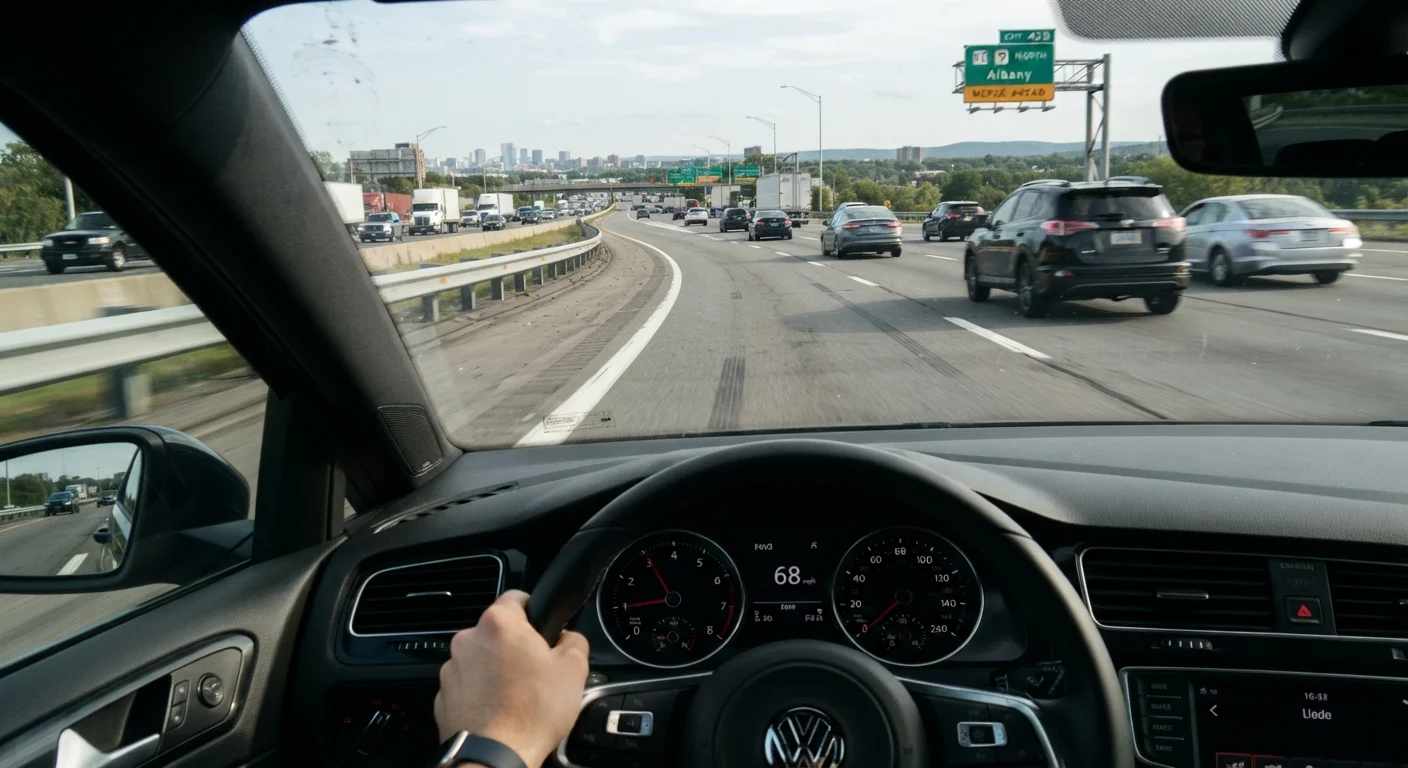
Why Highway Merging Goes Wrong
Merging onto a highway is one of the most cognitively demanding moments in everyday driving. It requires simultaneous speed management, gap judgment, signaling, mirror use, and a physical blind spot check - all within a compressed timeframe. Drivers who struggle with merges typically share one of a few common patterns: entering too slowly, choosing inadequate gaps, or committing before completing their blind spot check.
New drivers face a steep learning curve with these combined demands, but experienced drivers are not immune. Complacency, distraction, or unfamiliar on-ramp geometry can trip up drivers at any level. This guide provides a repeatable process to execute merges safely and predictably. If you are building foundational highway skills, Your First Year Behind the Wheel covers a broader set of essential techniques.
What you will need
Rearview and side mirrors
Provide the first read of traffic flow and gap size in the target lane.
Turn signal
Communicates your merging intent to highway drivers early enough for them to react.
Blind spot awareness (head check)
Confirms no vehicle is occupying the space mirrors cannot fully cover.
Step-by-Step: How to Merge Safely
Follow these steps every time you approach a highway on-ramp. With practice, the sequence becomes instinctive.
Never Stop at the End of an On-Ramp
Stopping at the end of an acceleration lane puts you and highway drivers at serious risk. A stopped vehicle in a merging zone has virtually no time to reach highway speed, and approaching drivers may not be able to stop in time. Only come to a complete stop if traffic is completely halted - not simply moving fast.
Use the Zipper Merge When Traffic Is Heavy
When highway traffic is congested and gaps are short, a zipper merge - where on-ramp drivers take turns alternating with highway drivers - is both legal and encouraged in most US states. Rather than forcing your way in early, maintain your position to the end of the ramp and merge one vehicle at a time. This method is recognized by transportation engineers as more efficient and less collision-prone than early merging in heavy traffic.
Merging in Poor Weather Conditions
Rain, fog, and snow significantly reduce visibility and increase stopping distances for all vehicles on the highway, which directly affects safe gap judgment. Extend your target gap to at least 5-6 seconds in low-visibility or slippery conditions. For a full breakdown of how weather affects driving dynamics, see our guide on adjusting your habits for every condition.
After the Merge: Settling Into Highway Traffic
A successful merge is only the beginning. Once you are in the right lane, your attention should shift to maintaining safe following distance and monitoring traffic flow around you. Highway driving demands consistent situational awareness - vehicles move faster, gaps close more quickly, and reaction time is compressed compared to surface streets.
Maintain at least a 3-4 second following gap under normal conditions and extend that buffer in heavier traffic or adverse weather. For guidance on how road type affects your overall risk picture, Rural Roads vs. Urban Streets offers useful perspective on adapting your habits to different environments.
If your vehicle is overdue for a maintenance check - tires, brakes, or lights that affect highway performance - the Car Maintenance hub has practical guidance to keep your vehicle road-ready.
The content on this site is for informational purposes only and is not a substitute for professional advice. Always consult a qualified professional for guidance specific to your situation.