

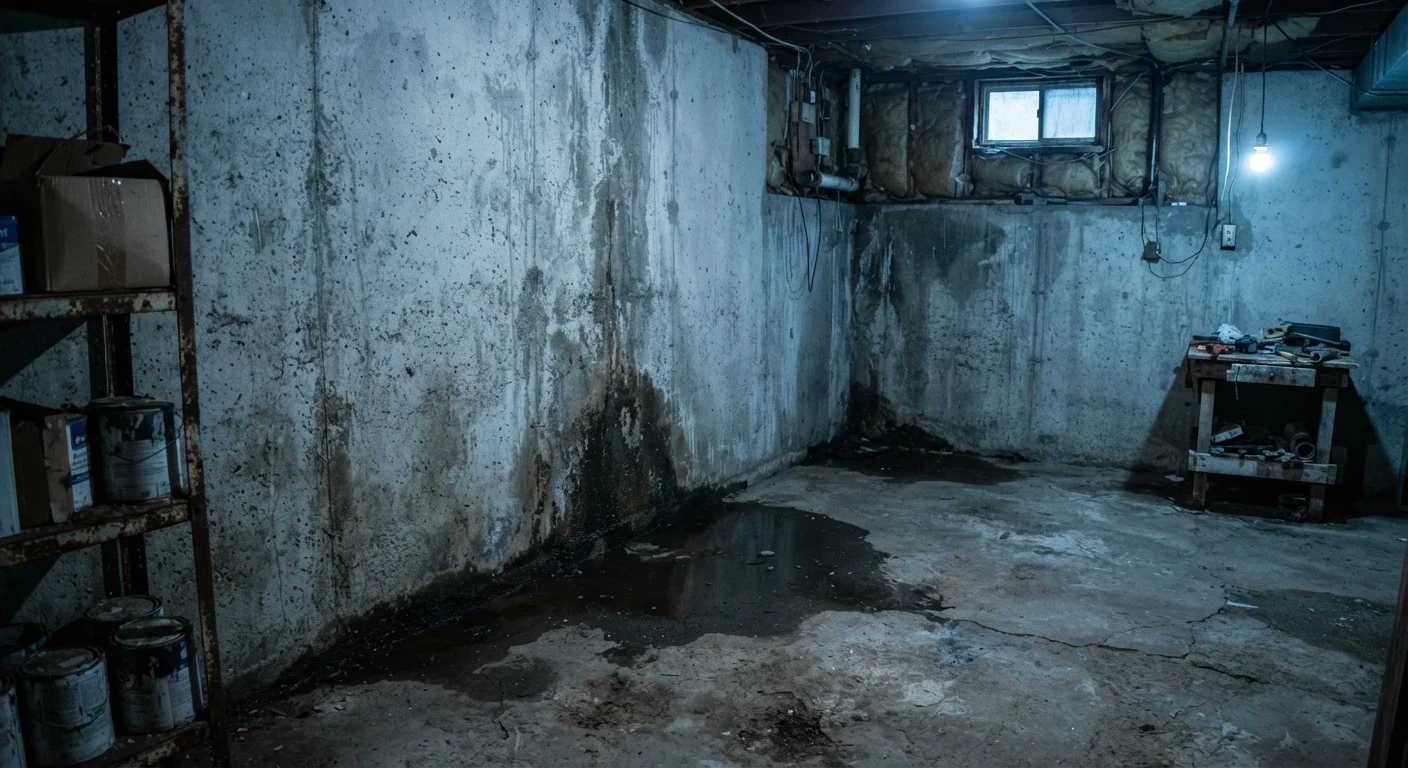
Where Moisture Comes From
Below-grade moisture rarely has a single source. Understanding the likely contributors in your home is the first step toward managing the problem effectively.
- Groundwater and hydrostatic pressure: When the soil around a foundation becomes saturated - from heavy rain, snowmelt, or a high water table - water can push through porous concrete or masonry under pressure. This often appears as seepage along wall-floor joints or through cracks.
- Surface water drainage: Gutters that overflow, downspouts that discharge too close to the foundation, or yard grading that slopes toward the house all direct surface runoff toward your foundation instead of away from it.
- Condensation: In warmer months, humid outdoor air that enters a cool basement condenses on walls and pipes, contributing to elevated humidity even without any actual water intrusion.
- Crawl space soil evaporation: Unfinished dirt floors in crawl spaces are a major moisture source. Ground moisture evaporates continuously into the enclosed space above it, raising humidity levels significantly.
Because these sources can overlap, addressing only one may not resolve the issue entirely. A seasonal home inspection is a practical way to catch new moisture entry points before they escalate.
Crawl Spaces vs. Basements: Key Differences
While both spaces sit below living areas, crawl spaces are typically unfinished, have limited height (often 18-36 inches), and may have exposed soil floors - making them especially prone to ground moisture. Basements are more likely to have concrete floors and may be partially finished, shifting the primary moisture risks toward wall seepage and condensation rather than soil evaporation. Management strategies differ accordingly.
Risks to Your Home and Health
Elevated moisture in below-grade spaces creates a cascade of secondary problems that extend well beyond a damp smell.
Structural Damage
Wood floor joists, beams, and sill plates that remain damp for extended periods are vulnerable to wood rot - a fungal decay that progressively weakens structural capacity. Moisture also accelerates corrosion of metal fasteners, straps, and HVAC components located in the crawl space or basement. As the cost of deferred maintenance illustrates, what starts as a manageable humidity issue can become a structural repair bill if left unaddressed.
Mold and Air Quality
Mold colonies can establish on wood, insulation, and cardboard stored in damp spaces within 24-48 hours of sustained moisture exposure. Because homes breathe from the bottom up, spores and volatile organic compounds from below can migrate into living areas. Renters and homeowners with respiratory sensitivities are particularly affected.
Pest Attraction
Termites, carpenter ants, and other wood-destroying insects are drawn to consistently moist wood. Crawl spaces with high humidity and wood-to-soil contact create near-ideal conditions for infestations that are expensive to remediate. You can learn more about hidden warning signs in our guide to water damage behind the walls.
Do the Plastic Sheet Test First
Before spending money on waterproofing, determine whether your basement moisture is from condensation or true water intrusion. Tape a 12-inch square of plastic sheeting to a suspect wall and seal all four edges. After 24-48 hours, moisture on the room-side surface indicates condensation; moisture behind the sheet points to seepage through the wall. This informs which type of solution is appropriate.
Common Management Approaches
No single solution fits every situation, but the following methods are widely used and recognized by building science professionals.
~60%
Humidity threshold for mold growth risk
Building scientists generally cite sustained relative humidity above 60% as the threshold at which mold colonization becomes likely on organic materials.
18 gallons
Daily moisture from a 1,500 sq ft dirt crawl space
The U.S. Department of Energy has estimated that an exposed soil crawl space can release roughly this amount of water vapor per day under typical conditions.
6-20 mil
Recommended vapor barrier thickness
Building codes and energy efficiency guidelines generally recommend polyethylene sheeting in this thickness range for effective ground-moisture control in crawl spaces.
Exterior Drainage Improvements
Correcting roof drainage (cleaning gutters, extending downspouts at least 4-6 feet from the foundation) and regrading soil so it slopes away from the house are often the most cost-effective first steps. These address surface water before it reaches the foundation.
Interior Drainage Systems
A perimeter drain channel installed along the interior base of basement walls, combined with a sump pump, collects water that does enter and removes it before it spreads. This approach manages water intrusion rather than preventing it entirely, but it is a widely used and durable solution.
Vapor Barriers and Crawl Space Encapsulation
A ground-cover vapor barrier - heavy polyethylene sheeting laid across the crawl space floor and sealed at seams and walls - dramatically reduces soil evaporation. Full encapsulation goes further, sealing walls and sometimes adding a conditioned air supply or dehumidifier to the space, effectively making the crawl space part of the home's thermal envelope.
Dehumidification
A crawl space or basement dehumidifier set to maintain relative humidity below 60% can prevent mold growth and reduce condensation. These units require regular maintenance, including emptying or draining the collection reservoir and cleaning the filter periodically.
Because work in crawl spaces can involve confined spaces, mold exposure, and electrical connections, many of these tasks are best evaluated and performed by licensed professionals. Always verify whether local permits or inspections are required before modifying drainage systems or encapsulating a crawl space.
Frequently Asked Questions
Common signs include a musty odor coming from floor vents, visible mold or mildew on wood joists, efflorescence (white salt deposits) on concrete, and sagging or soft flooring above the crawl space. A humidity reading above 60% in the space is also a reliable indicator.
Not necessarily. Condensation occurs when warm, humid air contacts cooler basement surfaces - it's a moisture source but a different one than a crack or failing waterproofing. You can do a simple tape test: tape plastic sheeting to the wall and check after 24 hours whether moisture forms on the interior face (condensation) or behind it (seepage).
A properly installed ground-cover vapor barrier significantly reduces the amount of moisture that evaporates from soil into the crawl space. Effectiveness depends on coverage, thickness (typically 6-20 mil polyethylene), and how well seams and edges are sealed against walls and piers.
Call a licensed waterproofing contractor or structural engineer if you notice active water intrusion through walls or the floor slab, white mineral deposits along cracks, visible structural damage to wood framing, or if dehumidification alone hasn't resolved chronic high humidity over multiple seasons.
Yes. Because air naturally moves upward through a home (the "stack effect"), moisture and mold spores from a crawl space can migrate into living areas. This can worsen allergy symptoms, increase whole-house humidity, and contribute to musty odors throughout the home.
The content on this site is for informational purposes only and is not a substitute for professional advice. Always consult a qualified professional for guidance specific to your situation.