
8 signs of high blood pressure

8 signs of high blood pressure

High blood pressure (HBP), or hypertension, occurs when the  pressure in blood vessels is excessively high. While the condition is common, the lack of treatment could worsen the complication. Most people with hypertension may not experience symptoms for years, even if the pressure is very high. That’s why one must get blood pressure checked to determine the condition. In some cases, one might notice telltale signs indicating the presence of high blood pressure. Severe headaches People with high blood pressure may experience headaches because it affects the blood-brain barrier. Excessive blood pressure may result in additional pressure on the brain, leading to blood leakage from the blood vessels in the organ. The leak causes swelling, which applies further pressure on the brain, consequently triggering severe headaches. Brain fog In addition to severe headaches, an individual at risk of high blood pressure might also experience brain fog. Excessive pressure on the brain during a phase of hypertension might result in reduced or no oxygen supply to the brain. If left unchecked, the lack of proper oxygen supply could cause brain fog symptoms, including trouble focusing, forgetfulness, difficulty learning, and problems retaining memory. Dizziness An individual might feel dizzy for several reasons, including dehydration, exhaustion, or due to various health complications.
Read More
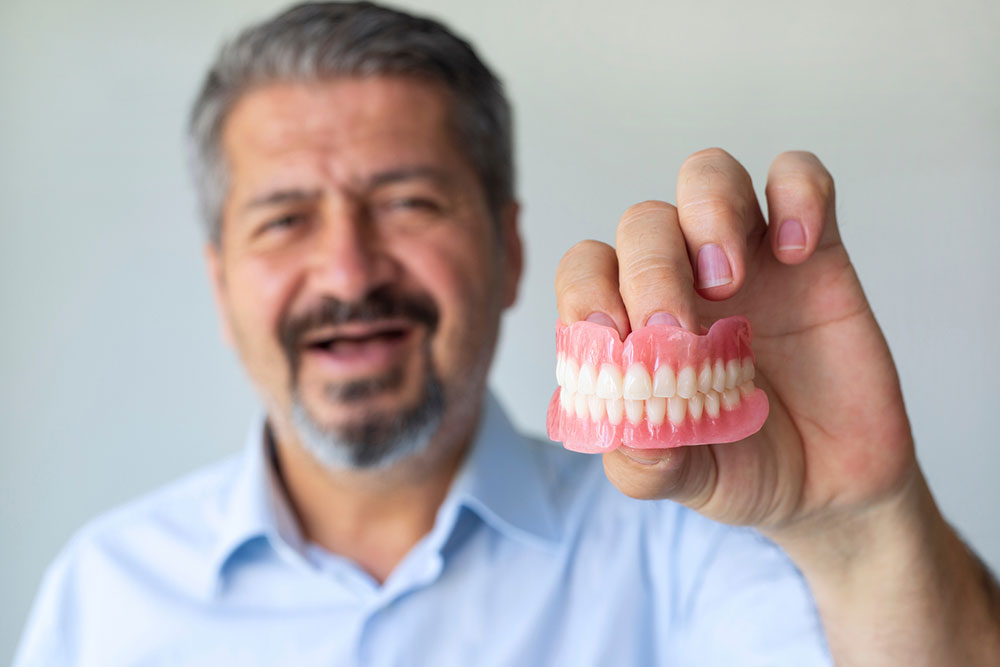
7 tips for choosing the right dentures

7 tips for choosing the right dentures

Dentures are artificial teeth that are used to replace missing teeth. Whether trying to manage a few missing teeth or going for a full arch replacement, selecting the right dentures is crucial. Making the right decision ensures optimal oral health, functionality, and comfort while using dentures. Choosing dentures is a collaborative process between the patients and their dentist, in which, they need to consider a variety of factors to make an informed decision. 1. Consult a dentist Speaking to a dentist is crucial when considering dentures. A qualified prosthodontist or dentist will prioritize assessing one’s oral health and then coming up with suitable treatment options. They will also be able to share the finer details about various types of dentures, their drawbacks, and their benefits. The consultation will help one determine the most suitable option that fits their budget and their requirements. 2. Compare different types of dentures Dentures come in different types, catering to unique oral health needs. A dentist can help one choose from various types of dentures—partial dentures, full dentures, and implant-supported dentures. Full dentures are meant for those who have lost their natural teeth in the upper or lower jaw arch. They are considered traditional dentures and consist of artificial teeth and a gum-colored base.
Read More
6 mistakes to avoid with dental implants

6 mistakes to avoid with dental implants

Dental implants have revolutionized dentistry. They provide individuals worldwide with a permanent solution for missing teeth. Dental implants closely mimic natural teeth in both form and function. However, the success of dental implant procedures depends on various factors, including proper planning, execution, and post-operative care. While dental implants boast high success rates, there are several common mistakes that patients and dental professionals should be aware of to ensure optimal outcomes. Mistakes to avoid while getting dental implants Inadequate assessment It is critical to put in some initial planning and assessment when considering dental implants as treatment. It needs to be the initial step in the process.  When individuals fail to  get  their oral health thoroughly  assessed , it can lead to complications  down the line .  Dental implants are selected based on oral health, bone density, and patients’ overall suitability. Comprehensive examinations need to be performed to conclude the same. Dentists can ask the patients to undergo dental imaging techniques like X-rays and CT scans. These are essential for evaluating bone structure and identifying potential issues such as gum disease or inadequate bone volume. Choosing the wrong provider Selecting the right dental implant provider is paramount to the success of the treatment.
Read More
Top 10 early warning signs of Crohn’s

Top 10 early warning signs of Crohn’s

The Centers for Disease Control and Prevention estimates that about 1.3% of adults in the country have Inflammatory Bowel Disease (IBD), like Crohn’s Disease and ulcerative colitis. Chronic inflammation of the digestive tract leads to Crohn’s disease. Early diagnosis and treatment can help in maintaining your quality of life and preventing complications that may be life-threatening. Following are some of the early warning signs of Crohn’s disease to look out for: Abdominal pain It can indicate Crohn’s disease if you feel cramps and pains in the lower right abdomen or any spot along the digestive tract. Recurring inflammation, abscesses, and ulcers that develop along the GI tract cause the pain. For some, pain may be the only symptom. Nausea Some may have cramps that make them nauseous. Some may throw up when there is pain. If one has continuous or frequent pain and vomiting episodes, visit a doctor without delay. Chronic diarrhea or constipation If diarrhea does not respond to home remedies or over-the-counter remedies, it may be an early warning sign of inflammation in the colon. Though diarrhea is more common, some may also experience constipation and pain while passing stools. Anal fissures Crohn’s disease directly leads to tears or fissures in the anus lining.
Read More
3 steps that help cope with depression

3 steps that help cope with depression

Major depressive disorder is a common occurrence seen in many people: about 17.3 million adults and 1.9 million children between the ages of 3 and 17 in the country are diagnosed with the disorder. Such a condition can lead to symptoms such as an irregular appetite, lack of energy, and trouble sleeping. Among other mechanisms to manage depression, following certain tips can also help an individual improve how they cope with the condition. Initiating treatments The first essential step for coping with major depressive disorder is initiating a treatment plan. A healthcare professional may recommend psychotherapy (talk therapy) to treat moderate to severe depression. Cognitive behavioral therapy is often the preferred option when it comes to tackling depression. Healthcare experts may recommend Rexulti® (brexpiprazole) for depression. The patient must take the tablet in combination with antidepressants as prescribed by the doctor. The dosage is also prescribed for the treatment of schizophrenia (a common depression trigger) in adult and pediatric patients aged 13 years and older. Rexulti® can be taken once daily with or without food. Caplyta® (lumateperone) is another prescription known to tackle episodes of depression associated with bipolar depression in adults. The prescription is administered by itself or by combining it with lithium or valproate.
Read More
3 effective ways to manage multiple sclerosis

3 effective ways to manage multiple sclerosis

Multiple sclerosis is a chronic or long-term condition of the brain and spinal cord, the two main parts of the central nervous system. The disease affects each individual differently, causing varied and unpredictable symptoms like weakness, vision problems, and bowel issues. It occurs when the immune system attacks myelin, the protective layer insulating wire-like nerve fibers. While there’s no known cure yet, there are multiple ways to manage multiple sclerosis: Treatment options Several treatments are available for multiple sclerosis. Doctors may prescribe the following treatments to help patients manage the disease. PONVORY® The FDA has approved PONVORY® (ponesimod) for treating relapsing forms of multiple sclerosis, including relapsing-remitting disease, active secondary progressive disease, and clinically isolated syndrome. It can lower relapse episodes and the number of lesions and slow down disease progression. PONVORY® is thought to work by reducing the number of immune cells, called lymphocytes, in the blood. It’s an oral treatment usually taken once a day with or without food. Some common side effects include upper respiratory tract infections, elevated liver enzymes (abnormal liver tests), and high blood pressure. KESIMPTA® KESIMPTA® (ofatumumab) is an FDA-approved treatment for adults with relapsing forms of multiple sclerosis. It’s a monoclonal antibody that works by depleting some immune B cells, which have been thought to contribute to nervous system damage in the disease.
Read More
Remedies and lifestyle changes to manage tardive dyskinesia

Remedies and lifestyle changes to manage tardive dyskinesia

Tardive dyskinesia (TD), in most cases, develops as an uncommon side effect of specific existing neurological prescriptions. Patients develop visible facial symptoms, including lip smacking, rapid blinking, and tongue thrusting, among others. These symptoms are triggered due to basic involuntary muscle contractions as the brain releases excess dopamine when one has tardive dyskinesia. There is no cure, but read on to know the prescriptions, treatments, and suggested lifestyle changes for the condition: Prescriptions for tardive dyskinesia One of the primary treatment methods suggested by specialists is the prevention of the symptoms and minimizing the risk of progression. Several FDA-approved prescriptions have proven to be effective in managing symptoms. Ingrezza® Ingrezza® once-a-day capsules are approved for treating and managing motor control issues linked to tardive dyskinesia. Adults can take the daily dose as suggested by their healthcare providers to manage specific facial and body movements that are involuntarily triggered during the disease progression. It controls the brain’s release of dopamine, one of the primary hormones linked to motor control, to prevent uncoordinated movements. Several clinical trials conducted revealed that the symptoms were managed within a period of six to eight weeks with a daily prescription. Continued use further improved outlook and quality of life among those dealing with moderate to severe symptoms.
Read More
6 odors that lead to migraine attacks

6 odors that lead to migraine attacks

Migraines are unbearable headaches that can last for hours or even days. About 17.1% of women and 5.6% of men in the country suffer from the condition. There are various stages of a migraine attack, such as prodrome, aura, attack, and postdrome. A common trigger for migraines is osmophobia, where strong odors trigger the condition. Health experts say migraines are also triggered by genetics, bright lights, hormonal changes, and several other factors such as: Car exhaust The amount of vehicular traffic on the road ensures that one passes by hundreds of automobiles every day. They may even drive one to work and other destinations. However, this simple occurrence could be triggering migraine symptoms in an individual. Cars give out carbon monoxide (CO), which is an odorless, colorless gas and is a byproduct of engine combustion. Once inhaled, the gas can stay inside for several hours. Pesticides Pesticides can be chemical substances, biological agents like a virus, bacterium, antimicrobial, or disinfectants. They are created to prevent or eliminate pests that may damage crops and other vegetation in farms and other regions. However, properties in pesticides such as DDT, chlordane, and toxaphene can negatively impact the human body. These chemicals can trigger migraines that can last for hours.
Read More
3 helpful tips to manage breast cancer

3 helpful tips to manage breast cancer

Cancer is a term used to describe a group of diseases caused due to the growth and multiplication of abnormal cells in the body. Breast cancer is when this abnormal growth starts in the breast. Around one in eight women are at risk of developing the condition. The most common sign is a lump in the breast or armpit. Here are some treatments, nutritional choices, and lifestyle changes that can help manage breast cancer: Get the right treatment Unfortunately, there is no cure for breast cancer yet. The various available treatments focus on reducing this condition’s symptoms and slowing cancer’s spread. Popular options include oral therapies, chemotherapy, and radiation therapy. Here is a closer look at two well-known treatments: CAR T-cell therapy CAR-T cell therapy (chimeric antigen receptor T-cell therapy) is a form of immunotherapy that can help treat many different types of cancer. It uses the individual’s own immune cells to fight the harmful cells in the body. Immune cells, or T cells, are extracted from the patient’s blood and modified in a laboratory. The modified cells are then injected back into the bloodstream. They are now more capable of fighting the disease. Over the last few years, CAR-T cell therapy has progressed significantly.
Read More
3 excellent ways to boost bone health

3 excellent ways to boost bone health

Many people don’t realize the importance of building and maintaining strong and healthy bones until their bones begin to weaken. Bones protect vital organs and store important nutrients and minerals. However, common diseases like osteoporosis, which affects about 10 million people in the country, can make the bone weak and more likely to break. Fortunately, osteoporosis and other diseases that affect the bone can be managed and even prevented with these simple tips: Treatment options For women with osteoporosis, an excellent treatment option is EVENITY®. The FDA has approved it to treat osteoporosis in women after menopause. Those looking for an effective bone strengthening treatment must know that EVENITY® works in two ways to treat osteoporosis: it boosts the body’s natural ability to form new bone and reduces bone loss simultaneously. It’s one of the only treatments to target these two critical aspects of bone health simultaneously. Studies conducted on EVENITY® found that it helps build new bones rapidly and reduces the risk of spine fracture in 12 months. It consists of two shots (single dose) given under the skin monthly by a healthcare provider. Like every other treatment, EVENITY® comes with certain side effects. The most common side effects are joint pain and headaches.
Read More