

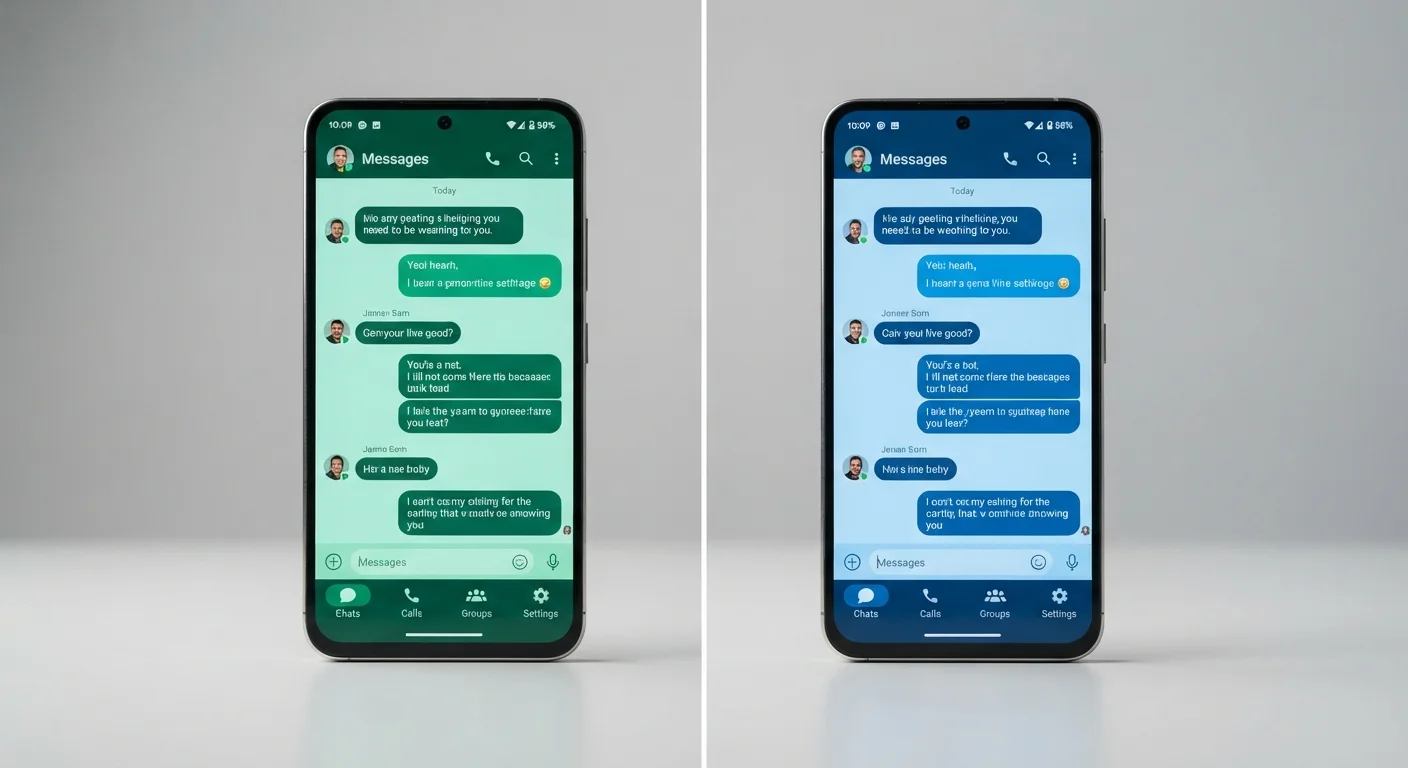
Option A
Android
The open, flexible platform built for variety.
Best for: Users who want deep customization, hardware choice, and fewer restrictions on how they use their device.
Option B
iOS
The tightly integrated, privacy-focused Apple ecosystem.
Best for: Users who want a seamless, consistent experience across Apple devices with long-term software support.
The Real Structural Differences
The Android vs. iOS debate has been going on for over a decade, but most everyday users encounter it as a choice between phones - not operating systems. Understanding what each platform actually does differently helps cut through the noise of brand loyalty and marketing claims.
Android is an open-source operating system developed by Google and licensed to dozens of device manufacturers. That openness is its defining characteristic: manufacturers can modify the interface, add features, and ship devices at nearly any price point. iOS, by contrast, is Apple's proprietary system that runs exclusively on Apple hardware. This closed model gives Apple direct control over how the software and device interact.
For readers who want a plain-language explanation of common smartphone terms mentioned throughout this comparison, the smartphone terminology glossary is a useful reference.
| Criterion | Android | iOS |
|---|---|---|
| Hardware variety | Dozens of manufacturers, wide price range | Apple devices only |
| Customization | High - launchers, defaults, sideloading | Limited - improving gradually |
| Software update length | Varies by manufacturer (2-7 years) | Typically 5-6 years |
| App tracking controls | Privacy dashboard, granular permissions | App Tracking Transparency (ATT) required |
| Ecosystem integration | Google services, some cross-device tools | Deep Apple device integration (Mac, iPad, Watch) |
| App sideloading | Permitted on most devices | Restricted by default; expanding in some regions |
Customization, Apps, and Ecosystem Lock-In
One of Android's most significant practical advantages is customization depth. Users can replace the default home screen launcher, set third-party apps as defaults for browsers or email, and - on most devices - install apps from outside the official Play Store (called sideloading). iOS has historically restricted these options, though Apple has gradually expanded flexibility in response to regulatory pressure in some markets.
App ecosystems on both platforms are mature. The vast majority of popular apps are available on both. Where differences emerge is in app quality consistency: developers often cite iOS as easier to optimize for because there are fewer device configurations to support. On Android, the fragmentation across manufacturers and screen sizes can occasionally result in inconsistent app experiences.
Ecosystem lock-in is real on both sides. iCloud backups, App Store purchases, and Apple-exclusive features like iMessage tie iOS users to the platform over time. Android users are tied to Google services in a similar way. If you're considering switching platforms, the guide to transferring data to a new phone covers what moves easily and what doesn't.
72%
Global smartphone OS market share held by Android
According to StatCounter data, Android consistently holds a dominant share of global smartphone usage, though iOS leads in the US market.
5-6 years
Typical iOS major update support window
Apple's direct control of hardware and software allows it to push updates to devices significantly longer than the Android average.
Software Updates, Privacy, and Long-Term Value
Software update timelines are one of the most consequential - and least discussed - differences between the two platforms. Apple controls both the hardware and software, allowing it to push major iOS updates simultaneously to all supported devices. Most iPhones receive updates for five to six years after release.
Android's update picture is more complicated. Google's own Pixel devices receive guaranteed updates for several years, and major manufacturers like Samsung have extended their commitments. But the Android ecosystem as a whole still shows significant variation depending on the manufacturer and device tier. For a deeper look at how this works mechanically, see how mobile OS updates actually work.
On privacy, both platforms have made meaningful strides. iOS introduced App Tracking Transparency (ATT), which requires apps to ask permission before tracking users across other apps and services. Android has expanded its privacy dashboard and permission controls as well. The implementations differ, but both give informed users meaningful tools - provided they take the time to review their settings.
Neither Platform Is Universally More Secure
Security researchers study both Android and iOS regularly, and vulnerabilities are found in each. iOS's closed ecosystem limits some attack vectors, while Android's openness enables faster third-party security research. Keeping either platform updated promptly is more impactful than the choice of platform itself. Enable automatic updates on whichever device you use.
For users interested in how connectivity and data processing intersect with privacy more broadly, the article on local vs. cloud-dependent smart devices explores related concepts in the smart home space.
The content on this site is for informational purposes only and is not a substitute for professional advice. Always consult a qualified professional for guidance specific to your situation.