

What Holds a Smart Home Together
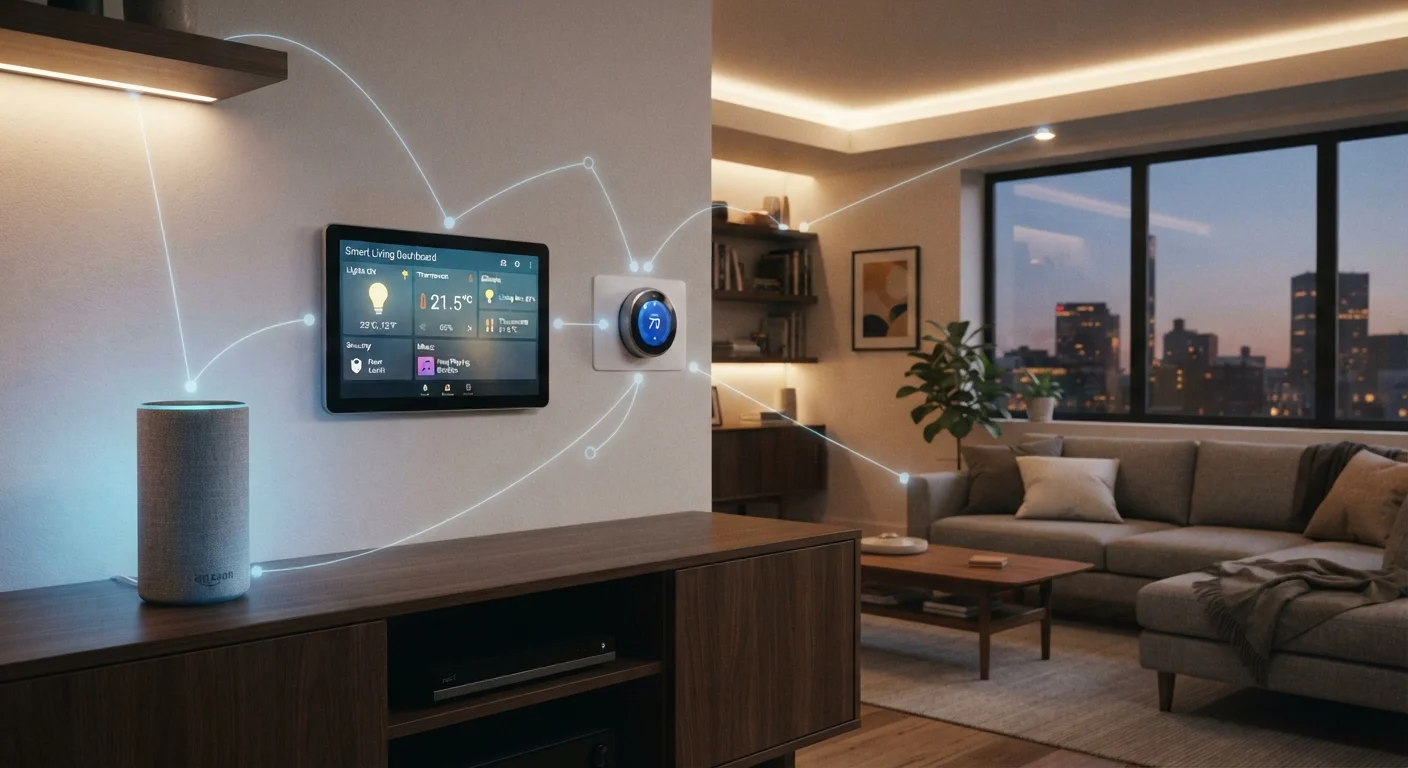
Every smart home, no matter how large or small, relies on two fundamental layers working in tandem: a communication protocol that moves data between devices, and a platform or hub that interprets commands and coordinates automation. Remove either layer and you no longer have a smart home - you have a collection of individually controlled gadgets.
Communication protocols are the wireless languages devices use to send and receive signals. The most common ones consumers encounter are:
- Wi-Fi - familiar, widely supported, but power-hungry and capable of congesting a home network with too many nodes.
- Zigbee - a low-power mesh protocol where each device can relay signals, extending range throughout a home.
- Z-Wave - similar to Zigbee in design, with a focus on interference avoidance by operating on a different radio frequency.
- Bluetooth / Bluetooth Mesh - suited for short-range or proximity-based control, increasingly used in lighting.
- Thread - a newer IP-based mesh protocol designed to underpin the Matter standard.
For a plain-language breakdown of these and other terms, see The Smart Home Glossary.
1.8B+
Smart home devices in use globally
Industry analysts estimate well over a billion connected home devices are actively deployed worldwide, underscoring the scale of the interoperability challenge.
600+
Companies backing the Matter standard
The Connectivity Standards Alliance reports that hundreds of technology companies have joined the Matter working group, reflecting broad industry commitment to cross-platform compatibility.
~30%
US households with at least one smart home device
Consumer research consistently places smart speaker and smart device penetration in US households at roughly one in three, with growth concentrated in lighting and security categories.
The Major Platforms and What They Offer
On top of the protocol layer sits the platform - the software environment where you create routines, check device status, and issue voice or app commands. The three dominant consumer platforms in the US each reflect a distinct philosophy:
- Amazon Alexa - broad device compatibility and strong third-party integration, with voice control as its primary interface.
- Google Home - tightly integrated with Android and Google services, increasingly leaning on AI-powered suggestions.
- Apple Home - prioritizes local processing and privacy, but historically required Apple hardware at every touchpoint.
Beyond these, platforms like Samsung SmartThings and the open-source Home Assistant appeal to users who want more control, local processing, or support for a wider mix of device types.
“The promise of the smart home has always been that your devices work together. The challenge has been that the industry spent years building walls instead of doors.”
— Connectivity Standards Alliance spokesperson, Industry body overseeing the Matter smart home standard
The platform you choose early shapes every device purchase afterward. It's worth evaluating which platform the majority of your household already uses - phone, speaker, or streaming device - before adding smart devices.
Matter: Reducing Fragmentation Across Ecosystems
The most significant development in smart home interoperability in years is Matter, an open-source connectivity standard maintained by the Connectivity Standards Alliance (CSA). Matter-certified devices are designed to work natively across Google Home, Amazon Alexa, Apple Home, and Samsung SmartThings - without proprietary bridges or adapters.
Matter runs over Thread (for battery-powered devices) and Wi-Fi (for mains-powered devices), using the same IP networking backbone as the internet. This makes device discovery, onboarding, and control more consistent than previous approaches.
Check the Matter Badge Before You Buy
When shopping for new smart home devices, look for the Matter certification logo on packaging or in product specifications. Matter-certified products are tested for cross-platform compatibility, which reduces the risk of purchasing a device that only works within a single manufacturer's app. This is especially important for long-term investments like smart locks and thermostats.
That said, Matter is still maturing. Older devices won't automatically gain Matter support, and not every product category is covered yet. For a deeper look at what the standard actually delivers today, see Matter: The Universal Smart Home Standard Explained.
Building Your Setup With Ecosystem Thinking
The practical takeaway from all of this is simple: think in ecosystems from the start, not device by device. Mixing incompatible protocols without a bridge or hub creates gaps in automation - a motion sensor that can't trigger your lights because they speak different protocols.
Before purchasing, verify that a device supports your chosen platform, and note whether it connects directly or requires a manufacturer-specific hub. Hubs add cost and complexity but enable lower-power, more reliable mesh protocols like Zigbee and Z-Wave.
If you're building from scratch, Your First Smart Home walks through which devices to add first and why sequencing matters. And if security devices are your priority, Smart Home Security: A Room-by-Room Guide covers how connected locks, cameras, and sensors fit into the broader ecosystem. For an honest assessment of where smart home tech delivers and where it still falls short, see Smart Home Devices: Real Value vs. Friction.
Frequently Asked Questions
Not automatically. Devices must share a compatible protocol or platform to communicate. The Matter standard is improving cross-brand compatibility, but many older devices still require a specific hub or app to function.
Zigbee and Z-Wave are low-power mesh protocols designed specifically for smart home devices - they're energy-efficient and don't crowd your Wi-Fi network. Wi-Fi devices are simpler to set up but consume more power and can strain your router if you have many connected devices.
Matter is an open connectivity standard backed by major tech companies that lets certified devices work across different platforms without additional bridges. A Matter-certified light bulb, for example, can be added to Google Home, Apple Home, or Amazon Alexa without separate apps.
It depends on the devices you choose. Wi-Fi and Bluetooth devices typically connect directly to your router and a companion app. Zigbee and Z-Wave devices usually require a hub. Some platforms, like SmartThings or Home Assistant, act as universal hubs for mixed setups.
Cloud-dependent devices and automations typically stop responding during an internet outage. Systems that process commands locally - such as Home Assistant or certain hub-based setups - continue to function on your local network even without internet access.
The content on this site is for informational purposes only and is not a substitute for professional advice. Always consult a qualified professional for guidance specific to your situation.