

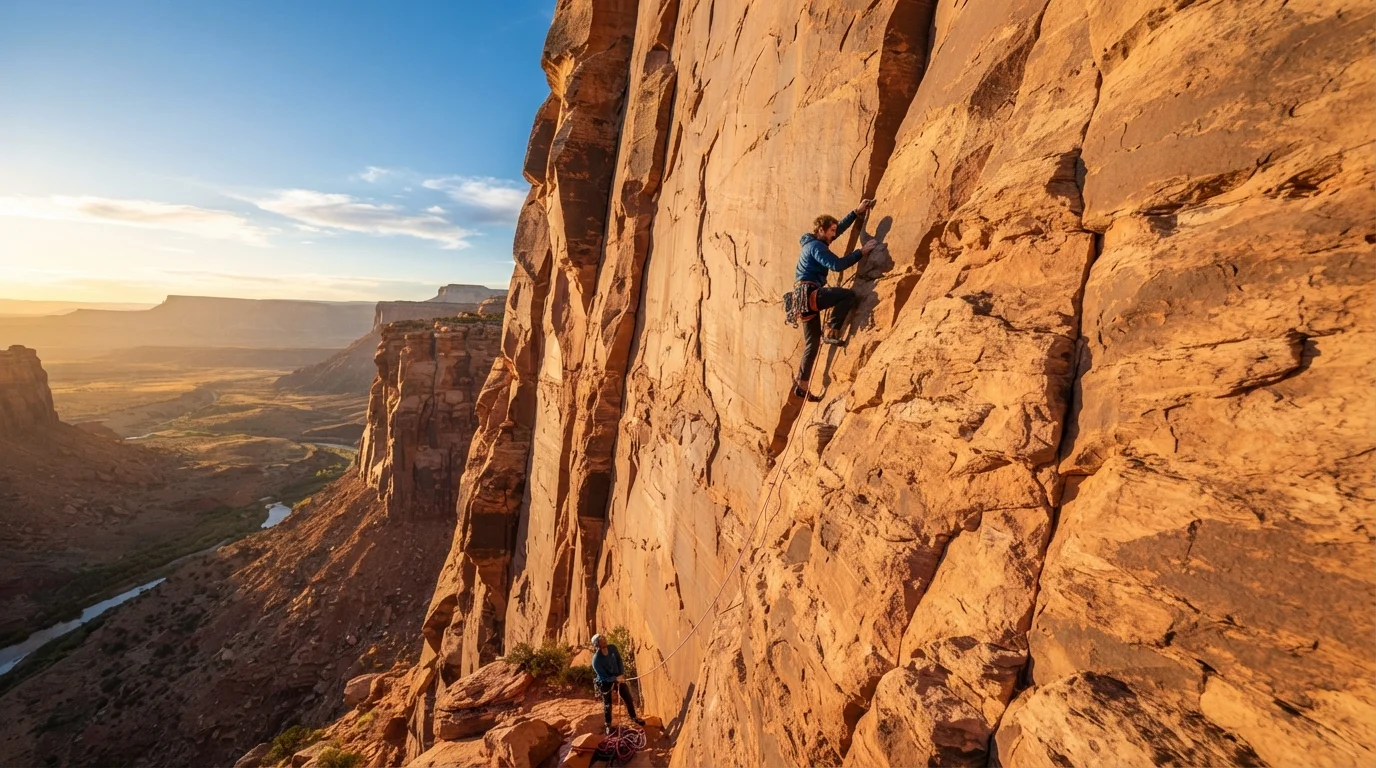
Why Outdoor Climbing Is a Different Animal
Indoor climbing gyms have democratized the sport - colorful holds, padded floors, and staff on hand make the basics approachable for nearly anyone. But stepping outside onto real rock introduces a genuinely different set of challenges. Routes aren't color-coded, landings are uneven, weather can shift without warning, and there's no reset button if something goes wrong.
That gap is worth taking seriously, not to scare anyone off, but because preparation is what makes outdoor climbing joyful rather than stressful. If you've been enjoying hikes and want a bigger physical challenge, outdoor climbing might be a natural next step - though it demands its own dedicated learning curve. For a general primer on getting outside, the first outdoor hiking trip guide covers foundational habits that apply to climbing approaches as well.
9M+
Americans who climb outdoors annually
The Outdoor Industry Association has reported climbing participation in the tens of millions when gym and outdoor climbing are combined, with outdoor climbing drawing millions of dedicated participants.
5.0-5.15d
Full range of YDS free climbing grades
The Yosemite Decimal System spans beginner-accessible slabs to the hardest athletic achievements in the sport, with most recreational climbers focusing on 5.6-5.11.
400+
Climbing areas protected by Access Fund
The Access Fund, a national non-profit, reports involvement in protecting and preserving hundreds of climbing destinations across the United States through advocacy and stewardship.
Decoding the Rating Systems
Grades exist to give climbers a shared language for difficulty - but that language has several dialects. In the United States, free climbing on rock primarily uses the YDS. Class 5 terrain is technical climbing requiring a rope; within that class, routes are graded 5.0 through 5.15d, with letter suffixes (a, b, c, d) adding precision at harder grades.
A few key nuances to understand:
- Subjectivity and local sandbagging: Grades are set by the first ascentionist and confirmed (or adjusted) by community consensus. Some areas are historically known as stiff or soft - a 5.10 at one crag may feel harder than a 5.11 at another.
- Bouldering grades: Problems close to the ground use the V-scale (V0 through V17), developed by John Sherman. V0 is beginner-appropriate; grades escalate quickly.
- Sport vs. trad distinction: Sport routes have pre-placed bolts; trad (traditional) routes require climbers to place their own removable gear called protection. The grade reflects physical difficulty, not the gear complexity.
When warming up outdoors, start two full number grades below your gym redpoint level - outdoor rock textures, unfamiliar movement patterns, and mental load add up fast.
Gym climbers routinely underestimate outdoor difficulty because gym setting is optimized for movement clarity; real rock is not. Sandbagging your warmup builds confidence and reduces injury risk.
Before pulling on any fixed bolt, give it a firm tug by hand and look for rust streaking, spinning hangers, or hollow sounds when tapped - any of these warrants skipping that piece.
Fixed gear degrades over years of weather exposure. Experienced climbers treat every anchor as suspect until inspected, a habit that has prevented countless accidents at aging crags.
Understanding how outdoor gear ratings work can also help you evaluate ropes, harnesses, and carabiners with a more critical eye before you buy.
Anchor Basics: What Holds Everything Together
An anchor is the system that connects the rope to the rock at the top of a climb. It is the most consequential piece of the safety puzzle, and it must be treated accordingly. Two foundational principles guide good anchor-building, often summarized by the acronym SERENE-A: Solid, Efficient, Redundant, Equalized, No Extension - with the A standing for a final review that everything checks out.
Anchors Require In-Person Training
No article, video, or guidebook fully substitutes for supervised, hands-on anchor-building practice. An incorrectly built anchor can fail catastrophically. Before building your own anchor outdoors, complete a course with a certified instructor and practice under supervision on low-consequence terrain first.
Anchor types vary by situation:
- Fixed anchors (bolts and chains): Common on sport routes. Inspect each bolt hanger for corrosion, loose movement, or cracked rock around the placement before trusting it.
- Natural anchors: Trees, horns, or boulders that meet strict size and health criteria can serve as anchors with slings. A live tree with a trunk diameter of at least 8 inches is a common guideline, though local conditions vary.
- Multi-piece trad anchors: Built from removable gear - cams, nuts, hexes - placed in cracks and equalized with a cordelette or sliding-X system.
Reading about anchors is a start, but hands-on practice under a qualified instructor or guide is the only responsible way to learn. American Mountain Guides Association (AMGA)-certified guides and local climbing clubs both offer courses specifically designed for this transition.
Crag Access Ethics: Protecting the Places We Climb
Climbing areas exist on a patchwork of public and private land. Access can be - and regularly is - revoked when climbers behave poorly. The Access Fund, a national advocacy organization, works with land managers across the country to keep crags open, but individual behavior remains the first line of defense.
Practical ethics every outdoor climber should practice:
- Stay on established trails to the base to prevent erosion and vegetation damage.
- Pack out all waste, including food scraps. Human waste at remote crags requires a WAG bag or a cathole dug at least 200 feet from water.
- Respect seasonal closures - many areas close during raptor nesting season. Check local Access Fund coalition pages before every visit.
- Minimize chalk impact - brush holds after climbing, and avoid excessive tick marks (chalk spots used to mark holds) that permanently discolor rock.
- Manage noise levels to remain good neighbors to surrounding communities and wildlife.
Register With Local Coalitions Before You Climb
Many popular climbing areas have a local coalition affiliated with the Access Fund that posts real-time closure updates, trail conditions, and stewardship work days. Signing up for their newsletter or checking their website before each trip takes two minutes and keeps you from accidentally violating a closure - the kind of incident that can spur permanent access restrictions.
Outdoor climbing connects directly to a broader outdoor ethic. If you're exploring different ways to stay active outside, see outdoor activities for every fitness level for a broader look at recreation matched to your current abilities.
Getting Started Safely
The path from gym climber to capable outdoor climber doesn't have to be long, but it should be deliberate. A few concrete first steps:
- Take an outdoor transition course through a local climbing gym, outdoor education center, or AMGA-certified guide service. One day outdoors with expert instruction compresses months of solo trial and error.
- Join a local club. Climbing clubs organize mentorship outings, skills workshops, and access stewardship events. They're also how most climbers build the community that makes the sport sustainable long-term.
- Start at well-documented areas. Guidebooks - both print and apps like Mountain Project - provide route descriptions, grades, and access notes vetted by the local community.
- Learn to read mountain weather before committing to a climbing day. Thunderstorms on exposed rock are acutely dangerous. The guide to mountain weather for beginners covers the most common errors and how to avoid them.
“Climbing is not about conquering the rock. It's about learning to be present, to read the terrain, and to move with intention - skills that take a lifetime to develop and never get old.”
— Alex Honnold, Professional climber and rock climbing advocate
Outdoor climbing is one of the most rewarding physical pursuits available - technical, creative, community-driven, and set in some of the most spectacular landscapes in the country. Approach it with patience and respect, and it can be a lifelong adventure.
This article provides general educational information about outdoor rock climbing. It is not a substitute for professional instruction, and climbing involves inherent risks. Always seek qualified guidance before attempting outdoor climbing independently.
The content on this site is for informational purposes only and is not a substitute for professional advice. Always consult a qualified professional for guidance specific to your situation.