

Why Home Workouts Work Better Than You Think
The biggest barrier to exercise for most Americans isn't motivation - it's logistics. Gym memberships cost money, commutes eat time, and packed weight rooms can feel intimidating. Home workouts solve all three problems at once, and research consistently shows that bodyweight training can produce meaningful strength and cardiovascular gains when performed regularly and progressively.
The catch is structure. Without a plan, home workouts drift from purposeful training into aimless movement that fades after two weeks. This guide gives you that structure - from clearing your space to choosing the right exercises for your goals. If you're also weighing whether to invest in home gym gear down the line, this practical framework is worth a read before spending anything.
What you will need
What You'll Need (It's Less Than You'd Guess)
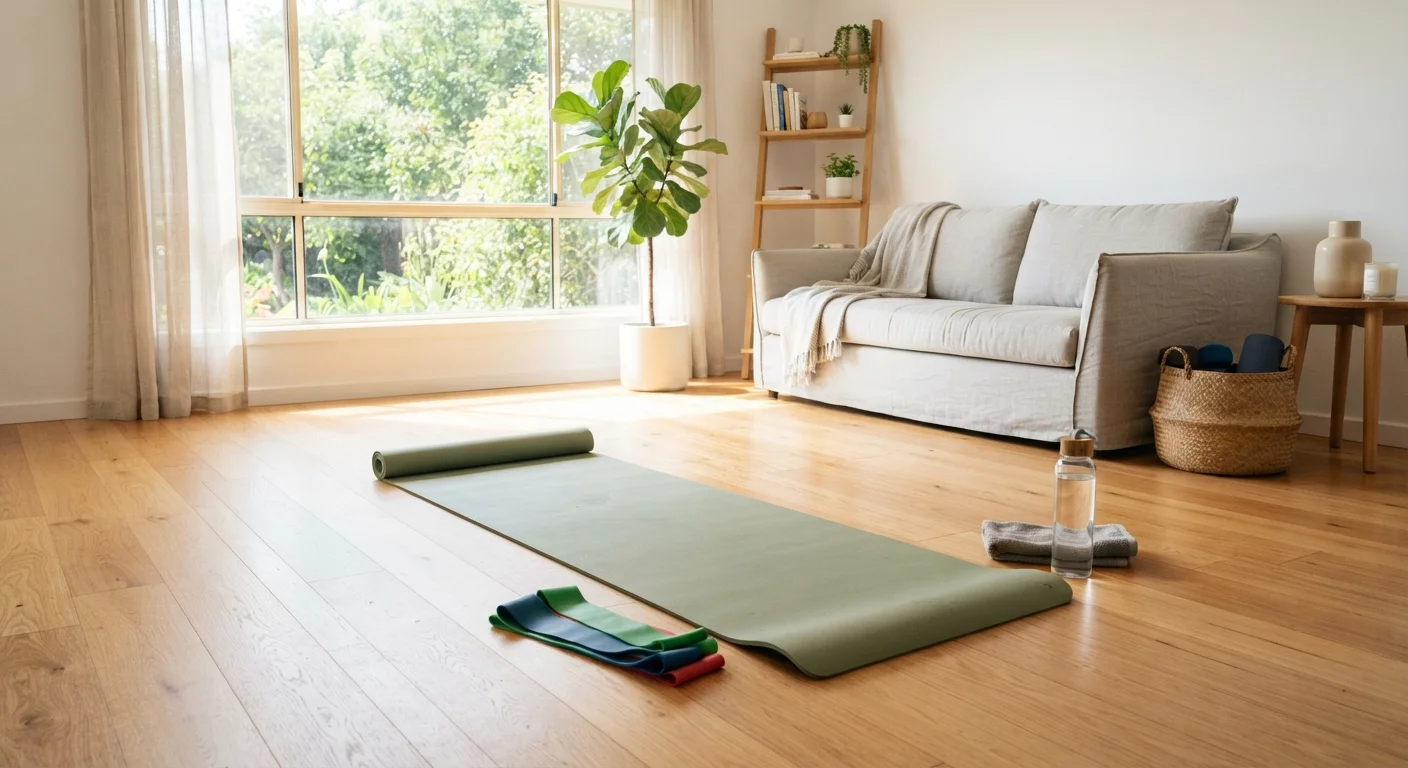
The good news: effective training requires almost nothing. The tools below range from genuinely optional to basic household items you already own. If you're curious about exploring movement outdoors instead, recreational activities that double as real exercise offer great alternatives that complement a home routine.
Yoga or Exercise Mat
Provides cushioning and grip for floor-based movements like push-ups, planks, and stretches.
Resistance Bands
Lightweight and inexpensive, they add progressive resistance to bodyweight exercises without taking up space.
A Sturdy Chair
Used for supported squats, tricep dips, and balance assistance during certain movements.
Timer or Stopwatch App
Keeps your interval and rest periods honest so you can track workout density and progress.
Step-by-Step: Building Your Routine
Follow these steps to move from an empty floor to a structured, repeatable workout plan. Each step builds on the last - don't skip ahead.
Clear and assess your workout space
Before anything else, find a spot in your home where you can safely move in every direction. Move furniture to the sides, roll up area rugs if they slip, and check for low-hanging fixtures overhead. You're looking for roughly 6x6 feet of unobstructed floor - that's enough for lunges, push-ups, and jumping movements.
Decide on your weekly structure
Plan to exercise 3-4 days per week, with at least one rest day between strength-focused sessions. A simple starting structure: two days of full-body strength work (push-ups, squats, lunges, planks) and one day of lighter cardio or mobility work. Write it down - even a sticky note on the fridge counts.
Build a 5-minute warm-up
Never skip this. A proper warm-up raises your core temperature, loosens joints, and primes your muscles for the work ahead. A simple circuit: 30 seconds of marching in place, 30 seconds of arm circles, 30 seconds of bodyweight squats, 30 seconds of hip circles, and two sets of slow torso twists. That's your five minutes.
Choose your core exercises
Build your routine around movement patterns, not just individual exercises. Aim to include: a pushing movement (push-ups or pike push-ups), a pulling movement (resistance band rows or door-frame rows), a lower-body movement (squats or reverse lunges), a hinge (glute bridges), and a core hold (plank or dead bug). Start with 2-3 sets of 8-12 repetitions per exercise.
Add a cardio or mobility block
After your strength work, tack on 5-10 minutes of cardio or mobility. Options for tight spaces include jumping jacks, high knees, standing bicycle crunches, or a simple yoga flow. If impact is a concern for you or your floor, low-impact marching and step-touch patterns elevate your heart rate without the noise or stress.
Cool down and stretch
Finish every session with at least 3-5 minutes of gentle stretching. Focus on the muscle groups you worked: hamstrings, hip flexors, chest, and shoulders are the most commonly tight after a home session. Breathe slowly, hold each stretch for 20-30 seconds, and never force a stretch to the point of pain.
Progress Without More Equipment
Once a movement feels easy at your target rep count, increase difficulty before buying gear. Try slowing down the lowering phase of a squat or push-up (3-4 seconds down), reducing rest time between sets, or adding a single-leg variation. These techniques build real strength and keep your sessions challenging without spending a dollar.
Troubleshooting Common Setbacks
Even the best-laid plans hit friction. Here are the most common sticking points and how to work around them:
- "I run out of energy mid-workout." Try eating a small snack 30-60 minutes before training, and make sure you're not starting sessions already dehydrated.
- "My neighbors or family complain about noise." Swap jumping movements for low-impact alternatives - step touches, slow mountain climbers, and standing core work are just as effective.
- "I don't feel sore, so I assume it's not working." Soreness is a poor proxy for progress. Consistent effort and gradual increases in reps or resistance are better indicators.
- "I keep skipping sessions." That's a scheduling problem, not a willpower problem. These habit-building strategies can help you design your week so workouts actually happen.
Know When to Pause and Seek Guidance
Sharp joint pain, dizziness, or chest discomfort during exercise are signals to stop immediately and consult a healthcare professional. General muscle fatigue and mild soreness are normal; these symptoms are not. If you're new to exercise or managing a chronic condition, getting clearance from a doctor before starting a new routine is always the right move.
This article is for general informational purposes only and is not a substitute for professional medical or fitness advice. Consult a qualified healthcare provider before beginning any new exercise program, especially if you have existing health conditions or injuries.
The content on this site is for informational purposes only and is not a substitute for professional advice. Always consult a qualified professional for guidance specific to your situation.