

Why the Label Alone Tells You Very Little
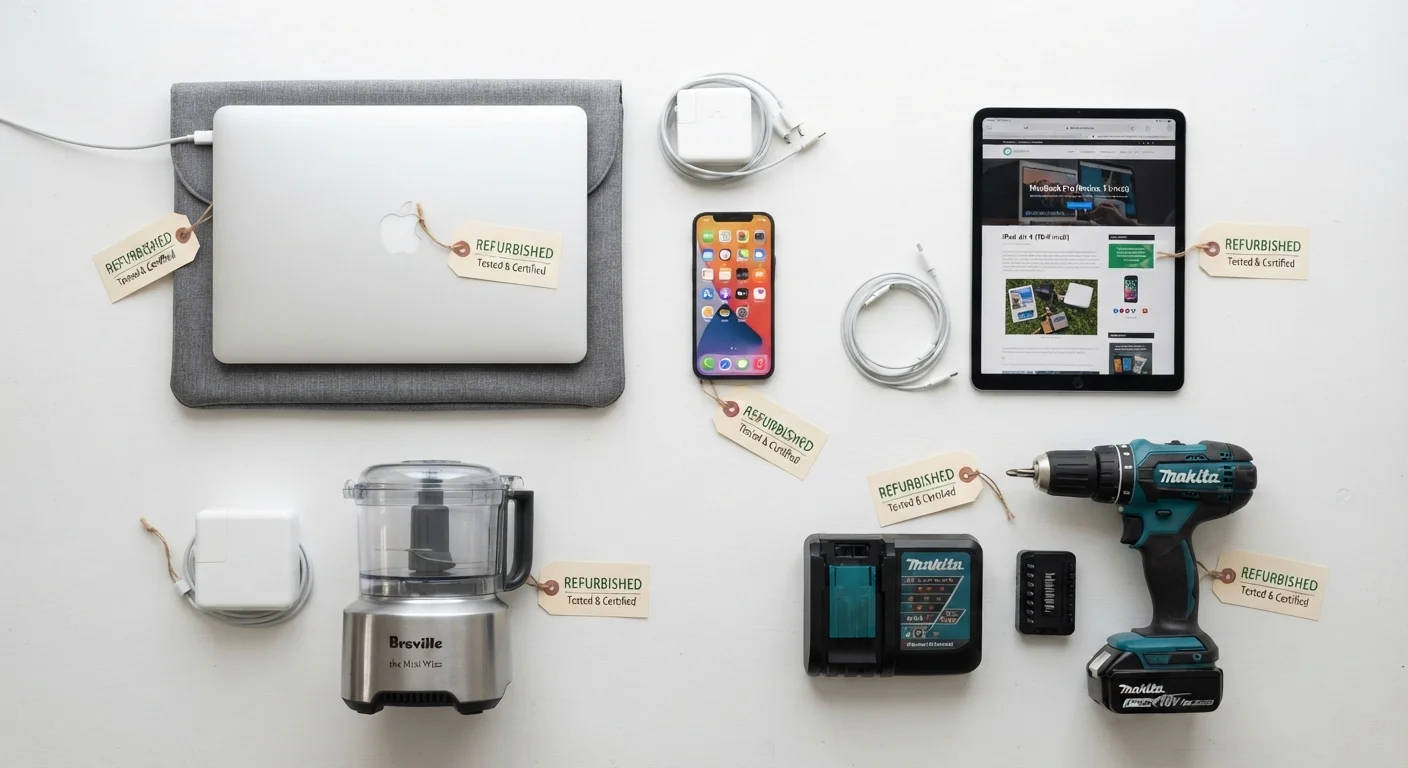
The word 'refurbished' is doing a lot of heavy lifting across the retail landscape, and it means something meaningfully different depending on who applied it and to what. A refurbished label from a device manufacturer describes a controlled process with access to original parts, proprietary diagnostics, and a standardized inspection checklist. The same word on a third-party reseller listing might mean the item was powered on, confirmed it turned on, and was repackaged. Both are legally 'refurbished.'
Before assuming equivalence, look past the label. Two signals matter more: who did the refurbishing (manufacturer vs. third-party) and what documentation exists about the process. For a plain-language reference on how this term fits alongside related shopping vocabulary, see our shopping terminology glossary.
Open-Box Is Not the Same as Refurbished
Open-box items were returned in sellable condition with minimal or no use - they typically haven't undergone any repair or formal inspection process. Refurbished items have been through at least some evaluation and remediation. The two terms are often used loosely, so check the seller's specific definition before assuming either standard applies.
Smartphones and Tablets: The Most Developed Market
Consumer electronics - phones, tablets, and to some extent laptops - have the most mature refurbished ecosystems. Major manufacturers operate certified programs with multi-point inspection checklists, battery health thresholds, and original-spec replacement parts. Many of these programs come with one-year warranties and a 30-day return window, which is meaningful consumer protection.
Third-party refurbishers in this category also tend to publish grading scales (A, B, C or similar) tied to specific cosmetic criteria. Grade A generally indicates minimal signs of prior use; Grade C may show visible scuffs or scratches with full functional integrity. The key is reading the grading definitions for that specific seller, not assuming a shared standard.
Battery condition deserves special attention. A phone that passes all functional tests but has a battery at 70% of original capacity will deliver a noticeably different experience. Certified programs often specify a minimum battery health threshold; third-party listings may not. Ask before buying.
~15%
Typical price discount for certified-refurbished smartphones
Industry estimates suggest certified manufacturer-refurbished phones commonly sell at 15-30% below new retail, with the discount varying by model age and condition grade.
90 days
Minimum warranty many third-party refurbishers offer
Many third-party refurbished electronics come with just a 90-day warranty, compared to the one-year standard on most new consumer electronics.
80%+
Battery health threshold in many certified phone programs
Several manufacturer-certified refurbished smartphone programs specify a minimum battery capacity of 80% as a condition of certification.
Laptops and Desktops: More Variables, More to Verify
Refurbished computers and accessories involve more components than phones, which creates more places for wear to accumulate and more variability in what a 'refurbished' label actually covers. Keyboards, hinges, ports, cooling systems, and storage drives all have independent wear patterns that a basic power-on test won't surface.
For laptops specifically, look for documentation on what was replaced - not just what was tested. A solid-state drive that was wiped and reinstalled is different from one that was replaced. Thermal paste on the CPU is rarely mentioned but affects long-term performance. If the listing doesn't describe component-level inspection, assume it wasn't done. Our guide on desktop vs. laptop trade-offs covers how the hardware differences between form factors affect longevity considerations.
Request the Inspection Report When Possible
For higher-value purchases like laptops or appliances, ask the seller for a written inspection summary or diagnostic report. Reputable refurbishers can usually provide this. If a seller can't describe what was tested or replaced, that's a meaningful signal about the depth of their refurbishment process.
Large Appliances and Power Tools: Higher Stakes, Less Transparency
Refurbished appliances - refrigerators, washing machines, dishwashers - occupy a more opaque corner of the market. Unlike consumer electronics, there are no widely adopted grading standards, and installation variables (water lines, electrical connections, leveling) mean that problems may not surface until after setup. The internal components most likely to fail - pumps, compressors, heating elements - are also the hardest to inspect without specialized equipment.
Manufacturer-refurbished appliances from scratch-and-dent programs are a different category: these are typically new units with cosmetic damage that were never installed. That's meaningfully lower risk than a returned unit with unknown usage history.
Power tools follow a similar pattern. Professional-grade tools refurbished through manufacturer programs can represent genuine value, since the core mechanics are built for heavy use. Consumer-grade tools refurbished by third parties are harder to evaluate, since the original specifications left less margin for wear.
If you're considering whether to hold onto electronics longer rather than replace them with refurbished alternatives, this breakdown of upgrade cycles is worth reading first.
What to Check Before Any Refurbished Purchase
Regardless of category, the following questions narrow down risk significantly:
- Who refurbished it? Manufacturer programs carry more accountability than anonymous third-party sellers.
- What does the warranty cover, and for how long? Ninety days is minimal; one year is reasonable. Confirm whether it covers parts and labor or just defects.
- What is the return window? Anything under 15 days is a red flag for a category with complex functionality.
- Is there a grading scale with specific criteria? Vague language like 'good condition' should prompt follow-up questions.
- What was replaced vs. what was tested? These are not the same thing, and the distinction matters for longevity.
The refurbished channel can offer real value - but only when the seller's process is specific enough to be evaluated. A lower price on a product with no documentation of what was done is not a deal; it's a gamble with unknown odds.
Frequently Asked Questions
Not exactly. Used items are sold as-is with no inspection process. Refurbished items have gone through at least some form of testing or repair before resale. The depth of that process, however, varies widely by seller.
Not necessarily. Many refurbished items were customer returns that showed no defect, cosmetic-only returns, or overstock items that were never used. Some were repaired; others were simply repackaged and retested.
Usually not. Refurbished warranties tend to be shorter - often 90 days to one year versus one to two years for new. Manufacturer-certified programs typically offer better warranty terms than third-party sellers.
Smartphones, laptops, and tablets have the most developed refurbished ecosystems with clearer grading standards. These categories are lower risk when purchased through certified programs. Large appliances and HVAC equipment carry more uncertainty due to installation variables and hard-to-inspect internal wear.
These are cosmetic and functional condition grades assigned by the seller. Grade A typically means minimal or no visible wear; Grade B means light scratches or scuffs. Grading is not standardized across sellers, so read the specific description rather than relying on the letter alone.
Return policies vary significantly. Manufacturer-certified programs generally allow returns within 15-30 days. Third-party marketplace sellers may have stricter or shorter return windows. Confirm the return policy before purchasing.
The content on this site is for informational purposes only and is not a substitute for professional advice. Always consult a qualified professional for guidance specific to your situation.