

How Reference Prices Are Set - and Why They're Often Misleading
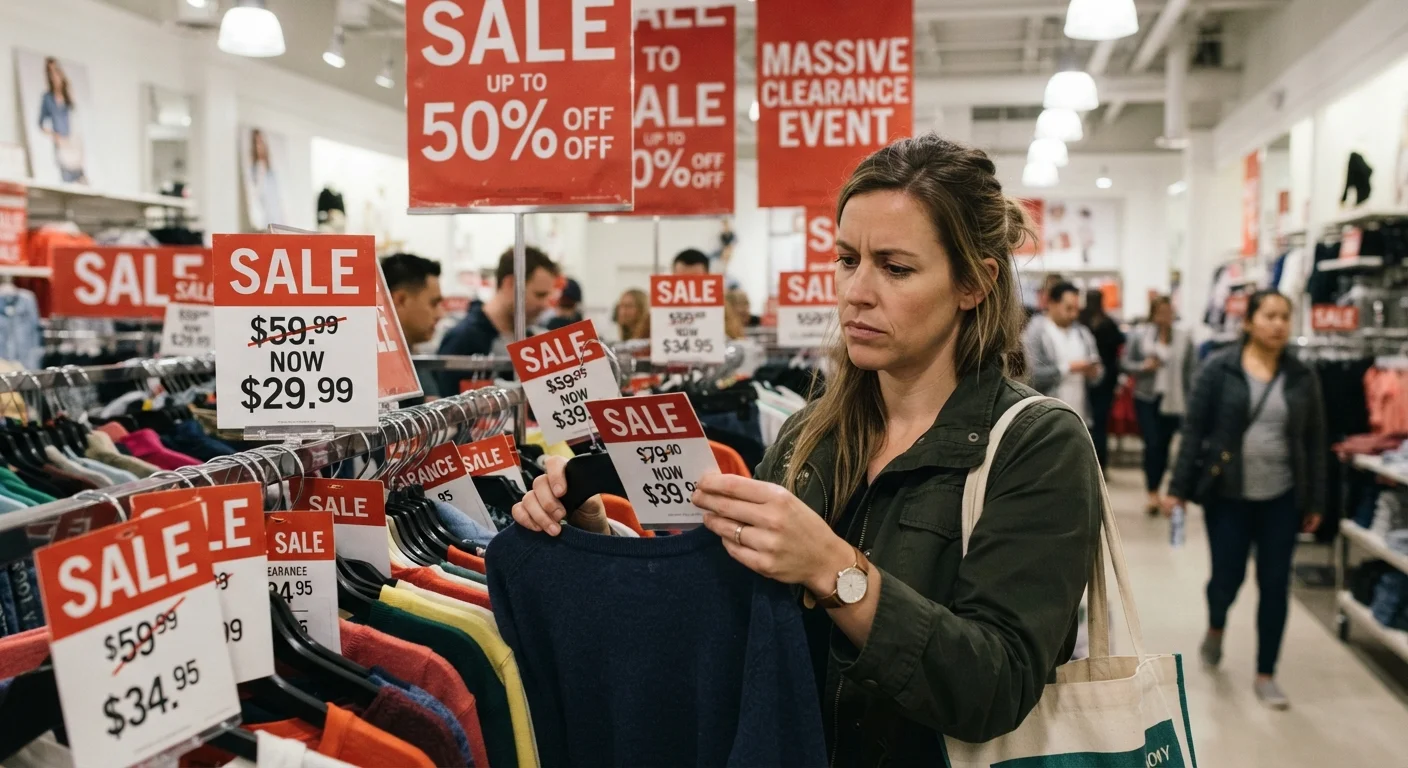
When you see a tag reading Was $120 - Now $79, your brain does something automatic: it calculates a saving of $41 and registers a deal. That's exactly what retailers are counting on. The psychological mechanism is called anchor pricing - the higher number sets a mental benchmark, and anything below it feels like a win.
The problem is that the 'was' price is frequently not what most customers actually paid. In some cases, items are briefly listed at an inflated price - sometimes for as little as a day or two - so that the retailer can legally advertise a markdown. In other cases, the reference price is the manufacturer's suggested retail price (MSRP), a figure that functions more as a marketing ceiling than a real transaction price.
Trusting inflated original prices is one of the most common reasoning errors shoppers make. The fix isn't cynicism - it's a habit of verifying before purchasing.
~60%
Black Friday items at equal or lower prices earlier in the year
An analysis by consumer advocacy researchers found roughly 60% of Black Friday 'deals' were available at the same or lower prices at other points during the year.
37%
Shoppers who check price history before buying
According to survey data from consumer research organizations, fewer than four in ten shoppers verify an item's price history before committing to a purchase.
Up to 3x
Price inflation seen before major sale events
Price tracking data has documented items being marked up by as much as three times their typical price in the weeks before promotional events, then 'discounted' during the sale.
The Mechanics Behind Manufactured Discounts
Retailers use several well-established techniques to create the appearance of savings without necessarily delivering them:
- Temporary inflation: An item is listed at a high price for a short period, then 'discounted' back to its normal price. The sale price is effectively the everyday price.
- Bundle and strip: A product is bundled with accessories to justify a higher MSRP, then sold without accessories at a lower price that looks like a markdown.
- Event-driven pricing: Prices are quietly raised in the weeks before a major sale event, then 'cut' during the event back to where they were - or only marginally lower.
- Category-exclusive models: Retailers sometimes sell retailer-exclusive versions of products with slightly different model numbers, making direct price comparisons difficult across stores.
Understanding these mechanics doesn't require distrust of every sale - it requires verification. See how to read a price tag like a retail insider for more detail on what the numbers and color codes on tags actually signal.
Check Price History Before You Click Buy
Install a free browser extension that tracks retail price history before your next major purchase. A quick glance at a 90-day price chart takes about 30 seconds and immediately tells you whether a 'sale' represents a genuine low. If the current price matches the item's average over the past three months, no real markdown has occurred.
How to Verify Whether a Discount Is Real
The most reliable check is price history. Browser extensions and dedicated tracking tools log an item's price over time, showing whether the current 'sale' price is actually below the item's typical range or simply repackaged at a normal level.
A few practical habits that pay off:
- Look up the 30- to 90-day price range before buying anything above $50. A genuine markdown shows a price that is meaningfully lower than the historical norm - not just lower than a recently inflated reference point.
- Cross-check across multiple retailers. If the 'sale' price at one store matches the standard price at three others, no discount has actually occurred.
- Note seasonal patterns. Many categories follow predictable markdown calendars. Seasonal price patterns explain when genuine cuts tend to happen - and when promotional noise peaks without real savings.
Price history tools can make this verification process straightforward, even for infrequent shoppers.
What Genuine Markdowns Actually Look Like
Real discounts do exist. End-of-season clearance, model-year transitions, and retailer inventory reductions produce genuine price drops - the kind where the item sells below its actual going rate because the seller needs to move stock. These are structurally different from promotional pricing: the retailer's incentive is to clear inventory, not to manufacture urgency.
Signs that a markdown is likely genuine include: the item is being discontinued or replaced by a newer version, the discount is consistent across multiple sellers simultaneously, and the price drop is reflected in the item's full price history - not just against an inflated anchor. Also worth checking: whether there are hidden costs that inflate the final price, such as required accessories, installation fees, or subscriptions that aren't obvious at checkout.
The takeaway is straightforward: the word 'sale' is a marketing signal, not a verified fact. Treating reference prices as hypotheses to be tested - rather than facts to be accepted - is the habit that separates shoppers who save from those who think they did.
Price-Match Policies Can Help - With Caveats
Some retailers offer price-match guarantees, but these policies often have significant exclusions - marketplace sellers, limited-time 'doorbusters,' and retailer-exclusive models may all be ineligible. Understanding what price-match policies actually cover before you shop can save frustration at checkout.
Frequently Asked Questions
It depends on the state and context. The FTC requires that a 'former price' be one at which the item was genuinely offered for a reasonable period. However, enforcement varies, and many inflated reference prices operate in a legal gray zone. Some states have stricter rules than others.
Check the item's price history using browser extensions or retail tracking tools - they show price fluctuations over weeks or months. If the 'sale' price is actually the item's typical going rate, the discount is manufactured. Comparing prices across multiple retailers also helps establish a true market price.
A 'was/now' price displays a higher former price alongside a current lower price to suggest savings. Retailers use it because comparison pricing is psychologically effective - consumers anchor on the higher number and perceive the lower price as a bargain, even if the markdown is minimal or the original price was rarely charged.
Some do, but research has consistently shown that many Black Friday and holiday sale prices are not significantly lower than prices available at other times of year. Certain categories - like TVs - do see genuine price drops, while others simply recycle standard promotions under a sale banner.
Anchor pricing is a psychological technique where a high reference price is shown first to make a lower price seem more attractive by comparison. The 'anchor' shapes what consumers consider a fair price, even if it doesn't reflect real market value.
The content on this site is for informational purposes only and is not a substitute for professional advice. Always consult a qualified professional for guidance specific to your situation.