

Why Hidden Water Damage Is So Difficult to Catch
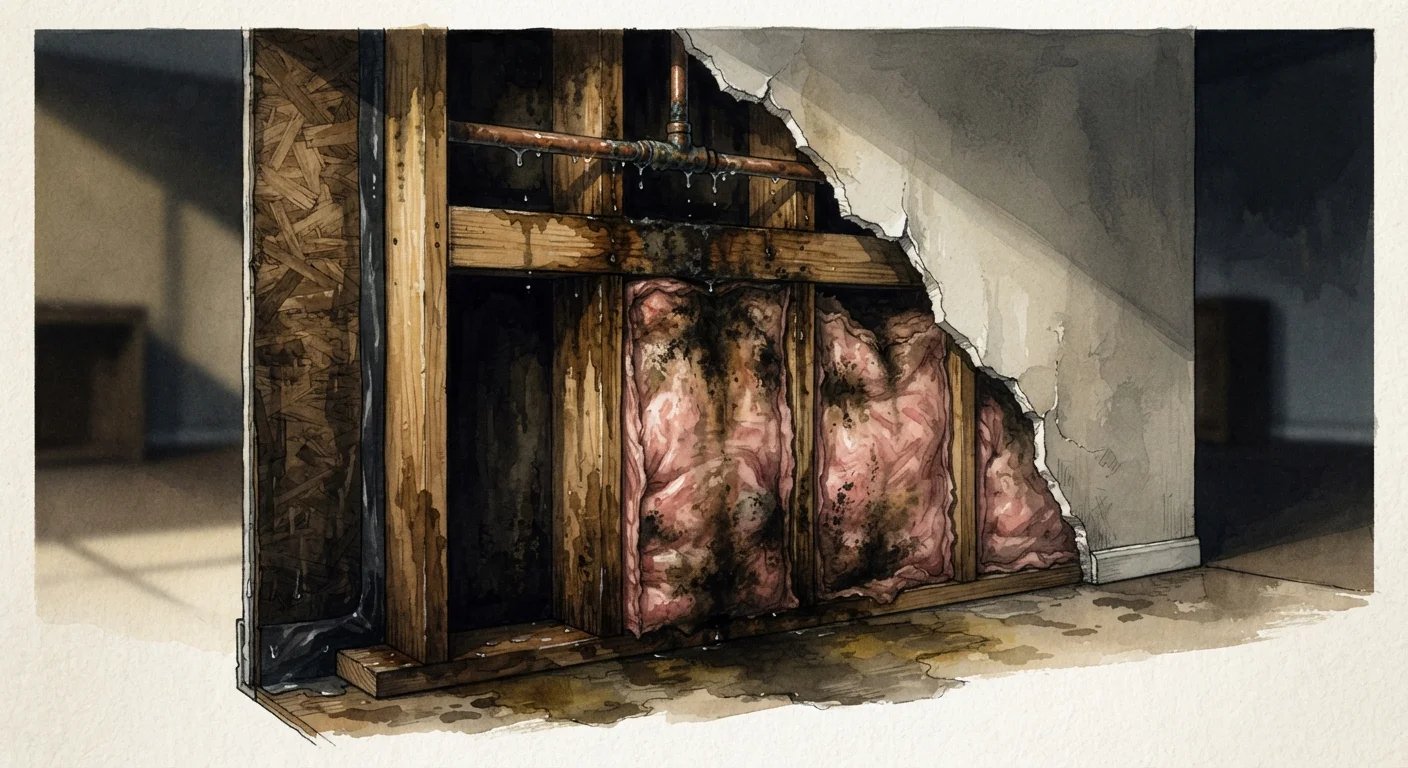
Water is extraordinarily good at finding paths of least resistance - traveling along framing, pooling inside insulation, and saturating drywall long before any stain appears on your wall surface. Unlike a burst pipe, which demands immediate attention, slow leaks from faulty seals, hairline cracks in plumbing fittings, or compromised roof flashing can operate silently for months. By the time a homeowner notices a problem, structural wood may already be softening, and mold may be well-established inside the cavity.
The compounding issue is that most of us simply don't have reason to look closely at our walls until something visually obvious appears. That delay is exactly what turns a manageable repair into a major remediation project. Understanding the subtle early signals - and why so many of us miss them - is the first step to protecting your home.
~14,000
US homes affected by water damage daily
According to insurance industry estimates, roughly 14,000 Americans experience a water damage emergency at home each day.
~$11,000
Average water damage claim cost
Water damage and freezing claims are among the most common homeowner insurance claims, with average payouts often exceeding $10,000 depending on severity and location.
24-48 hrs
Time for mold growth to begin
The EPA notes that mold can begin to develop on wet building materials within 24 to 48 hours when conditions are warm and there is inadequate airflow.
The Mistakes That Let Water Damage Spread Undetected
The errors below represent the most common patterns our editorial team sees homeowners repeat. Each one is understandable - and each one is preventable with a small shift in awareness.
Dismissing a musty smell as normal household odor.
Why it happens: Musty odors come and go, and homeowners often attribute them to seasonal humidity, old carpets, or poor ventilation rather than active moisture intrusion.
Assuming paint bubbles or peeling wallpaper are purely cosmetic problems.
Why it happens: Blistered paint is easy to patch and repaint, so homeowners treat it as a surface issue without investigating what caused it in the first place.
Ignoring a slow but persistent increase in monthly water bills.
Why it happens: Utility bills vary month to month, and small increases are often chalked up to seasonal use, a new appliance, or rate changes.
Skipping the exterior inspection after heavy rain or winter weather.
Why it happens: Most homeowners focus on visible interior damage after storms and don't connect exterior deterioration - such as cracked caulking, missing shingles, or damaged flashing - to interior wall moisture.
Delaying action on a known slow drip under a sink or around a pipe fitting.
Why it happens: A small drip feels manageable - homeowners place a towel or a bucket underneath and intend to fix it later, underestimating how quickly moisture spreads into adjacent wall cavities.
Mold Can Develop Within 24-48 Hours
Once moisture reaches wall cavities, mold colonies can begin forming in as little as 24 to 48 hours under warm conditions. By the time mold becomes visible on your wall surface, growth inside the cavity may already be extensive. Do not delay investigation if multiple warning signs appear together. Contact a licensed remediation professional for an assessment.
What to Do When You Suspect Moisture Behind a Wall
If multiple warning signs appear together - soft drywall, discoloration, a musty smell, or unexplained bill increases - resist the impulse to simply repaint or caulk over the surface. That approach seals moisture in, which accelerates structural damage and mold growth.
Don't Open Walls Without Turning Off the Water
Before cutting into any drywall to investigate suspected leaks, locate and shut off the water supply to the affected area. Cutting into a wall near an active pressurized pipe can result in flooding. If you cannot confidently identify what's behind a wall, call a licensed plumber before proceeding.
Start by checking the most likely sources: supply lines under sinks, toilet tank connections, washing machine hoses, and any pipe that runs through the affected wall. A non-invasive moisture meter (available at hardware stores) can help you confirm whether drywall is holding abnormal levels of moisture before you open anything up.
For walls adjacent to bathrooms, kitchens, or laundry rooms, also inspect the grout and caulking at tile joints. Failed grout is one of the leading causes of slow moisture intrusion into wall cavities. Homes with crawl spaces or unfinished basements may experience moisture migration upward through framing - the risks of basement and crawl space moisture are often underappreciated until wall damage appears on upper floors.
When in doubt, contact a licensed water damage restoration professional or a plumber. Many offer initial assessments and can use thermal imaging to locate moisture without demolition. This is not a situation where a wait-and-see approach is advisable. New homeowners especially may not yet recognize these patterns - reviewing commonly overlooked maintenance tasks can help build that foundational awareness before problems compound.
The content on this site is for informational purposes only and is not a substitute for professional advice. Always consult a qualified professional for guidance specific to your situation.