

Our Verdict
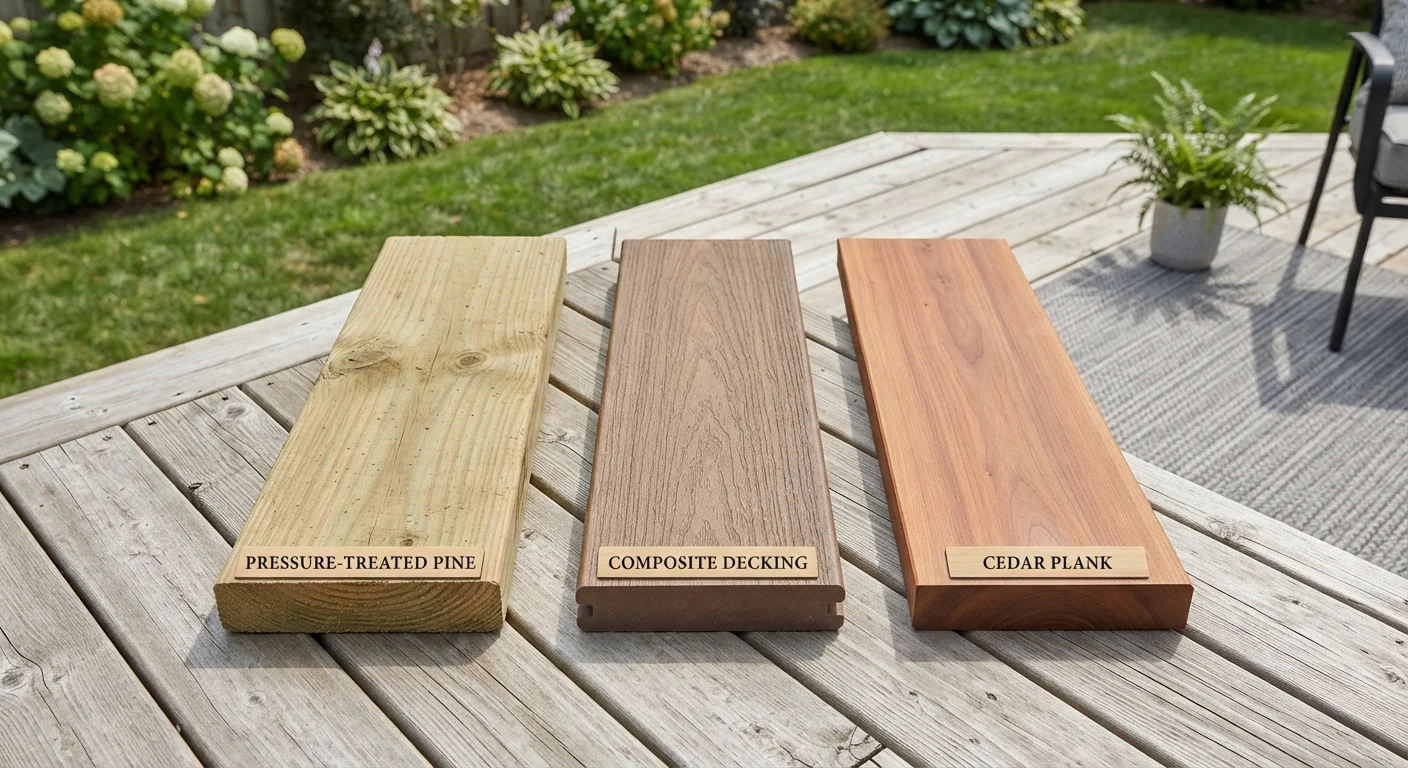
Each of these three materials serves a distinct type of homeowner. Pressure-treated wood suits budget-conscious builders who don't mind annual upkeep. Composite rewards those who want a low-maintenance deck over the long haul. Cedar appeals to homeowners who value natural aesthetics and are willing to invest moderate time in care. No single material wins outright - the right choice depends on your climate, budget, and lifestyle.
| Best for | Recommended |
|---|---|
| Budget-focused homeowners comfortable with regular maintenance | Pressure-Treated Wood |
| Those prioritizing long-term low maintenance over upfront savings | Composite Decking |
| Homeowners who want natural wood aesthetics with moderate upkeep | Cedar |
Pressure-Treated Wood: Affordable but Demanding
Pressure-treated (PT) lumber is the most widely used decking material in the US, primarily because of its low upfront cost. The wood is infused with preservative chemicals - typically copper-based compounds - that help it resist rot, insects, and moisture. A 12×12 foot deck built with PT lumber can cost significantly less in materials than composite alternatives.
That said, PT wood is not a set-and-forget option. It tends to warp, crack, and splinter as it dries out over the first year, which means waiting before staining or sealing is often advised. After that initial period, expect to clean, re-seal, or restain every one to three years to prevent deterioration. Boards that go untreated can gray, check (develop surface cracks), and begin to decay within a few seasons.
Lifespan with proper maintenance is typically 15-20 years. One additional consideration: older PT lumber used arsenic-based treatments that raised health concerns. Modern formulations are different, but it's still worth wearing gloves when cutting and avoiding inhaling sawdust without a proper respirator.
Always Cut PT Lumber Safely
Cutting pressure-treated lumber produces sawdust that contains preservative residues. Always wear an N95 or better respirator, safety glasses, and disposable gloves when cutting or sanding PT wood. Never burn PT lumber scraps - the smoke and ash can contain harmful compounds. Dispose of offcuts according to your local waste management guidelines.
Composite Decking: Higher Upfront, Lower Long-Term Effort
Composite decking is manufactured from a blend of wood fiber and recycled plastics. The result is a board that resists moisture, insects, and fading far better than natural wood, with far less annual upkeep. Most composite products only need an occasional wash with soap and water to stay looking good.
The trade-off is cost. Composite materials can run two to three times the price of PT lumber per square foot. For a mid-sized deck, that difference adds up quickly. However, many homeowners find the reduced maintenance costs and longer lifespan - commonly cited at 25-30 years for quality products - offset the initial investment over time.
Composite boards can still get hot underfoot in direct summer sun, a consideration for families with young children. They also don't accept stain or paint the way wood does, so the color you choose at purchase is essentially the color you'll live with. If a board gets damaged, matching the original shade in a future repair can sometimes prove difficult.
For a deeper look at how material quality and longevity factor into home purchases more broadly, see our guide to evaluating material trade-offs.
| Pressure-Treated Wood | Composite | Cedar | |
|---|---|---|---|
| Upfront Material Cost | Lowest | Highest | Moderate |
| Typical Lifespan | 15-20 years | 25-30 years | 15-20 years |
| Maintenance Frequency | Every 1-3 years | Minimal (washing) | Every 2-3 years |
| Rot & Insect Resistance | Chemically treated | Excellent (inherent) | Naturally resistant |
| Aesthetic Flexibility | Stainable/paintable | Color fixed at purchase | Stainable, weathers naturally |
| Environmental Notes | Chemical preservatives used | Often uses recycled content | Renewable natural resource |
Cedar: Natural Beauty With a Maintenance Commitment
Western red cedar is a naturally rot- and insect-resistant wood that has been used in outdoor construction for generations. It sits in a middle ground between PT wood and composite: more expensive than PT lumber but typically less costly than premium composite, and requiring more upkeep than composite but generally less chemical treatment than PT wood.
Cedar's grain and warm reddish-brown tones make it a popular choice when aesthetics matter. Left untreated, cedar weathers to a silvery gray - a look some homeowners appreciate, others do not. Applying a UV-blocking sealant every two to three years helps preserve the original color and extend the wood's life. Without any treatment, cedar can still last a decade, though it will show wear more visibly.
Because cedar is a softer wood, it can dent or scratch more easily than composite or some harder species. It's also subject to regional availability: pricing and supply can vary considerably depending on where you live in the country. If you're comparing how natural versus engineered materials perform in indoor settings too, our hardwood vs. luxury vinyl plank flooring comparison covers similar trade-offs.
Seal Cedar Before Its First Winter
Applying a quality water-repellent sealant to new cedar boards before winter arrives can significantly reduce the checking and splitting that happens during freeze-thaw cycles. Allow the wood to dry fully after installation - typically a few weeks in dry weather - before applying any finish. Always follow the sealant manufacturer's instructions for application and recoat intervals.
Planning Your Deck Build: What Else to Consider
Beyond material choice, several practical factors shape how a deck project unfolds. Most jurisdictions in the US require a building permit for new deck construction, especially for decks above a certain height or square footage. Requirements vary by municipality, so check with your local building department before breaking ground - not after.
Substructure framing is typically built from PT lumber regardless of what decking material goes on top. This means even a composite-surfaced deck has PT components underneath that need proper installation and ventilation to avoid moisture problems.
If you're unsure whether a project is within DIY range, a licensed contractor can assess the site, pull permits, and ensure the structure meets local code. For elevated decks, complex footings, or any work near electrical or gas lines, consulting a professional is strongly recommended. Structural failures on decks can cause serious injury - this is one area where cutting corners carries real risk.
Finally, consider your local climate when weighing materials. High humidity and frequent rain accelerate wood degradation; extreme heat affects composite surface temperature; freeze-thaw cycles stress fasteners and framing. A material that performs well in a dry Southwest climate may behave very differently in the Pacific Northwest.
The content on this site is for informational purposes only and is not a substitute for professional advice. Always consult a qualified professional for guidance specific to your situation.