

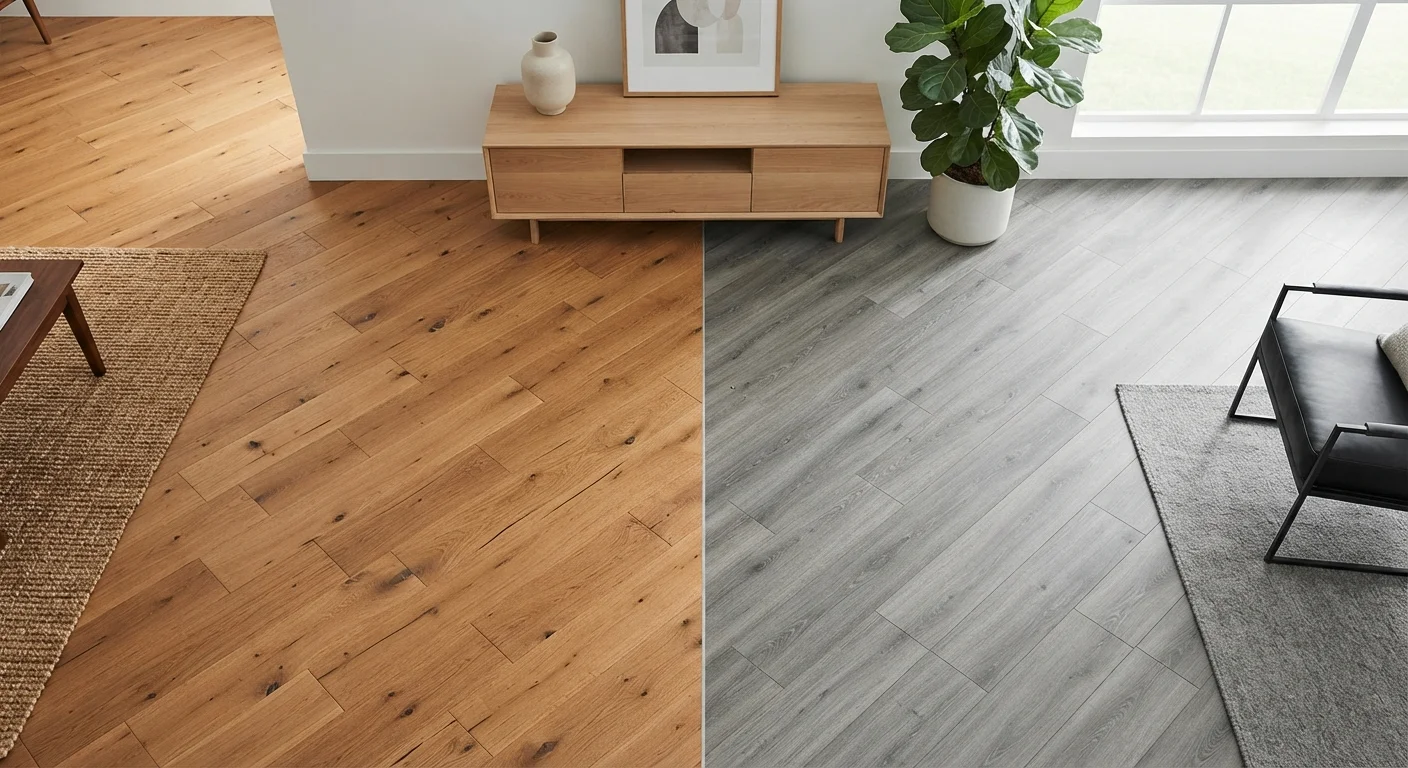
Option A
Hardwood Flooring
The timeless, high-value natural choice.
Best for: Homeowners seeking long-term property value and a classic aesthetic who can manage moderate maintenance and a higher upfront cost.
Option B
Luxury Vinyl Plank (LVP)
The durable, moisture-resistant modern alternative.
Best for: Households with pets, children, or moisture-prone spaces that need a resilient, lower-cost floor that still looks like wood.
Cost and Installation
Budget is usually the first filter homeowners apply. Hardwood flooring - both solid (¾-inch planks nailed to a subfloor) and engineered (plywood-core planks that can float or be glued) - typically costs between $6 and $12 per square foot for materials alone, with professional installation adding $3-$5 per square foot on average. Solid hardwood requires a wood or plywood subfloor and cannot be installed below grade.
Luxury vinyl plank generally runs $2-$7 per square foot for materials, with installation often cheaper because most products use a click-lock floating system that an experienced DIYer can manage over a weekend. LVP can go over concrete, existing tile, or plywood, and it's suitable for below-grade spaces like finished basements.
When weighing long-term value, it helps to understand that a higher upfront cost isn't always wasteful - see our guide on when paying more upfront makes sense for a broader framework.
| Criterion | Hardwood | Luxury Vinyl Plank |
|---|---|---|
| Typical material cost | $6-$12 per sq ft | $2-$7 per sq ft |
| Waterproof | No | Yes |
| Below-grade installation | Not recommended | Yes |
| Can be refinished | Yes (multiple times) | No |
| Scratch resistance | Moderate (species-dependent) | High (wear layer) |
| Typical lifespan | 50+ years with care | 15-25 years |
| DIY-friendly | Engineered only (floating) | Yes (click-lock) |
| Resale value impact | Generally higher | Moderate |
Durability, Moisture, and Maintenance
This is where the two materials diverge most sharply. Solid hardwood expands and contracts with humidity changes and can buckle or cup if it gets wet. It should never be installed in bathrooms or below grade. Engineered hardwood handles moisture somewhat better but still isn't waterproof.
LVP is constructed with a waterproof PVC core, meaning spills, splashes, and even minor flooding won't damage the planks themselves - though prolonged standing water can affect adhesives or the subfloor beneath.
For day-to-day wear, LVP's protective wear layer (rated in mils - typically 12 mil for residential use) resists scratches and scuffs better than most hardwood species. Hardwood, however, can be sanded down and refinished when wear shows, essentially resetting the surface. LVP cannot be refinished; once the wear layer is gone, the plank needs to be replaced.
50+ years
Potential lifespan of solid hardwood
Solid hardwood floors that are properly maintained and periodically refinished can last the lifetime of a home, according to flooring industry guidance.
15-25 years
Typical LVP lifespan under normal residential use
Most manufacturers rate residential-grade LVP products for 15-25 years depending on wear-layer thickness and foot traffic levels.
12 mil
Standard residential LVP wear-layer thickness
A 12-mil wear layer is generally considered adequate for typical household use; commercial-grade products start at 20 mil.
Routine maintenance for hardwood involves dry mopping, occasional damp mopping with a wood-safe cleaner, and re-coating every several years. LVP requires only sweeping and damp mopping - no special cleaners or coatings needed.
Aesthetics, Comfort, and Resale Value
Hardwood's natural grain variation, warmth underfoot, and the way it ages gracefully are difficult to replicate. LVP has improved dramatically - photographic print layers now convincingly mimic oak, hickory, and walnut - but it lacks the thermal mass of real wood and can feel slightly hollow underfoot without an underlayment pad.
From a comfort standpoint, hardwood (especially engineered over a concrete slab) can feel cold in winter without radiant heat. LVP can be paired with radiant systems if the manufacturer's temperature rating allows it - verify specs before installation.
On resale value, real estate professionals frequently note that genuine hardwood floors are a selling point buyers recognise. LVP is increasingly accepted, particularly in mid-range and rental properties, but it doesn't carry the same premium perception in most US markets. If you're comparing how material choices affect a project's long-term return, our piece on decking material trade-offs applies a similar framework to outdoor surfaces.
A Note on Engineered Hardwood
Engineered hardwood sits between solid hardwood and LVP in both cost and performance. Its plywood core is more dimensionally stable than solid wood, allowing installation over concrete and in some below-grade spaces. However, it can typically only be refinished one to three times depending on the veneer thickness. If you're considering engineered hardwood, check the veneer thickness (3mm or more is preferable) and the manufacturer's moisture guidelines before committing.
The content on this site is for informational purposes only and is not a substitute for professional advice. Always consult a qualified professional for guidance specific to your situation.