

Our Verdict
Buying furniture online is a genuinely practical option for many shoppers, but it rewards those who do the pre-purchase legwork. The savings potential is real, and so are the risks - particularly around material quality, assembly burden, and return complexity. Going in with clear expectations and a methodical checklist helps avoid the scenarios where convenience turns into a headache.
Best suited to shoppers who are comfortable with assembly, have verified dimensions carefully, and are buying furniture for low-stakes spaces where tactile quality matters less.
Why the Price Tag Doesn't Tell the Whole Story
Online furniture listings often lead with an attractive sticker price, but that number rarely reflects what you'll ultimately spend. Delivery fees for large or heavy items can run anywhere from moderate to significant, especially for white-glove or room-of-choice delivery services. Assembly charges, if offered, add another layer. Then there's the disposal cost if you're replacing existing furniture and need to haul it away.
These compounding expenses are worth mapping out before assuming you're getting a better deal than a local showroom. For a deeper look at how fees stack up quietly, hidden costs can quietly inflate what you pay. It's also worth weighing whether a pricier piece with better longevity changes the math - when paying more upfront makes sense depends heavily on how long you plan to keep the item.
~30%
Online furniture return rate estimate
Industry observers have estimated that furniture return rates for online purchases hover around 30%, driven largely by size mismatches and quality expectations not met on delivery.
2-6 weeks
Typical furniture delivery lead time
Many online furniture orders, particularly custom or made-to-order pieces, carry delivery windows of two to six weeks - a timeline that can affect move-in or renovation schedules.
The Pros: What Online Furniture Shopping Does Well
There are legitimate reasons online furniture sales have grown substantially. The practical advantages are real for shoppers who approach the process carefully.
Wider selection than most local showrooms offer
Online retailers can carry thousands of SKUs without physical floor space constraints, making niche styles, dimensions, and configurations far easier to find.
Easier side-by-side price and spec comparison
Shoppers can compare materials, dimensions, and customer reviews across multiple options in a single session, without sales pressure or travel time.
Convenient delivery to your door
Most online orders include standard threshold or doorstep delivery, which eliminates the need to rent a truck or coordinate transport from a store.
Customer reviews provide real-world assembly and quality data
Aggregate reviews often surface recurring quality issues or assembly problems that a showroom visit would never reveal, giving buyers advance warning.
The Cons: Where Online Purchases Create Real Problems
The downsides of online furniture buying are not hypothetical - they're the consistent friction points shoppers report after the purchase. Understanding them upfront is the clearest way to avoid regret.
No ability to assess materials or comfort in person
Cushion density, frame sturdiness, and finish texture are almost impossible to judge from photos or written descriptions - qualities that matter most for daily-use pieces.
Assembly complexity is frequently underestimated
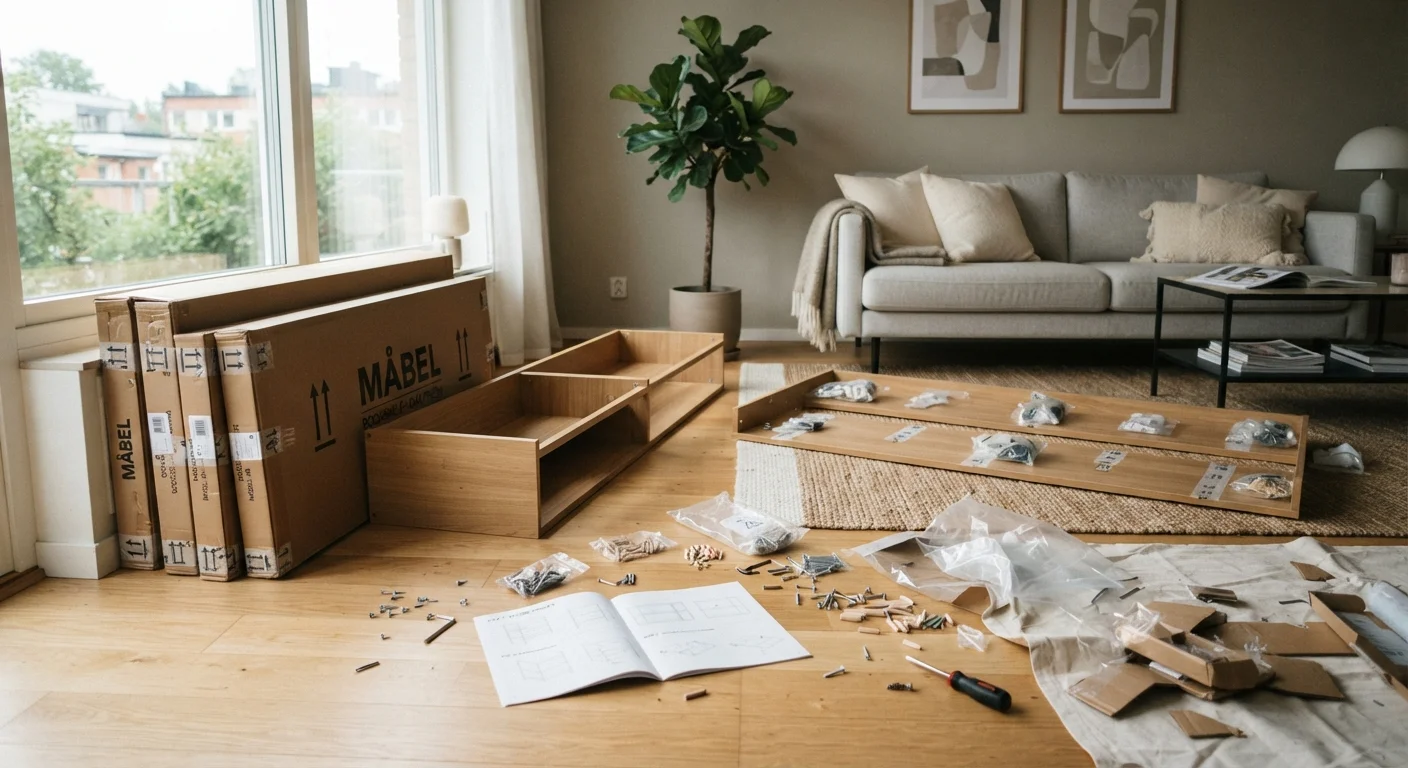
Flat-pack furniture can involve dozens of steps, ambiguous diagrams, and hardware that requires specific tools. Time and frustration costs are real but rarely factored into the purchase decision.
Return logistics are burdensome and often costly
Large furniture items require repackaging and scheduled pickup; return shipping fees can be substantial, and some retailers restrict returns on assembled pieces entirely.
Dimensions can mislead without physical context
A sofa that measures 88 inches can look very different in a 12-by-15-foot room than it does in a sparse studio photo - a mismatch that's expensive to undo.
Shipping damage risk is higher than for small goods
Larger boxes are more susceptible to handling damage in transit, and the process of documenting and disputing damage claims takes time and follow-up.
When Showroom Visits Still Make Sense
For high-use items like sofas, dining chairs, or mattresses, an in-store visit to a similar product - even if you ultimately buy online - can provide a useful reference point for comfort and material quality. Some shoppers use showrooms as a calibration step, then compare the tested piece against online options at various price points. This hybrid approach adds a small time cost but can prevent a much larger return-logistics headache later.
Material Quality: The Gap Between Photos and Reality
Product photography is optimized to sell. Finishes look richer, upholstery appears more substantial, and wood grain reads as solid rather than veneered. In practice, the tactile reality - the density of cushioning, the feel of a frame joint, the weight of a drawer - is impossible to convey in an image or even a written spec sheet.
One reliable workaround is to seek out independent owner reviews that specifically mention material quality over time, not just at delivery. Look for reviews that are at least six months old. Construction details such as corner blocking, dovetail joints, and kiln-dried hardwood frames signal durability in ways that price alone does not. This kind of category-specific thinking also applies when comparing options like mattress types, where material composition has direct long-term consequences.
Returns, Damaged Goods, and What Happens When Things Go Wrong
Returning a piece of furniture is categorically different from returning a phone case. Large items require repackaging, coordinated pickup scheduling, and often an out-of-pocket return shipping fee that the retailer buries in the policy fine print. Some retailers mark all furniture as final sale once assembled - which creates an obvious problem for any flat-pack product that requires assembly to assess properly.
Damage during shipping is also more common with furniture than smaller goods. Document everything on delivery: photograph the exterior packaging before opening, and note any damage to the carrier immediately. Before committing to any purchase, verify the return window, who pays for return shipping, and whether assembly voids eligibility. A pre-purchase checklist can help you verify these details before you commit.
The content on this site is for informational purposes only and is not a substitute for professional advice. Always consult a qualified professional for guidance specific to your situation.