

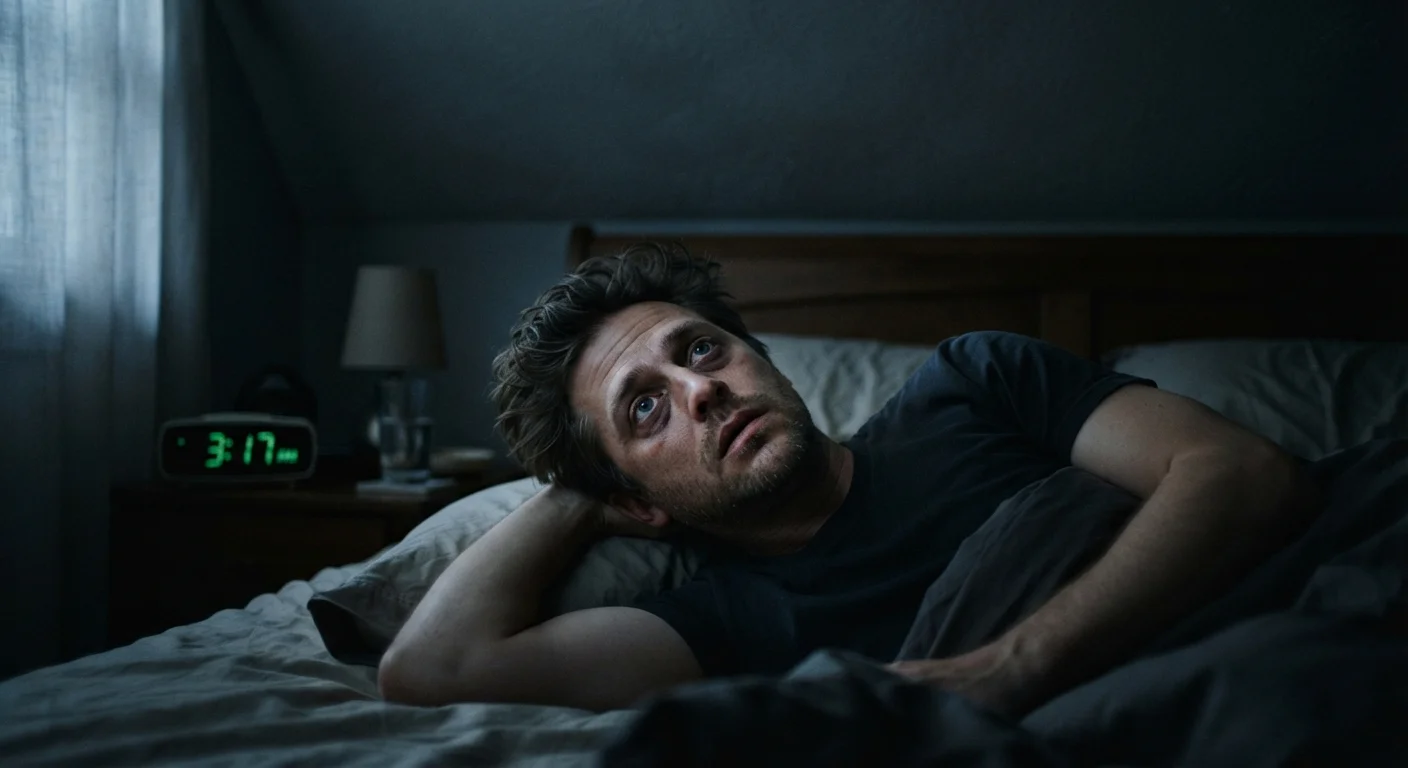
Why Sleep Is a Men's Health Issue
Sleep is often treated as a lifestyle preference rather than a biological necessity - something to be sacrificed for work, social obligations, or late-night entertainment. For men in particular, cultural norms around productivity and toughness can reinforce the idea that needing sleep is somehow a weakness. But the physiology is unambiguous: sleep is when the body repairs tissue, consolidates memory, regulates hormones, and resets the immune system.
Men face several sleep-specific vulnerabilities. They are diagnosed with obstructive sleep apnea at roughly twice the rate of premenopausal women, a condition that fragments sleep and reduces oxygen delivery throughout the night. They also show steeper declines in slow-wave (deep) sleep beginning in their 30s, which affects the quality of rest even when total hours appear adequate. This pattern is distinct from what women experience, as explored in sleep disruption and women's hormones.
Sleep Deprivation and Lifestyle Habits Interact
The consequences of sleep loss rarely occur in isolation. Men who sleep poorly are more likely to consume more alcohol and less likely to exercise regularly - both of which further degrade sleep quality. Addressing sleep as part of an overall health picture tends to be more effective than treating it as a standalone problem.
The overlap between poor sleep and other health habits compounds risk. Men who sleep poorly are more likely to consume more alcohol and less likely to exercise regularly - both of which further degrade sleep quality. See alcohol and men's health for more on how drinking patterns affect physiological function.
Hormones, Heart Health, and Metabolic Risk
The hormonal consequences of chronic sleep loss are among the most clinically significant. Testosterone - critical for muscle mass, bone density, libido, mood, and metabolic rate - is predominantly released during sleep. Research published in the Journal of the American Medical Association found that restricting healthy young men to five hours of sleep per night for one week reduced daytime testosterone levels by 10-15%. That decline is comparable to aging 10 to 15 years.
Simultaneously, sleep deprivation elevates cortisol, the body's primary stress hormone. Chronically elevated cortisol promotes fat storage, particularly visceral (abdominal) fat, and increases insulin resistance - a precursor to type 2 diabetes. The hormonal picture that emerges from chronic sleep loss mirrors many of the same physiological disruptions seen with chronic psychological stress. How stress affects the male body explains this overlap in greater depth.
2x
Men's rate of obstructive sleep apnea vs. women
According to the American Academy of Sleep Medicine, obstructive sleep apnea is diagnosed approximately twice as often in men as in premenopausal women.
10-15%
Testosterone drop after one week of short sleep
A study published in JAMA found this decline in young men restricted to five hours of sleep nightly - equivalent to aging roughly a decade in hormonal terms.
~1 in 3
U.S. adults not getting enough sleep
CDC surveillance data consistently show that approximately one-third of American adults report sleeping fewer than the recommended seven hours per night.
Cardiovascular risk also climbs with insufficient sleep. Large prospective studies have linked habitual short sleep duration to higher rates of hypertension, coronary artery disease, and stroke. The mechanisms include increased inflammation, elevated blood pressure, and impaired glucose metabolism - all of which are independently established cardiovascular risk factors.
The Mental Health Dimension Men Often Miss
The relationship between sleep and mental health is bidirectional and particularly consequential for men. Sleep deprivation impairs emotional regulation, reduces stress tolerance, and increases reactivity - yet men are far less likely than women to attribute mood changes to a health issue worth addressing. This creates a compounding problem: poor sleep worsens mood and cognition, which discourages help-seeking, which perpetuates poor sleep.
Persistent fatigue, irritability, and difficulty concentrating are frequently rationalized as normal stress responses rather than signals of a recoverable physiological problem. Men experiencing these symptoms are encouraged to consider them seriously rather than push through - a pattern discussed in detail in red flags men often brush off.
Start With One Change, Not a Full Overhaul
Sleep experts often recommend choosing a single consistent wake time as a first step - rather than overhauling every sleep habit simultaneously. A fixed wake time, maintained even on weekends, builds circadian consistency faster than most other interventions. Once that anchor is established, other improvements tend to follow more naturally.
The stigma surrounding mental health in men can delay recognition of sleep-related depression and anxiety. Research consistently shows that when men do engage with care, outcomes improve substantially. For more context on this pattern, see mental health stigma in men.
Building Better Sleep Habits: What the Evidence Supports
Improving sleep is not simply a matter of going to bed earlier. Sleep quality depends on consistent timing, a sleep-conducive environment, and the management of factors that fragment or delay sleep onset. The following evidence-informed practices are widely recommended by sleep medicine specialists:
- Consistent sleep and wake times: The circadian rhythm is highly sensitive to schedule irregularity. Waking at the same time each day - even on weekends - anchors the biological clock more effectively than any other single intervention.
- Limiting light exposure at night: Blue-spectrum light from screens suppresses melatonin secretion. Reducing screen time in the hour before bed has been shown to improve sleep onset latency.
- Managing caffeine timing: Caffeine has a half-life of approximately five to six hours in most adults. Consuming caffeine after early afternoon can meaningfully delay sleep onset, even when the individual does not feel stimulated.
- Cool, dark sleeping environment: Core body temperature drops as part of normal sleep initiation. A cooler room temperature (generally between 65-68°F / 18-20°C) supports this process.
- Discussing persistent issues with a provider: Snoring, frequent waking, and excessive daytime sleepiness are not normal - they warrant evaluation. Men who delay this conversation follow a broader pattern explored in why men skip the doctor.
This article is for general informational and educational purposes only and does not constitute medical advice. If you have concerns about your sleep, mood, or health, consult a qualified healthcare provider.
Frequently Asked Questions
Most health authorities, including the CDC and the American Academy of Sleep Medicine, recommend seven to nine hours per night for adults. Individual variation exists, but consistently sleeping fewer than seven hours is associated with measurable health risks for most men.
Yes. Research has shown that restricting sleep to five hours per night for one week can significantly reduce daytime testosterone levels in young men. Most testosterone release occurs during sleep, particularly during the early hours of the night.
Common signs include loud snoring, waking with a dry mouth or headache, excessive daytime sleepiness, and observed pauses in breathing during sleep. A healthcare provider can refer for a sleep study to confirm a diagnosis.
Partial recovery is possible, but research suggests that weekend catch-up sleep does not fully reverse metabolic and cognitive effects accumulated during weekday sleep restriction. Consistent nightly sleep is more beneficial than irregular patterns.
There is a well-established bidirectional relationship between sleep and mental health. Poor sleep increases risk of depression and anxiety, and mental health conditions often worsen sleep quality. Men, who are less likely to seek mental health support, may be especially vulnerable to this cycle.
The content on this site is for informational purposes only and is not a substitute for professional advice. Always consult a qualified professional for guidance specific to your situation.