

The Numbers Behind the Pattern
By nearly every measure, men in the United States engage with the healthcare system less than women. Research from the CDC and the Kaiser Family Foundation consistently shows that men are less likely to have a regular primary care provider, less likely to seek care for new symptoms, and less likely to complete recommended screenings. Men also wait longer before seeking care when they do decide to go.
The downstream consequences are significant. Men die at higher rates than women from nine of the ten leading causes of death in the US. Average male life expectancy trails female life expectancy by approximately five years. A substantial portion of that gap is attributable to late diagnoses and untreated chronic conditions - problems that preventive care is specifically designed to catch.
~5 years
US male vs. female life expectancy gap
According to CDC National Center for Health Statistics data, men's average life expectancy consistently trails women's by approximately five years.
~60%
Men without a regular primary care provider
Surveys conducted by the Kaiser Family Foundation found that a significant majority of adult men lack an established relationship with a primary care physician.
4x
Male-to-female ratio in suicide mortality
CDC data consistently shows men die by suicide at roughly four times the rate of women, a gap linked in part to lower rates of mental health treatment-seeking.
This isn't primarily an access story. Studies controlling for income and insurance coverage still find men underutilizing care compared to women. Something else is operating - and it runs deeper than logistics.
What Drives Healthcare Avoidance
Psychologists and public health researchers have identified several overlapping explanations for why men resist medical care. The most consistent finding involves traditional masculinity norms - cultural scripts that frame stoicism, self-sufficiency, and pain tolerance as core male virtues. Within this framework, admitting to a health concern can feel like an admission of weakness.
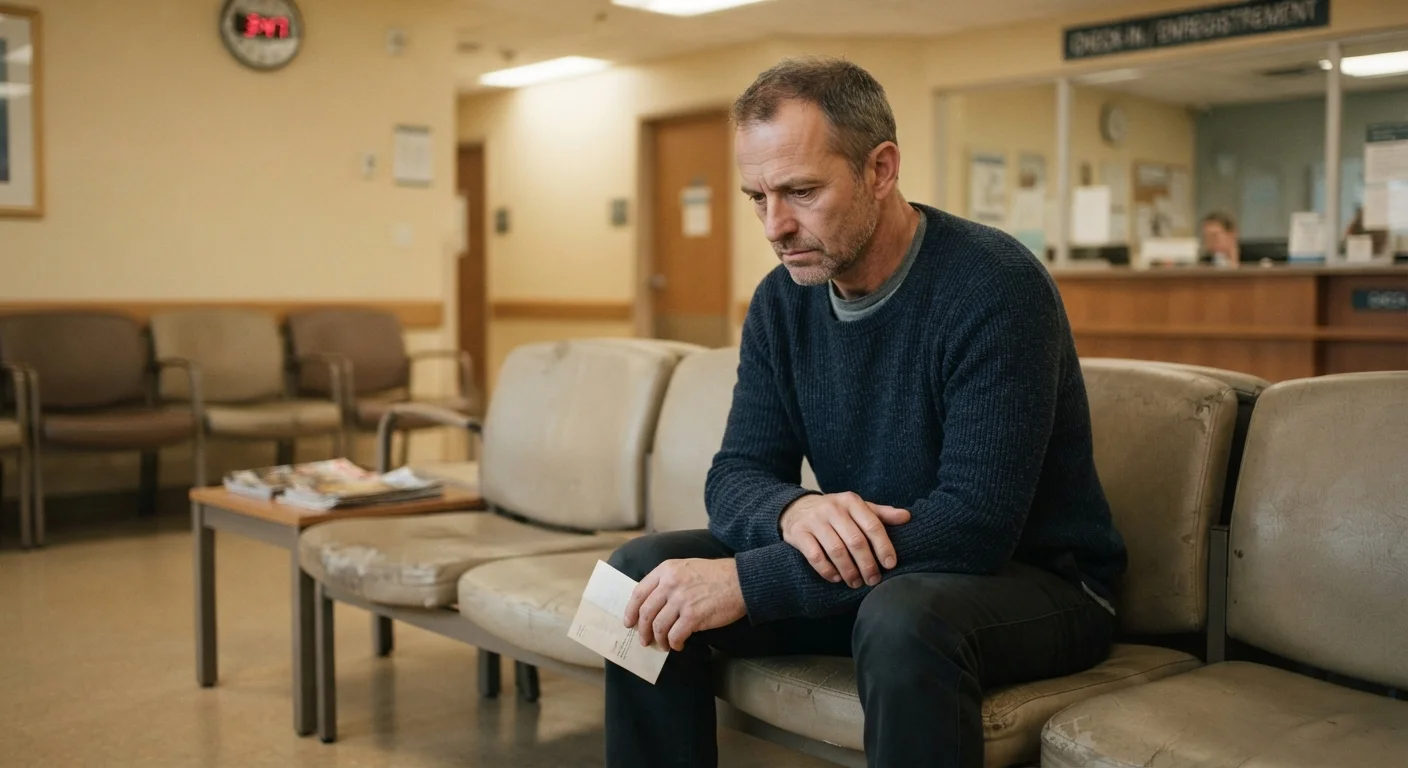
“There is a powerful cultural message that men should be able to handle things on their own. That message doesn't stop at the doctor's office door - it walks right in with them and sits in the waiting room.”
— Will Courtenay, Researcher and author specializing in men's health behavior
Fear of diagnosis is another documented driver. Many men report avoiding the doctor specifically because they don't want to receive bad news. This ostrich effect - preferring not to know - is particularly common around symptoms that might signal serious illness. Paradoxically, the conditions men fear most (heart disease, cancer) are most treatable when caught early.
Mental health stigma compounds the pattern further. Men are far less likely than women to seek care for depression or anxiety, and are significantly more likely to present to emergency care or not at all. The reluctance to discuss psychological distress often extends to physical symptoms with emotional dimensions, making comprehensive care harder to deliver even when men do show up.
What Gets Missed - and When It Matters
Several conditions disproportionately affect men precisely because they are so often caught late. Colorectal cancer is a clear example: it is highly survivable when detected early through colonoscopy, but survival rates drop dramatically at later stages. Yet men consistently complete colorectal screenings at lower rates than women.
Hypertension - often called a silent killer because it produces no obvious symptoms - is another. A man can carry dangerously elevated blood pressure for years without knowing it, increasing his risk of heart attack and stroke with each passing season. A simple blood pressure reading costs almost nothing and takes under a minute.
Symptoms men commonly rationalize away - fatigue, chest tightness, shortness of breath, mood changes - are frequently the early signals of diagnosable and treatable conditions. Similarly, chronic sleep problems that go undiscussed with a provider can mask or worsen underlying cardiovascular and hormonal issues.
Start With One Appointment
If you haven't seen a primary care provider recently, scheduling a single annual physical is the most impactful first step. Use that visit to establish baseline numbers - blood pressure, cholesterol, blood glucose - and ask what screenings are appropriate for your age and family history. One visit creates a foundation for everything else.
The parallel to deferred maintenance is instructive. Just as skipping scheduled vehicle maintenance tends to convert minor, inexpensive issues into major failures, ignoring routine health checks allows manageable conditions to escalate into crises.
Shifting the Equation
Changing this pattern doesn't require a dramatic reinvention of how men relate to their health. Research on behavior change suggests that small, concrete reductions in friction matter more than broad attitude shifts. Scheduling a single annual physical - and keeping it - establishes a baseline that makes every subsequent conversation easier.
Providers and public health advocates have also found that reframing the concept of a checkup helps. Language around performance optimization, baseline testing, or knowing your numbers resonates with men who find medical language passive or threatening. The goal isn't to turn every man into a health enthusiast; it's to lower the activation energy for a first appointment.
This Is General Health Information
The patterns described here reflect population-level research trends, not a diagnosis or personal health assessment. Individual health needs vary considerably. If you have symptoms you've been putting off or it's been several years since a checkup, consult a licensed healthcare provider for guidance tailored to your circumstances.
Men with chronic conditions, a family history of serious illness, or symptoms they've been delaying should speak with a qualified healthcare provider promptly. This article provides general health information only and is not a substitute for individualized medical advice.
This article is for informational purposes only and does not constitute medical advice. Always consult a qualified healthcare professional for guidance specific to your health situation.
Frequently Asked Questions
Research points to a mix of cultural conditioning, fear of receiving bad news, and a tendency to downplay symptoms. Many men were raised to equate seeking help with weakness. Structural barriers like cost and limited appointment availability also play a role, though studies suggest the psychosocial factors are significant even when access isn't an issue.
Conditions like high blood pressure, type 2 diabetes, and several cancers often develop without obvious symptoms. Routine screenings are designed to catch these early, when treatment is most effective. Skipping them increases the likelihood that a condition will be discovered at an advanced stage, often requiring more aggressive and costly intervention.
Progress has been slow. The male-female gap in life expectancy and preventive care utilization remains substantial. Public health efforts have focused on destigmatizing help-seeking behavior in men, but cultural change is gradual. Some research suggests younger generations of men are becoming more proactive about health, though data is still emerging.
Blood pressure checks, cholesterol panels, colorectal cancer screenings, and diabetes testing are among the most frequently delayed. Mental health assessments are also underutilized in men. The specific screenings a man needs depend on age, family history, and individual risk factors - a primary care provider can help build a personalized schedule.
Framing a visit as a practical health audit rather than an admission of vulnerability can help shift the mindset. Preparing specific questions in advance, being honest about symptoms, and viewing the doctor as a partner rather than a gatekeeper are strategies that many men find useful. Some men also report that male physicians make the first visit feel more comfortable, though any qualified provider is appropriate.
The content on this site is for informational purposes only and is not a substitute for professional advice. Always consult a qualified professional for guidance specific to your situation.