

What Is an Asset Class?
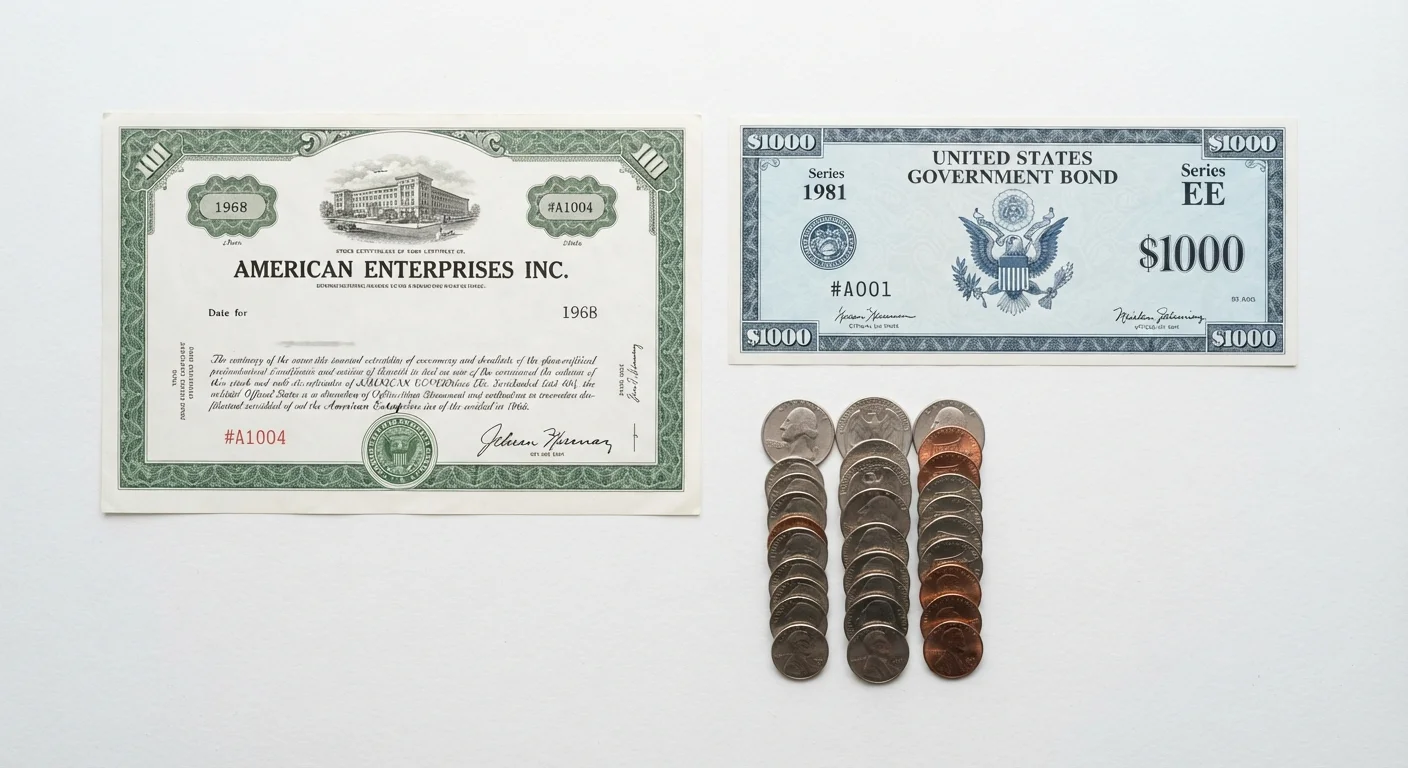
When financial professionals talk about asset classes, they mean broad categories of investments that share similar characteristics - how they generate returns, how they behave in different market conditions, and how much risk they typically carry. The three most fundamental asset classes are stocks, bonds, and cash (or cash equivalents).
Understanding what each one does - and doesn't do - helps you make sense of why a portfolio might hold all three at once. Before diving in, it helps to understand the difference between saving and investing, since those concepts underpin how each asset class is used.
| Primary asset classes | Stocks, bonds, and cash (cash equivalents) |
| Stocks risk level | Higher - prices fluctuate with markets |
| Bonds risk level | Moderate - tied to interest rates and issuer credit |
| Cash risk level | Low - but vulnerable to inflation over time |
| Stocks primary return source | Price appreciation and dividends |
| Bonds primary return source | Interest (coupon) payments |
| Cash primary purpose | Liquidity and capital preservation |
| Typical emergency fund holding | 3-6 months of essential expenses in cash (Widely cited personal finance guideline) |
Stocks: Ownership With Growth Potential
A stock (also called a share or equity) represents a fractional ownership stake in a company. When a company performs well and grows, the value of its shares can rise. Some companies also distribute a portion of their profits to shareholders as dividends.
Stocks have historically offered higher long-term returns than other major asset classes - but that potential comes with higher short-term volatility. Stock prices can swing sharply in response to economic news, interest rate changes, or company-specific events. An investor who needs their money within a year or two faces real risk if stocks drop in that window.
Stocks are generally considered growth-oriented assets, suited for goals that are far enough in the future that short-term fluctuations can be weathered. They are a cornerstone of most long-term retirement strategies. If you want to explore a widely used, low-cost way to invest in stocks, see our article on what index funds are and how they work.
Bonds: Lending in Exchange for Income
A bond is a loan you make to a borrower - typically a corporation or government - in exchange for regular interest payments and the return of your principal at a set maturity date. Because the income stream is defined in advance, bonds are often called fixed-income securities.
Bonds generally carry less risk than stocks, but the trade-off is lower expected returns over the long run. They can, however, provide stability and predictable income - useful for investors who are closer to needing their money or who want to reduce the overall swings in their portfolio.
Bond prices move inversely to interest rates: when rates rise, existing bond prices typically fall, and vice versa. Credit quality also matters - bonds from borrowers with weaker finances carry higher default risk and typically offer higher yields to compensate.
Asset class
A broad category of investments that share similar characteristics, risk profiles, and behavior in the market. The major classes are stocks, bonds, and cash equivalents.
Equity (stock)
A share of ownership in a company. Stockholders may benefit from price appreciation and dividends, but also bear the risk of losses if the company underperforms.
Fixed-income security
An investment - most commonly a bond - that pays the holder a defined stream of interest over time and returns the principal at maturity.
Liquidity
How quickly and easily an asset can be converted to cash without significantly affecting its value. Savings accounts are highly liquid; real estate is not.
Dividend
A portion of a company's profits distributed to its shareholders, usually paid on a quarterly basis. Not all companies pay dividends.
Inflation risk
The risk that the purchasing power of your money erodes over time because inflation outpaces your investment returns. Cash held over the long term is especially exposed to this risk.
Maturity date
The date on which a bond's principal is repaid to the bondholder. Bonds can range from short-term (a few months) to long-term (30 years or more).
Portfolio
The collection of all investments held by an individual or institution, which may include stocks, bonds, cash, real estate, and other assets.
Cash and Cash Equivalents: Safety and Liquidity
Cash equivalents include savings accounts, money market accounts, certificates of deposit (CDs), and Treasury bills - instruments that are highly liquid (easy to access) and carry very low risk of losing value. They don't aim to grow your wealth over time; their purpose is to preserve it and keep it accessible.
Cash plays a critical role in a sound financial plan. An emergency fund - typically three to six months of essential expenses - is almost always held in cash or cash equivalents rather than invested. For a structured starting point, see your first steps toward building a financial safety net.
The main risk of holding too much cash long-term is inflation risk: if your cash earns less than the inflation rate, its real purchasing power declines over time. That's why cash is generally reserved for short-term needs and emergency buffers, not long-term wealth building.
This article is for general informational and educational purposes only. It does not constitute personalized financial, investment, or tax advice. Consider consulting a licensed financial adviser before making investment decisions based on your individual circumstances.
The content on this site is for informational purposes only and is not a substitute for professional advice. Always consult a qualified professional for guidance specific to your situation.