

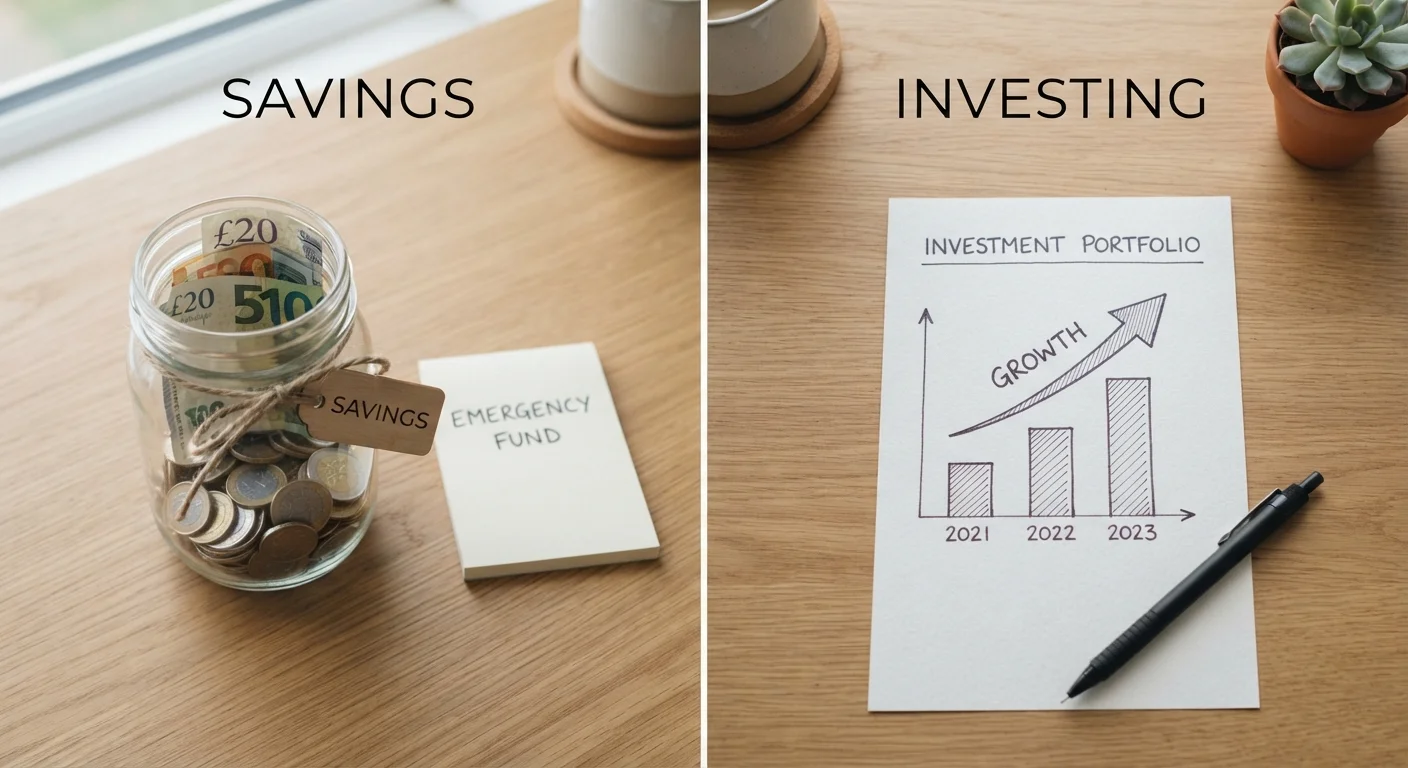
Two Tools, Two Different Jobs
Most people use the words "saving" and "investing" interchangeably, but they describe fundamentally different financial activities. Understanding the distinction matters because using the wrong tool for the wrong goal can leave you either exposed to unnecessary risk or missing out on long-term growth.
Saving is the act of setting money aside in a stable, low-risk place - most commonly a savings account or money market account at a bank or credit union. The primary goal is to preserve what you put in while keeping it accessible. Your principal, meaning the amount you deposit, doesn't fluctuate with market conditions.
Investing involves putting money into assets - such as stocks, bonds, mutual funds, or real estate - with the expectation that the value may grow over time. Unlike savings, invested money is not guaranteed to hold its value. Markets move up and down, and any investment can lose value.
Think of saving as a foundation and investing as the structure built on top of it. Both are necessary, but neither works well when used in place of the other.
$250,000
FDIC deposit insurance limit per depositor
The FDIC insures eligible bank deposits up to this amount per depositor, per institution, protecting savings account balances against bank failure.
~20%
Americans with no emergency savings
According to Bankrate's annual emergency savings survey, roughly one in five U.S. adults report having no emergency savings at all, underscoring the importance of establishing savings before investing.
3-6 months
Recommended emergency fund coverage
Most personal finance educators advise keeping three to six months of essential living expenses in an accessible savings account before directing extra funds toward investments.
The Role of Risk - and Why It's Not Interchangeable
The central difference between saving and investing comes down to risk. Savings instruments - especially those held at FDIC-insured institutions - protect your principal. The Federal Deposit Insurance Corporation insures deposits up to $250,000 per depositor, per institution, providing a meaningful safety net against bank failure.
Investments carry no such guarantee. Stock values can drop sharply in a market downturn. Even diversified portfolios - those spread across many different assets - can decline in value during economic contractions. This is why financial educators consistently advise against investing money you cannot afford to lose or may need in the short term.
That said, risk in investing also creates the opportunity for returns that savings accounts typically cannot match over long periods. Historically, diversified equity investments have outpaced inflation over multi-decade horizons - though past performance does not guarantee future results, and individual outcomes vary significantly.
Match the Tool to the Timeline
A general rule of thumb: if you'll need the money within the next one to three years, saving is typically the safer choice. If the goal is five or more years away, investing may be worth considering - provided you understand the risks involved. Aligning your approach to your actual timeline helps avoid selling investments at a loss when life demands quick access to cash.
When Saving Makes More Sense
Saving is the right tool when the goal is short-term, the money needs to stay accessible, or losing any portion of it would create a hardship. Common saving goals include:
- Building an emergency fund (typically three to six months of essential expenses)
- Saving for a near-term purchase such as a car, vacation, or home down payment
- Holding cash reserves for predictable irregular expenses like annual insurance premiums
If you're just getting started, the first step is usually building a financial safety net before turning attention to investing. See also our overview of when to prioritize an emergency fund versus an investment account for a deeper look at this decision.
Not all savings accounts are equal in what they offer. High-yield savings accounts can offer meaningfully higher interest rates than standard accounts, which matters when keeping cash parked for extended periods.
When Investing Becomes the Right Move
Investing is generally suited to goals with a longer time horizon - typically five or more years - where the money won't be needed on short notice. Common examples include saving for retirement, funding a child's education, or building long-term wealth.
The longer the time horizon, the more opportunity an investor has to ride out market fluctuations. Short-term volatility tends to matter less when money has decades to recover and grow. This is why retirement accounts like 401(k)s and IRAs are structured around long investment timelines.
If you've hesitated to invest because the process feels complicated or exclusive, you're not alone. Our piece on common myths about investing addresses many of the misconceptions that hold people back.
This article is for general informational and educational purposes only and does not constitute personalized financial, investment, or tax advice. For guidance specific to your situation, consider consulting a licensed financial adviser.
“The goal of saving is security. The goal of investing is growth. Confusing the two can undermine both.”
— General principle in personal finance education, Widely cited framework in financial literacy programs
Frequently Asked Questions
No. Saving keeps money stable and accessible, typically in a bank account with little or no risk. Investing puts money into assets that may grow over time, but also carries the risk of loss. They serve different purposes within a financial plan.
Most financial educators recommend establishing a basic emergency fund before investing. Having accessible savings protects you from needing to sell investments during emergencies. Once a safety net is in place, many people pursue both goals simultaneously.
Savings accounts at FDIC-insured banks are protected up to $250,000 per depositor, meaning you generally won't lose the principal amount deposited. However, inflation can erode purchasing power over time if interest earned doesn't keep pace with rising prices.
Not necessarily. Many brokerage platforms allow investors to start with small amounts, including fractional shares. The more important factor is understanding what you're investing in and accepting that market values can go up or down.
Inflation reduces the purchasing power of money over time. Savings accounts may not always earn enough interest to outpace inflation, which is one reason many people invest - seeking returns that may exceed inflation over the long run. However, investments carry risk and returns are not guaranteed.
The content on this site is for informational purposes only and is not a substitute for professional advice. Always consult a qualified professional for guidance specific to your situation.