

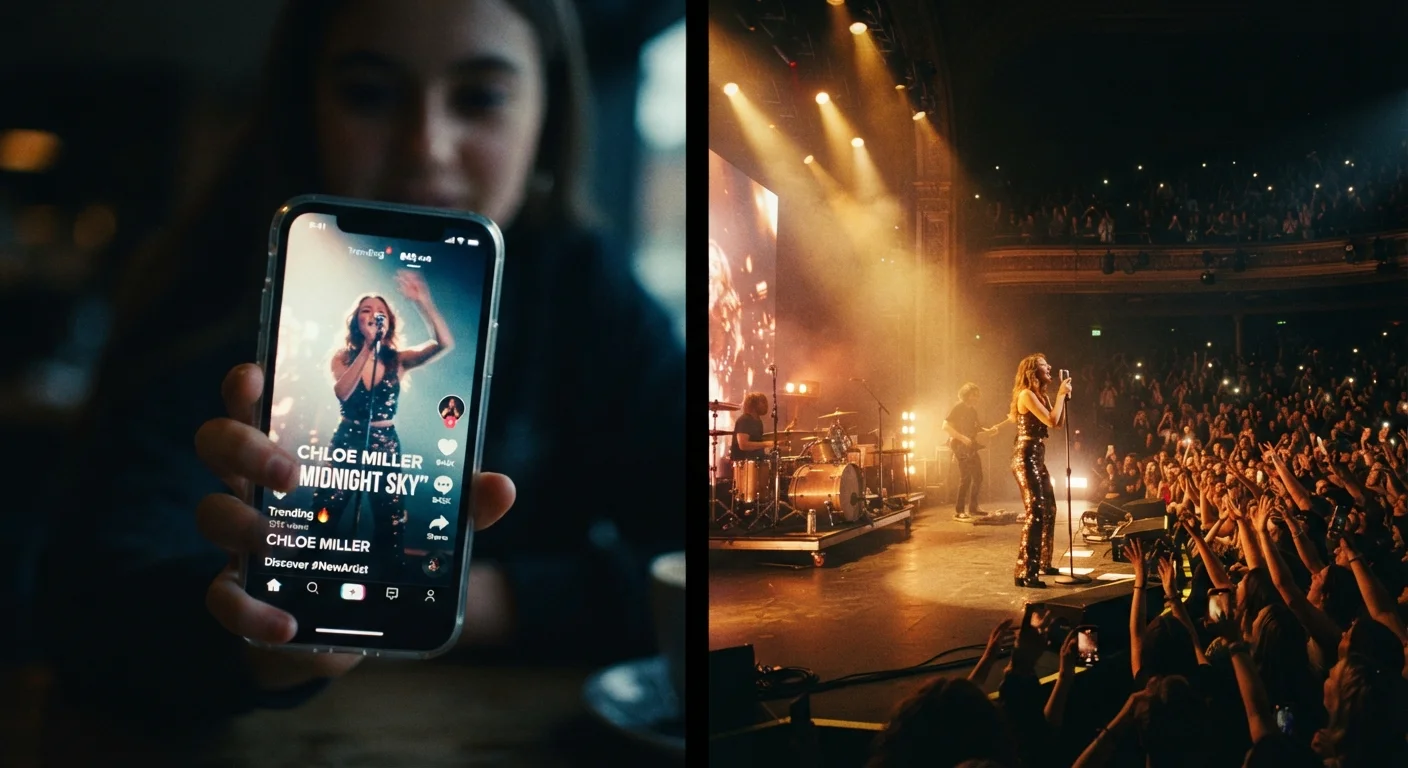
Option A
The Viral Moment
The explosive, algorithm-fueled flash of mass attention.
Best for: Artists seeking rapid exposure and immediate cultural conversation across social platforms.
Option B
The Music Career
The slow-built, catalog-driven arc of lasting artistic relevance.
Best for: Artists committed to evolving their sound, growing a loyal fanbase, and sustaining creative output over time.
What Actually Happens When a Song Goes Viral
A song trends on TikTok. Streams spike overnight. Radio stations start calling. For a brief, electric window, an unknown artist is everywhere - playlists, memes, late-night TV chatter. It feels like a career launch. Often, it's something else entirely.
Viral songs succeed because they latch onto a specific cultural moment: a sound that hits a particular emotional nerve, a hook built for 15-second clips, or a lyric that becomes a shared shorthand. That's not a small thing. But the mechanics of virality are distinct from the mechanics of longevity. Algorithmic momentum is real, but it's also fickle - the same platforms that amplify a song can bury it just as quickly when the next trend rolls in.
As cultural stories cycle through media, viral songs follow a similar arc: explosive entry, saturation, and then a rapid cooling. What happens in the cooling period determines everything.
| Criterion | The Viral Moment | The Music Career |
|---|---|---|
| Timeframe | Days to weeks of peak attention | Years to decades of sustained relevance |
| Audience relationship | Passive, algorithm-driven listeners | Active, emotionally invested fans |
| Revenue sources | Streaming spikes, sync deals | Tours, catalog, merchandise, licensing |
| Industry treatment | Quick monetization push | Long-term artist development investment |
| Creative identity | Often defined by a single sound or trend | Evolves across multiple projects and eras |
| Platform dependency | High - success tied to algorithm behavior | Lower - fanbase provides independent base |
What Builds a Music Career That Actually Lasts
Career artists - the ones still selling out tours a decade after their debut - share something viral sensations often lack: infrastructure. That means a catalog deep enough that listeners can fall into your discography, a live show that builds real-world community, and a creative identity that evolves without losing its core.
Streaming reshaped the music economy in ways that complicate this picture. Catalog depth matters more than ever because listeners can access everything simultaneously - but streaming also rewards the algorithm-friendly single over the cohesive album. Career artists have had to adapt, finding ways to feed the content cycle while protecting their artistic identity.
There's also the question of industry support. Labels and managers invest differently in artists they see as long-term projects versus viral acts they're trying to monetize quickly. That difference in resources - promotional budgets, songwriting collaborations, tour support - compounds over time.
~60,000
New songs uploaded to streaming platforms daily
Spotify has reported that tens of thousands of tracks are added to its platform each day, making sustained visibility a significant challenge for any artist.
1 in 14
Viral artists who chart a second top-40 hit
Music industry analysts have historically observed that artists with a single major viral breakthrough rarely replicate that commercial chart performance with follow-up releases.
3-5 years
Typical label development window for career acts
According to music business reporting, major labels generally allow established career artists a multi-year runway to develop audience and catalog before reassessing contracts.
The Gap Between Exposure and Connection
Perhaps the most important distinction is emotional: viral moments create exposure, but careers are built on connection. A listener who streams a trending song because it's everywhere is behaving differently from a fan who pre-saves an album, attends a show, or follows an artist through reinvention.
This gap shows up in the data. An artist can rack up hundreds of millions of streams on a single song and still struggle to sell tickets, because streams and fandom are not the same currency. Fame, notoriety, and influence are genuinely different things - and music careers depend on the third.
The artists who successfully convert viral moments into lasting careers tend to move quickly and deliberately: they release follow-up material while attention is high, they show up in person, and they resist being defined entirely by the sound that broke through. Think of it as the difference between being a song people remember and an artist people return to - and that distinction matters just as much when an artist is trying to recapture lost momentum later in their career.
Virality Isn't Always an Accident
Some artists and their teams engineer viral moments deliberately - seeding sounds on short-form video platforms, timing drops to cultural conversations, or building a TikTok presence before a release. When it works as part of a broader strategy, virality can be a powerful on-ramp to a real career. The artists who struggle are often those who went viral without the infrastructure to capitalize on the moment - no follow-up material ready, no live show built out, no team equipped to manage sudden scale.
The content on this site is for informational purposes only and is not a substitute for professional advice. Always consult a qualified professional for guidance specific to your situation.