

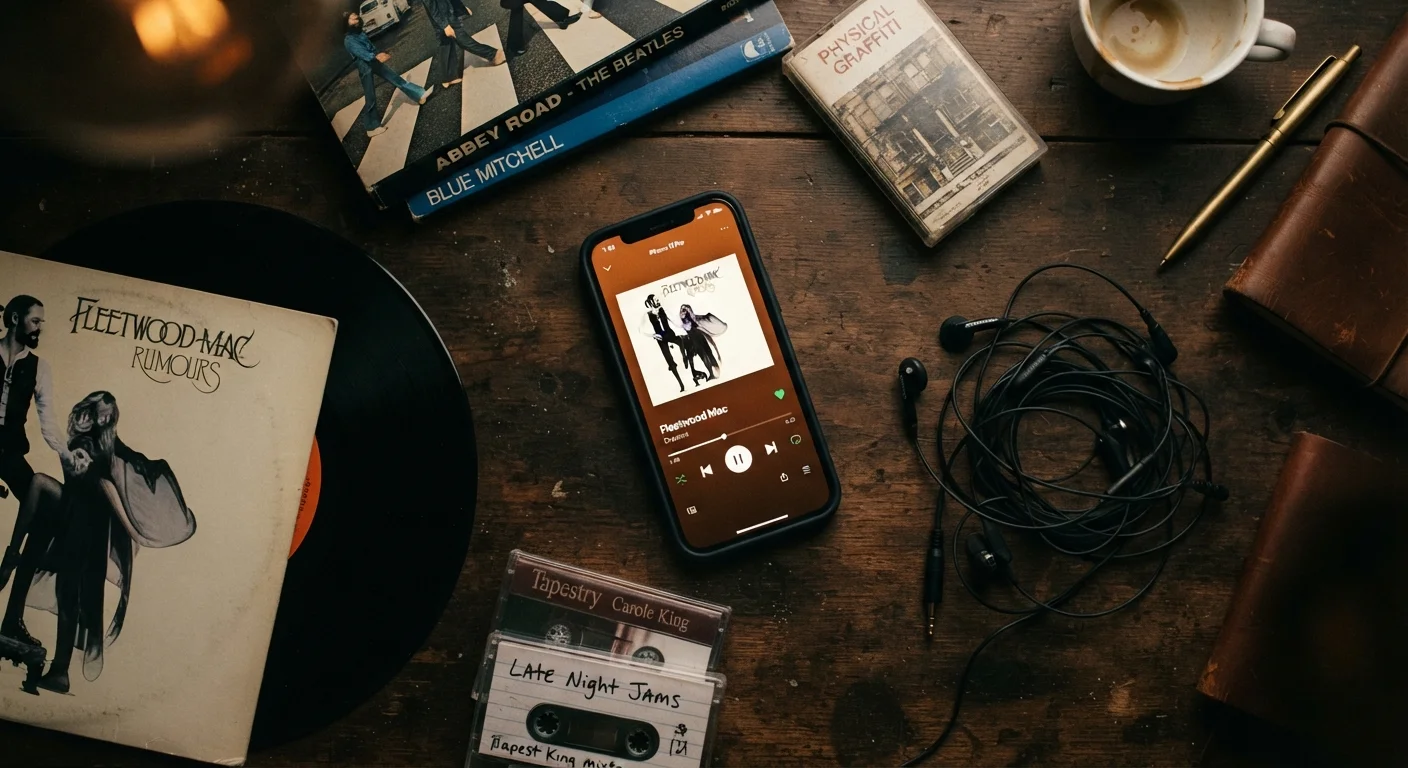
From Physical Sales to Infinite Libraries
For most of recorded music history, the transaction was simple: a listener paid for a physical object - a record, a cassette, a CD - and an artist received a share of that sale. Streaming dismantled this model almost completely within a single decade. By the early 2020s, streaming accounted for the majority of recorded music revenue in the United States, according to the Recording Industry Association of America (RIAA).
What listeners gained was extraordinary: virtually every song ever commercially released, available instantly, for a flat monthly fee. What the industry lost was a clear, per-unit economic relationship between a listener's enjoyment and an artist's compensation. The album - the dominant creative and commercial unit for half a century - became optional infrastructure in a world organized around individual tracks and curated playlists.
84%
Share of US recorded music revenue from streaming
According to the RIAA's 2023 mid-year music revenue report, streaming accounted for approximately 84% of total US recorded music revenues.
$0.003-$0.005
Estimated per-stream artist payout range
Industry analysts and artist advocacy groups commonly cite this range, though actual rates vary significantly by platform, tier, and contract terms.
3 min 17 sec
Average song length in 2023 vs. 3 min 50 sec in 1990s
Music analysts tracking song duration data have documented a meaningful compression in average track length since streaming became the primary listening format.
Understanding how American music movements built cultural identity helps illuminate what was at stake when streaming restructured the commercial foundation beneath that identity.
The Algorithm as Gatekeeper
Radio programmers and label A&R executives once controlled what most Americans heard. Streaming replaced those gatekeepers with recommendation algorithms - and the shift wasn't entirely liberating. Platforms surface music based on engagement signals: skip rates, repeat listens, playlist adds, and session completion. This creates a quiet pressure on artists to optimize for those signals rather than purely for artistic ambition.
Songs have trended shorter since streaming became dominant. Intros have compressed. Hooks arrive faster. Whether this reflects genuine creative evolution or algorithmic accommodation is a genuine debate in the industry - and the answer is probably both, depending on the artist. For a fuller picture of how artists navigate reinvention under commercial pressure, see how musicians strategically reshape their identity between albums.
“The playlist has become the new radio - but nobody elected the algorithm, and it has aesthetic preferences nobody fully understands.”
— Damon Krukowski, Musician and author of 'Ways of Hearing,' a critical examination of digital listening culture
What Artists Actually Earn - and How They've Adapted
The math of streaming income is stark for most working musicians. Even a track with a million streams might generate only a few thousand dollars in gross royalties before label and distributor splits. For artists signed to major labels, the label typically recoups advances and takes a significant percentage before the artist sees a check. Independent artists keep more per stream but need much higher volume to match what a modest album sale might have produced.
In response, artists have restructured how they think about revenue. Live performance and touring - always important - became even more central to artist economics as recorded revenue compressed. Merchandise, direct-to-fan platforms, sync licensing (placing music in TV, film, and advertising), and brand partnerships all grew in relative importance.
Supporting Artists Beyond Streaming
If you want your listening to more directly benefit musicians you care about, purchasing music directly through artist websites or platforms that offer higher artist payouts, attending live shows, and buying merchandise are all ways to supplement the thin margins streaming provides. Many artists openly share which channels support them most.
Viral moments on social platforms can generate a streaming surge, but - as our coverage of what separates a viral hit from a lasting career explores - those spikes rarely sustain themselves without a deeper artistic foundation beneath them.
The Cultural Wins Streaming Actually Delivered
Critique of streaming economics is well-founded, but the format also produced genuine cultural gains worth acknowledging. Music that would have struggled to find distribution through traditional retail channels - regional sounds, independent artists from underrepresented communities, international genres - found global audiences. K-pop, Afrobeats, and regional Mexican music all saw dramatic US audience growth partly enabled by streaming's frictionless access.
Catalog listening surged as well. Older artists who had stopped generating new radio hits found millions of new listeners discovering their back catalogs. The barriers between music eras dissolved: a teenager in 2024 is as likely to discover a 1970s soul record through a playlist as a song released last week.
For listeners curious about how genre boundaries themselves shifted alongside these economic changes, the map of modern music's hybrid sounds is worth exploring. And for a parallel look at how streaming reshaped another entertainment vertical entirely, our coverage of how streaming transformed American TV viewing habits draws instructive comparisons.
Streaming Metrics Are Not All Alike
Different platforms count and report streams in different ways, making cross-platform comparisons tricky. What counts as a 'stream' - minimum listen duration, repeat plays, free-tier vs. paid-tier weight - varies. For a deeper breakdown of how these numbers work, see our explainer on how streaming platforms count views and why skepticism is warranted.
Frequently Asked Questions
Per-stream payouts vary by platform and contract, but figures commonly cited in industry reporting range from roughly $0.003 to $0.005 per stream before label and distributor splits. An independent artist keeps a larger share but needs enormous play counts to generate meaningful income from streaming alone.
Streaming didn't eliminate albums, but it weakened the album as the primary commercial unit. Many artists still release full-length projects for artistic and cultural reasons, but the industry's commercial attention has shifted heavily toward individual tracks and playlist placement.
Streaming algorithms reward consistent output - platforms tend to recommend artists who regularly release new material. Staying active keeps an artist visible in playlists and listener libraries, creating pressure to shorten the gap between projects compared to the CD era.
Streaming removed many gatekeepers, allowing independent artists to distribute music globally without a major label deal. However, the low per-stream rates and algorithm competition make it difficult for most independent artists to generate sustainable income from recordings alone.
Social platforms - particularly short-video apps - have become major pipelines for streaming growth. A clip featuring a song can drive millions of streams overnight, though as explored in coverage of viral moments, that spike doesn't automatically build a durable career.
Generally, yes - major labels control large catalogs and negotiated equity stakes in early streaming platforms, positioning them to capture a substantial share of streaming revenue. Emerging artists and those without significant catalog depth typically see a smaller proportional benefit.
The content on this site is for informational purposes only and is not a substitute for professional advice. Always consult a qualified professional for guidance specific to your situation.