

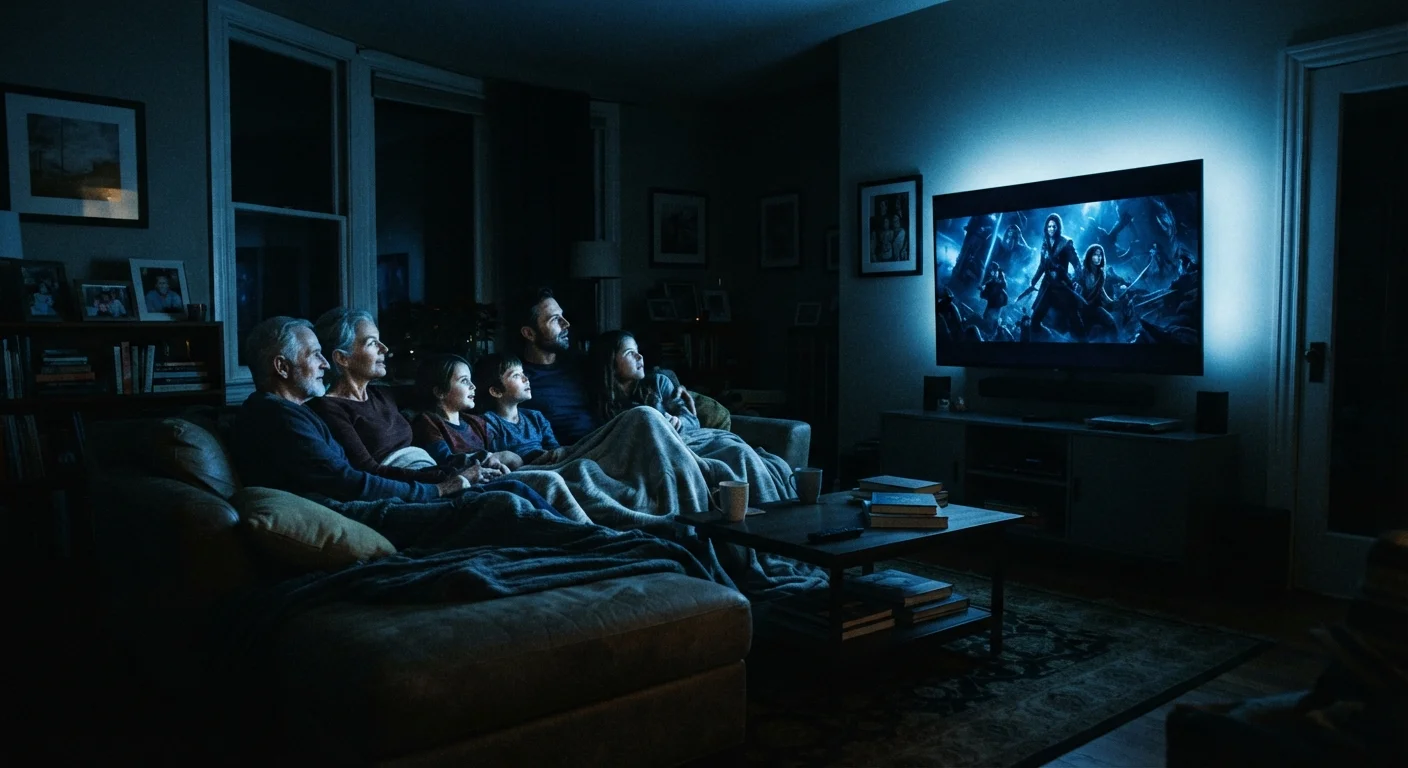
What Turns a TV Show Into a Cultural Event
Not every critically praised drama becomes a cultural phenomenon - and not every cultural phenomenon is critically praised. The shows that genuinely capture a national moment tend to share a particular quality: they arrive when a social tension has built up enough pressure that audiences are hungry for a story that names it clearly.
Think about the dramas Americans have debated most fiercely in recent memory. They aren't just entertaining - they're useful. They give viewers a shared vocabulary, a set of characters to argue about, and a dramatic frame through which real anxieties become legible. That usefulness is what separates a prestige drama with cultural footprint from one that earns awards and then quietly fades.
The explosion of original programming across streaming platforms made the competition for attention fiercer than ever - which paradoxically raised the stakes for shows that do break through. When millions of people are all choosing different things to watch, a drama that pulls them into the same conversation has accomplished something genuinely remarkable.
87%
Americans who discuss TV shows with others
A Pew Research Center survey found that the large majority of American TV viewers talk about what they're watching with friends, family, or colleagues - underscoring television's role as social currency.
3x
Faster cultural spread via social media vs. traditional word-of-mouth
Media researchers have noted that social platforms dramatically accelerate how quickly television moments enter broader public discourse compared to pre-internet viewing eras.
Top 10
Streaming shows dominating weekly social media conversation
According to Nielsen's weekly streaming charts, the shows generating the most social media chatter routinely outpace their actual viewership numbers, indicating engagement beyond the primary audience.
The Anatomy of a Water-Cooler Moment
Scholars of television culture often point to the "water-cooler moment" as the basic unit of a show's social life - that scene so stunning, upsetting, or morally complicated that viewers feel compelled to find another human being and process it immediately. These moments don't happen by accident.
Writers engineering them typically rely on a combination of delayed payoff (narrative threads that have been building for episodes), genuine moral ambiguity (no clean answer about who was right), and stakes that feel connected to real-world concerns. The storytelling techniques that drive binge-watching and those that produce water-cooler moments are related but distinct - binging keeps you watching alone, while a truly galvanizing scene pushes you outward into conversation.
Social media has multiplied and accelerated this dynamic. A shocking episode that might once have generated workplace chatter over several days now produces trending topics within hours, pulling in people who haven't even watched the show yet. That secondary audience - following the reaction rather than the show itself - is part of how prestige dramas now build cultural mass.
“Television has become the dominant art form of our era - not because it reaches the most people, but because it holds them longest and makes them care most deeply about characters they will never meet.”
— Jason Mittell, Media scholar and author of 'Complex TV: The Poetics of Contemporary Television Storytelling'
Reflection, Representation, and Why It Matters
The prestige dramas with the deepest cultural footprints tend to do more than reflect society - they challenge audiences to see familiar institutions, relationships, or hierarchies from an unfamiliar angle. A drama set inside a legal system, a political machine, or a family business becomes genuinely powerful when it refuses to offer easy heroes and villains.
Shifts in casting diversity over the past decade have significantly expanded which audiences feel seen by prestige television. When a show centers voices and experiences that haven't historically been centered, it doesn't just broaden its viewership - it expands the range of social realities the genre can credibly explore. That expansion produces richer, more contested conversations.
Cultural Impact Isn't the Same as Ratings
A show can draw massive viewership without generating meaningful cultural conversation - and a smaller-audience drama can reshape public discourse entirely. Cultural footprint is measured not just in who watches, but in how deeply the show infiltrates everyday language, opinion, and debate. Some of the most culturally significant dramas in recent American television history were never the most-watched shows of their season.
Format also shapes ambition and reach. Limited series and ongoing dramas create different relationships with their audiences - a self-contained story can take larger risks with its ending, while a multi-season drama builds the kind of deep attachment that makes cultural impact accumulate over years.
And when a prestige drama's stars and creators carry their themes onto award show stages, the show's cultural conversation extends even further - into spaces where entertainment, politics, and public identity visibly overlap.
Frequently Asked Questions
Prestige dramas typically combine high production budgets, literary-quality writing, and serious thematic content that invites critical analysis. They often feature established film actors, auteur directors, and stories that tackle weighty social, moral, or political questions. Critical acclaim and awards recognition frequently accompany the label.
The shows that break through tend to arrive at exactly the right cultural moment, reflecting anxieties or debates already simmering in public life. Strong word-of-mouth, social media amplification, and the ability to generate genuine surprise or moral debate all accelerate a show's spread into the broader conversation.
Streaming shifted viewing from shared weekly schedules to individualized binge patterns, which can fragment the communal experience. However, platforms also give shows longer shelf lives and global reach, allowing cultural moments to build gradually rather than peak and fade in a single season.
Directly influencing legislation is rare, but prestige dramas can meaningfully shape public opinion by humanizing complex issues - immigration, addiction, systemic inequality - that statistics alone rarely convey. Policymakers and advocates have cited specific shows when discussing shifts in public empathy around particular topics.
Not anymore. Cable and streaming platforms have produced some of the most culturally resonant dramas of the past two decades. What matters is discoverability, critical mass of viewers, and the show's ability to generate discussion across platforms and in everyday life.
The content on this site is for informational purposes only and is not a substitute for professional advice. Always consult a qualified professional for guidance specific to your situation.