

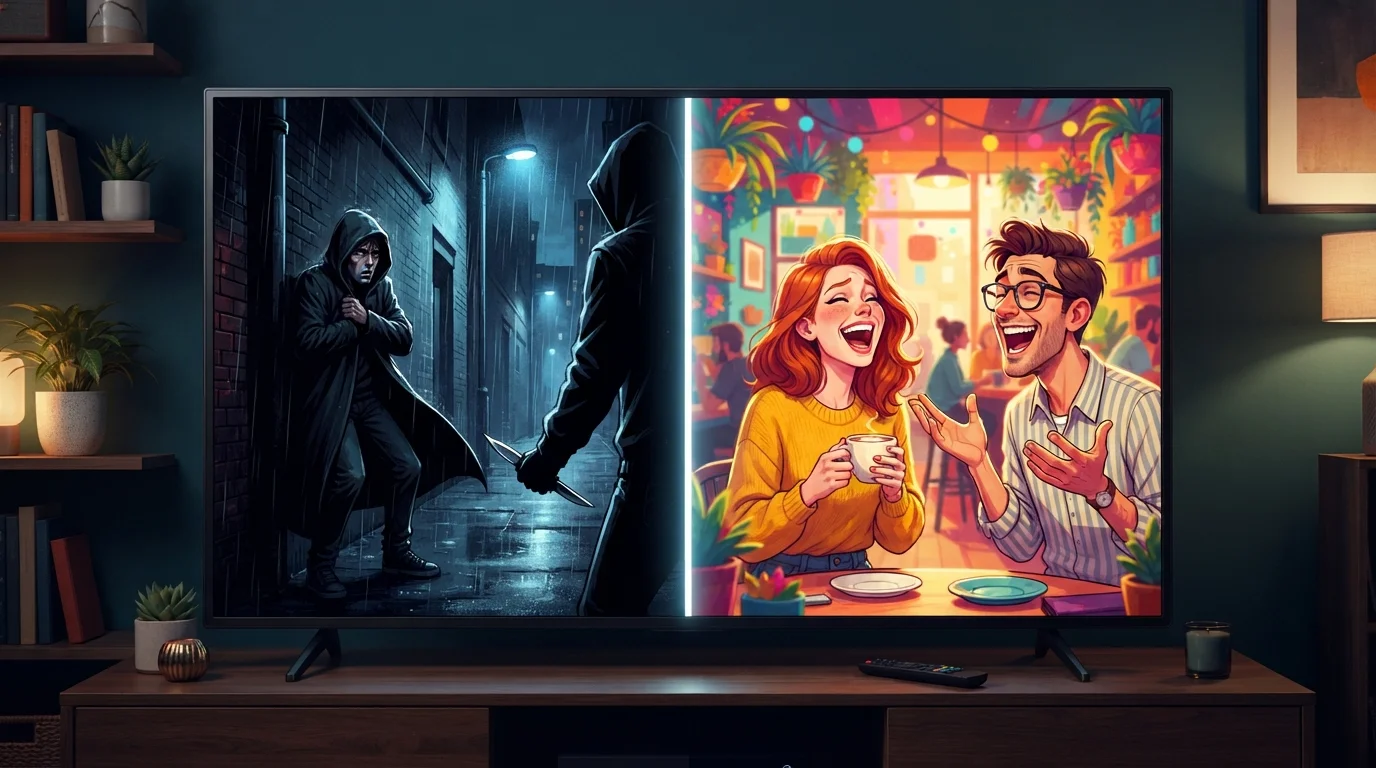
Why Genre Lines Are Dissolving on American TV
For most of television's history, genre functioned like a contract between show and viewer. You tuned into a cop procedural expecting investigations and justice. You settled into a sitcom for jokes and a tidy resolution. Those expectations weren't accidents - they were built by decades of network scheduling, advertiser demands, and the simple logistics of fitting a show into a recognizable slot.
That contract is being rewritten. The shows Americans are most passionately debating right now tend to be the ones that refuse to stay in their lane. A story about a struggling restaurant becomes a pressure-cooker psychological drama. A political thriller tips into farce that's uncomfortably close to satire. A family drama pivots on a dime into something that plays like a thriller. The streaming era's transformation of viewing habits is a major force behind this shift: without the hard constraints of broadcast scheduling and advertiser-friendly genre buckets, creators have more room to follow the story wherever it leads.
63%
Streaming subscribers preferring genre-blended content
A 2023 Deloitte Digital Media Trends survey found that a majority of US streaming subscribers said they sought out shows described as mixing humor with dramatic or thriller elements.
2x
Growth in 'dramedy' Emmy submissions over a decade
Television Academy observers have noted roughly double the number of hybrid-genre submissions in comedy and drama categories between the early 2010s and early 2020s, reflecting the industry-wide trend.
40+
Prestige series in production simultaneously at peak
At the height of the Peak TV era, industry trackers counted over 400 original scripted series in production in a single year across US platforms, creating intense competition that rewards genre distinctiveness.
Genre blending isn't just a stylistic choice - it's increasingly a storytelling philosophy. Writers are drawn to the creative tension that comes from placing darkly comic characters inside genuinely high-stakes situations, or from undercutting a thriller's tension with a scene of mundane, almost sitcom-level awkwardness. That friction is where contemporary TV lives.
The Mechanics of Genre Mixing: How Writers Make It Work
Genre crossover is harder than it looks. Done poorly, a tonal mismatch pulls viewers out of the story - a misplaced joke can deflate real dramatic stakes, and sudden seriousness in a comedic context can feel manipulative. What separates effective genre blending from incoherent tonal chaos is intentionality and craft.
Strong genre-fluid writing tends to anchor itself in character rather than plot machinery. When audiences are deeply invested in who a person is, they can follow that character through rapid shifts in emotional register. The humor emerges from how a specific person reacts under pressure; the drama earns its weight because we already care about the stakes. Inside the writers' room, these tonal negotiations are often among the most intensely debated creative decisions of any season.
Watch for Tonal Shifts as Intentional Design
When a show suddenly pivots from comedy to dark drama - or undercuts thriller tension with absurdist humor - it's worth pausing to consider whether the shift is intentional craft or structural inconsistency. Genre-fluid shows reward close attention: the tonal decisions often carry meaning about character psychology or thematic argument that a single-genre approach couldn't communicate as efficiently.
Soap opera elements - escalating personal stakes, overlapping betrayals, emotionally heightened confrontations - have found their way into prestige thrillers not by accident but because they work. They sustain engagement across long episode orders in ways that pure procedural logic can't always maintain. Meanwhile, shows built on dramatic premises increasingly use comedic deflation as a pressure valve, giving audiences (and characters) room to breathe before the next gut punch arrives.
What Genre Fluidity Tells Us About American Culture Right Now
Genre crossovers aren't just a TV industry trend - they reflect something genuine about how American audiences are processing the world. Life doesn't sort itself into clean emotional categories, and shows that honor that messiness tend to resonate. A scene can be both absurdly funny and genuinely tragic, and viewers have grown sophisticated enough to hold both responses at once.
There's also a cultural appetite for subversion - for shows that appear to deliver one experience and then pivot to reveal something more complicated. The thriller that turns out to be about grief. The comedy that turns out to be about addiction. When genre expectations are set up and then upended with purpose, it creates a particular kind of engagement that straight genre exercises rarely achieve. As the cultural footprint of prestige drama continues to grow, genre-blending shows are increasingly the ones shaping national conversation.
The challenge for critics, award bodies, and even streaming algorithms is that the tools for categorizing TV were built for a simpler landscape. When a series genuinely cannot be pinned to a genre, the machinery of the industry - from Emmy categories to recommendation engines - strains to accommodate it. That strain is, in its own way, a sign that television storytelling is evolving faster than the infrastructure built around it. Format choices shape these possibilities too, as limited series give creators a defined runway to take genre risks without sustaining them indefinitely.
Frequently Asked Questions
A genre crossover is when a television series blends conventions from two or more distinct genres - for example, mixing dramatic storytelling with comedic timing, or layering soap opera melodrama into a thriller. These shows deliberately resist easy categorization and shift tone across episodes or even within a single scene.
Streaming platforms give showrunners more creative freedom than traditional network schedules, which historically demanded clear genre labels for marketing. Blended genres also tend to reflect how audiences actually experience life - situations rarely fit into one emotional register - making these shows feel more authentic and harder to put down.
A dramedy (drama + comedy) is a hybrid format that uses both comedic and dramatic storytelling tools without fully committing to either. Unlike a traditional sitcom, it doesn't rely on joke structures or laugh tracks. Unlike a pure drama, it regularly uses humor - sometimes dark or absurd - to process serious themes.
The Emmy Awards have faced repeated controversy when genre-blending series self-select categories that seem counterintuitive - for instance, a show with heavy dramatic content submitting as a comedy for strategic award-season positioning. The Television Academy has periodically debated formalizing stricter genre classification criteria.
Not entirely - shows have always played with tone, and early examples like 'M*A*S*H' blended war drama with sharp comedy decades ago. What's changed is the scale and intentionality of genre blending in the streaming era, where entire series are built around genre subversion as a core creative strategy.
Yes, and that tension is well-documented in the industry. Networks and streamers typically rely on genre cues to build audience awareness and set expectations. Genre-fluid shows can be harder to pitch with a short logline, which is one reason they've flourished more on streaming platforms with algorithm-driven discovery rather than traditional broadcast slots.
The content on this site is for informational purposes only and is not a substitute for professional advice. Always consult a qualified professional for guidance specific to your situation.