

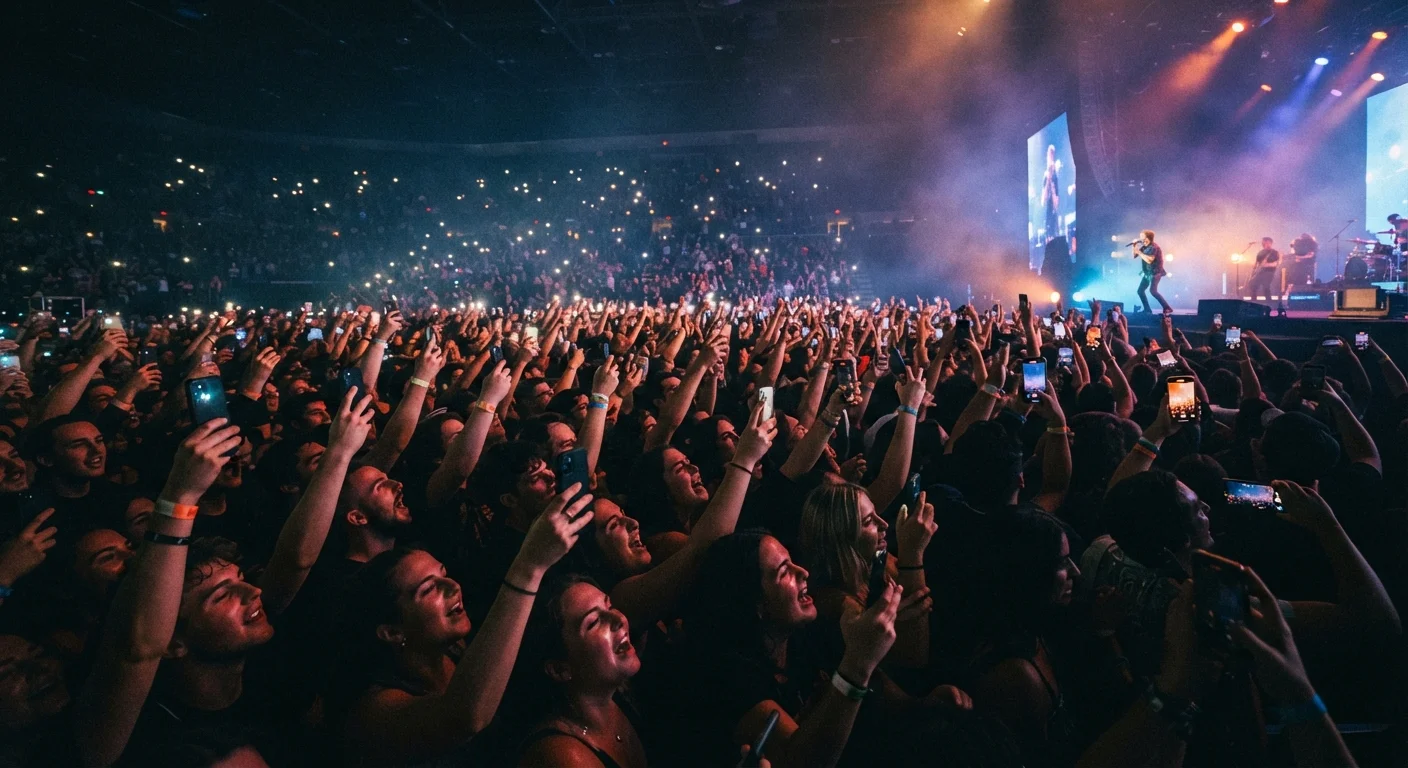
How Fan Communities Became Narrative Architects
There was a time when celebrity stories moved in one direction - from a publicist's desk to a journalist's column to the public's ears. That pipeline still exists, but it now runs alongside something far less controlled: the collective voice of millions of fans operating in real time across social platforms.
Today's fan communities don't just consume celebrity culture - they actively shape it. A carefully coordinated hashtag campaign can push a celebrity's new project to the top of trending lists. A mass-streaming effort can rewrite chart history. A flood of positive testimonials can counter a damaging story before it fully takes root in mainstream coverage.
Understanding how this dynamic works matters not just for media literacy, but for anyone trying to make sense of why certain celebrity narratives feel so oddly immune to contradiction. As our piece on how celebrity stories move through the news cycle explores, narratives don't just appear - they're shaped by competing forces, and fan communities are now one of the most powerful forces in that mix.
67%
Of Gen Z identify as part of a fan community
According to a Morning Consult survey on fandom, roughly two-thirds of Gen Z Americans consider themselves active members of at least one fan community.
3x
Faster spread of fan-driven content vs. news articles
Research into social media virality consistently finds that emotionally charged fan content spreads significantly faster across platforms than traditional reporting on the same subject.
60%+
Of celebrity harassment reports involve organized groups
Studies examining online harassment patterns find the majority of targeted celebrity abuse originates from coordinated groups rather than isolated individuals, per platform safety research.
The Amplification Effect: When Fans Become the Story
Platforms like X (formerly Twitter), TikTok, Reddit, and Instagram are architected around engagement - and fan communities are engagement machines. When a celebrity releases new music, appears in a controversial interview, or faces public criticism, their fan base often mobilizes within minutes.
This amplification isn't random. Organized fan groups - sometimes called 'stan armies' - develop explicit strategies: which posts to like, which trending topics to push, which critics to respond to. The result is that algorithm-driven platforms elevate fan-generated content simply because it generates the most activity, regardless of whether that content reflects broader public sentiment or factual accuracy.
A Quick Media Literacy Check
Before accepting a trending celebrity narrative at face value, consider whether the volume of coverage reflects broad public interest or concentrated fan activity. Look at who is doing the talking - is it a wide range of sources, or does it trace back to a single highly organized community? Slowing down that reflex to accept trending as true is one of the most useful habits in modern pop-culture consumption.
This creates a feedback loop: journalists and casual observers see a topic trending and assume widespread public interest, when the volume may actually reflect a few thousand highly coordinated accounts. It's one reason why a celebrity's perceived cultural dominance online doesn't always translate to equivalent real-world reach. For a fuller picture of how public figures actually differ in cultural weight, see our explainer on the difference between fame, notoriety, and influence.
The Distortion Problem: Defending, Rewriting, and Weaponizing
Fan loyalty is a genuine and often beautiful thing - but the same energy that protects a celebrity from unfair attacks can also distort reality in meaningful ways. Three patterns emerge repeatedly in modern fandom dynamics.
- Narrative suppression: When negative coverage surfaces, fan bases flood platforms with contradictory positive content, effectively burying critical stories in algorithmic feeds.
- Hagiography: Fan communities often reframe unflattering facts - public feuds, professional failures, credible allegations - as media bias or rival-camp sabotage, constructing a version of their favorite that bears little resemblance to documented events.
- Weaponized harassment: Perhaps most troubling, fan loyalty frequently becomes a tool of aggression, with coordinated pile-ons directed at critics, rivals, journalists, or anyone deemed a threat to the celebrity's image.
These dynamics are closely tied to how celebrities manage their image across platforms - a topic explored in depth in our piece on how celebrities manage their public persona across different platforms. The key tension: celebrities increasingly rely on fan engagement for visibility, but that dependence can make it difficult to moderate or distance themselves from harmful fan behavior.
What This Means for How We Read Celebrity Culture
None of this means every fan-driven narrative is false, or that fan communities are inherently manipulative. Often they surface genuine injustices, correct media misrepresentations, and provide meaningful cultural context. The problem lies in the lack of friction - in how easily coordinated enthusiasm can substitute for evidence and how quickly volume can be mistaken for consensus.
Media literacy in the social era increasingly means asking: Is this trending because it's broadly significant, or because a concentrated group wants it to trend? Is this celebrity narrative widely held, or just loudly performed?
Publicists, of course, are well aware of these dynamics and sometimes actively cultivate fan communities as an extension of their own strategy - something worth keeping in mind when a narrative feels suspiciously polished. Our overview of what publicists actually do for celebrities breaks down exactly where professional image management ends and organic fan activity begins.
Fan communities aren't going away - nor should they. But reading celebrity culture clearly means holding space for the possibility that the loudest story isn't always the truest one.
Fan Communities Aren't Monolithic
It's worth noting that fan communities are rarely a single unified bloc - they contain internal disagreements, competing factions, and diverse motivations. The coordinated behaviors described here are often driven by a vocal subset, not every fan. Broad characterizations of 'stans' can themselves distort reality by flattening the complexity of how people genuinely connect with the artists and entertainers they love.
Frequently Asked Questions
Fan communities use social media platforms to share, defend, and promote narratives about their favorite celebrities. Through coordinated hashtag campaigns, mass streaming, and flooding comment sections, they can shape what casual observers perceive as cultural consensus. This activity directly influences algorithm-driven visibility, meaning fan-favored stories reach far wider audiences.
Yes, to a degree. When negative coverage emerges, organized fan groups often flood the same platforms with contradictory positive content, effectively burying critical stories in search results or trending feeds. This doesn't erase the stories, but it can significantly reduce how many people encounter them organically.
The term 'stan' - drawn from an Eminem song - describes an obsessively devoted fan. In modern usage it refers both to individuals and coordinated fan armies. Stan culture matters because these groups are highly organized, emotionally invested, and capable of mobilizing rapidly around a celebrity narrative, for better or worse.
Both can happen. Fan communities can provide enormous promotional support, turning niche moments into viral cultural events. But they can also take ownership of a celebrity's story in ways the celebrity never intended, making it difficult for public figures to course-correct their own narratives.
Yes. Multiple high-profile cases have documented fan communities directing coordinated harassment at rivals, critics, or anyone perceived as threatening their favorite celebrity. Platform policies and public discourse around this issue have grown substantially, though enforcement remains inconsistent.
The content on this site is for informational purposes only and is not a substitute for professional advice. Always consult a qualified professional for guidance specific to your situation.