

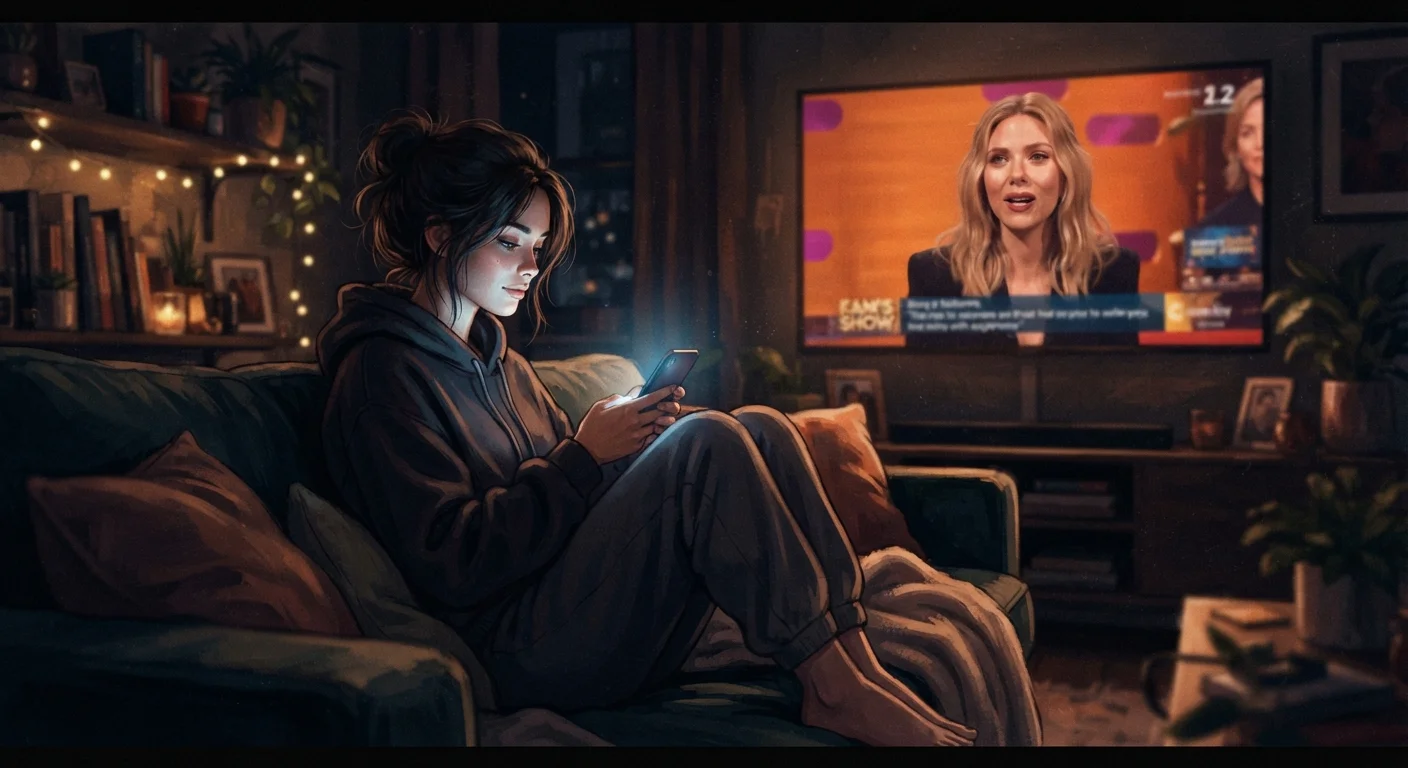
The Brain Doesn't Know It's Being Fooled
When you know every detail of a podcast host's morning routine, feel nervous before a musician's big album drop, or find yourself genuinely upset when a favorite actor goes through a public breakup - that's parasocial attachment doing its thing. And before you chalk it up to obsession, consider this: your brain is behaving exactly as evolution designed it to.
Human brains evolved to build social bonds through repeated exposure, recognizable voices, and consistent emotional cues. A celebrity who appears on your screen or in your earbuds daily checks every one of those boxes. The brain doesn't automatically distinguish between a face seen through a camera lens and one seen across a dinner table. It registers familiarity, and familiarity breeds attachment.
This is why fans can mourn the death of a celebrity they never met with genuine, profound grief - the loss is real to their nervous system, even if the relationship was always one-directional.
“Parasocial relationships are not a pathology or a sign of social failure. They are an extension of the same social cognition that allows us to form any human bond - simply applied to a new kind of stimulus.”
— Dr. David Giles, Media psychologist and author of research on celebrity culture and parasocial interaction
How Modern Media Supercharges the Effect
Parasocial bonds have existed since the earliest days of radio and cinema, but today's media landscape has turbocharged them in ways Horton and Wohl couldn't have anticipated in 1956. The shift is largely about perceived intimacy.
Traditional celebrities were distant by design - curated, polished, mediated through publicists and studio systems. Today, a streamer playing video games for six hours while chatting directly to viewers, or an influencer narrating their grocery run in real time, creates an illusion of raw, unfiltered access. It feels like hanging out with a friend.
51%
Adults reporting parasocial relationships with media figures
A survey by the American Psychological Association found that roughly half of adults reported forming strong one-sided emotional bonds with at least one public figure or media personality.
1956
Year the term 'parasocial relationship' was coined
Sociologists Donald Horton and Richard Wohl introduced the concept in their landmark paper analyzing how television fostered intimacy between performers and audiences.
3x
Greater sense of closeness reported by daily podcast listeners
Communication researchers have noted that audio-first media like podcasts generate significantly stronger parasocial intimacy than video content, due to the personal nature of voice heard in-ear.
Podcasts in particular have emerged as parasocial intensity amplifiers. Voices heard in earbuds during commutes, workouts, and quiet evenings register as unusually intimate. Listeners often report feeling they know a podcast host better than many people in their actual lives - a testament to how powerful audio proximity can be. To understand how public figures deliberately shape these perceptions across platforms, see how celebrities manage their public persona.
The Celebrity Side of the Equation
Parasocial relationships don't form in a vacuum - they're often actively, if not always consciously, cultivated. When celebrities share vulnerable moments, speak directly to camera, use first-name intimacy with their audience, or respond personally to fan comments, they're feeding the psychological conditions that make parasocial bonds flourish.
This isn't necessarily cynical. Many public figures genuinely appreciate their audiences and want authentic connection. But the commercial incentives of the attention economy mean that deeper parasocial engagement also translates to more streams, more ticket sales, and more cultural staying power.
The dynamic gets complicated when fans mistake the carefully constructed public persona for the whole, real person. As explored in the difference between fame, notoriety, and influence, public figures operate in layers - and the version audiences fall for is rarely the complete picture.
A Useful Reality Check for Fans
When a celebrity does something that surprises or disappoints you, it can help to remember that you've only ever seen the portion of their personality that was broadcast. The dissonance between 'the person I felt I knew' and 'the person who did this' isn't hypocrisy on their part - it's a reminder that parasocial knowledge is always partial. That awareness doesn't have to diminish your enjoyment; it just keeps expectations anchored to reality.
When Parasocial Bonds Shape Bigger Cultural Forces
Individual parasocial attachment, multiplied across millions of fans, doesn't just stay personal - it becomes a collective cultural force. Fan communities amplify, defend, and sometimes distort the narratives around the celebrities they love, turning parasocial investment into real-world consequences for public figures' reputations and careers. This dynamic is explored in depth in how fan communities shape celebrity narratives.
It also shapes how celebrity conflicts play out publicly. When a beloved figure gets into a feud, their parasocially bonded fans take it personally - because to them, it is personal. For a closer look at how those conflicts develop, celebrity feuds rarely follow simple scripts.
Understanding parasocial psychology doesn't make the feelings disappear - nor should it. These bonds bring genuine joy, community, and meaning to millions of people. What it does offer is perspective: a reminder that the celebrity you feel you know is also a person shaped by contexts you can't fully see, and that the connection, however real it feels, flows in only one direction.
Parasocial Bonds and Mental Wellbeing
For most people, parasocial relationships exist alongside healthy real-world social lives and add enjoyment without causing harm. However, if you find that attachment to a public figure is displacing real relationships, generating significant distress, or making it hard to engage with daily life, speaking with a mental health professional is a worthwhile step. This article is general information and is not a substitute for professional psychological guidance.
Frequently Asked Questions
Not inherently. Most people experience some degree of parasocial attachment without any negative consequences. They become concerning only when they significantly interfere with real-life relationships, create obsessive behavior, or lead someone to blur the line between public persona and private person.
The brain processes repeated exposure to a familiar face and voice using the same neural pathways involved in real friendships. Seeing someone daily on a podcast or Instagram story triggers genuine feelings of closeness, even without reciprocal contact.
In a limited sense, yes. Performers often describe a collective sense of love for their audience as a whole, even if they can't know individuals personally. However, this isn't truly parasocial in the clinical sense.
It can trigger real emotional pain similar to a friendship rupture - sometimes called a parasocial breakup. Fans may feel anger, grief, or a sense of personal betrayal, even though no actual relationship existed.
Research strongly suggests yes. Platforms like Instagram Stories, TikTok Lives, and podcasts create a sense of unfiltered, behind-the-scenes access that makes the perceived intimacy feel much more personal than traditional TV or film appearances.
Being a fan means appreciating someone's work; parasocial attachment involves a felt personal relationship with the person themselves. The two often overlap, but a parasocial bond goes beyond admiration into emotional investment in the celebrity's life and wellbeing.
The content on this site is for informational purposes only and is not a substitute for professional advice. Always consult a qualified professional for guidance specific to your situation.