

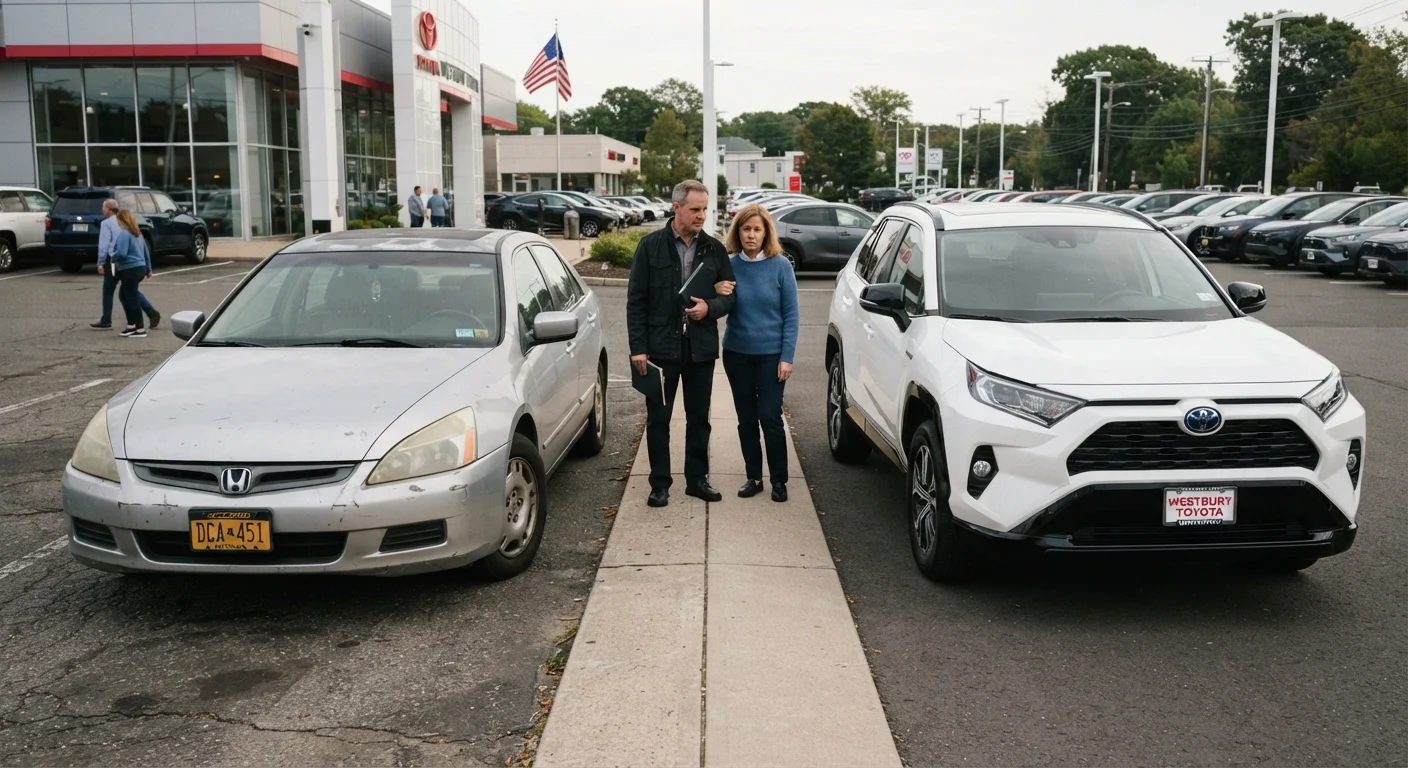
Our Verdict
Keeping an older paid-off car makes the most financial sense when it's mechanically sound and repair costs remain manageable relative to its value. Financing a new vehicle may be justified when reliability is critical, safety technology is a priority, or your credit profile makes favorable loan terms achievable. Neither option is universally superior - the math shifts based on individual circumstances.
Drivers who prioritize lower monthly expenses and can tolerate some repair uncertainty will generally benefit most from retaining an older vehicle, while those who depend heavily on their car for work or safety and can comfortably manage loan payments may find a new financed vehicle worthwhile.
The Core Trade-Off: Cash Flow vs. Reliability
The central question isn't which car is newer - it's which arrangement best fits your financial situation and driving needs. An older car you own outright means no monthly payment, but it may demand irregular repair spending. A new financed vehicle is far more predictable mechanically, but you're committing to a fixed loan obligation, often for five to seven years.
For many US households, cash flow consistency matters enormously. A $450-$600 monthly car payment isn't just a line item - it affects rent, savings, and emergency fund decisions. At the same time, an unreliable vehicle that leaves you stranded or facing a $2,000 transmission repair can be equally disruptive. Understanding which risk you're better positioned to absorb is the starting point of this decision. See our guide to when paying more upfront makes sense for a broader framework on cost-versus-value decisions.
~$735
Average new-vehicle monthly payment (2024 estimates)
Industry tracking from sources such as Edmunds and Cox Automotive has placed average new-car monthly payments in this range in recent years, reflecting elevated vehicle prices and interest rates.
15-20%
First-year depreciation on a new vehicle
General automotive industry estimates suggest new cars lose roughly this share of their purchase value within the first 12 months of ownership.
Pros and Cons of Keeping an Older Car
Retaining a vehicle you already own - or purchasing an older used car outright - comes with a distinct set of advantages and drawbacks that go beyond simple repair cost estimates.
No monthly loan payment improves cash flow
Owning a car outright eliminates a recurring debt obligation, which can free hundreds of dollars per month for savings, emergencies, or other priorities.
Lower or more flexible insurance coverage options
Without a lender requiring full coverage, owners of older vehicles may choose to drop collision and comprehensive coverage, potentially reducing annual premiums meaningfully.
No risk of negative equity
Since there's no loan balance to track, you're never in a position where you owe more on the car than it's worth - a common problem early in new-car loans.
Depreciation no longer works against you
Older vehicles have already absorbed the steepest portion of their depreciation curve, so year-over-year value loss is typically far smaller.
On the downside, age introduces compounding mechanical risk. Components wear together, and addressing one system often reveals issues in adjacent ones. Parts availability can also be a challenge for vehicles beyond 15 years old, and some independent shops may lack diagnostic tools for older proprietary systems.
Repair costs can be unpredictable and significant
Major components - timing belts, water pumps, suspension parts - have finite service lives, and failures often arrive without warning. A single repair can rival several months of loan payments.
Older vehicles lack modern safety technology
Features like automatic emergency braking, blind-spot monitoring, and backup cameras are absent on most vehicles more than a decade old, which can affect real-world crash avoidance.
Fuel efficiency is often lower than newer models
Advances in engine design, transmission technology, and hybrid powertrains mean newer vehicles frequently achieve meaningfully better fuel economy, which adds up over tens of thousands of miles.
Financing options are limited for older vehicles
Lenders typically restrict or decline loans on vehicles over a certain age or mileage threshold, meaning buyers of older cars often need to pay cash or use personal loans at higher rates.
For guidance on managing insurance costs on an aging vehicle, our article on when to drop collision and comprehensive coverage explains how to evaluate whether full coverage is still cost-effective.
What Financing a New Car Actually Costs
Sticker price is just the beginning. When you finance a new vehicle, the true cost includes the interest paid over the loan term, taxes, documentation fees, and the accelerated depreciation that hits immediately after purchase. A new car can lose 15-20% of its value within the first year, according to general automotive industry estimates - meaning your loan balance may exceed the vehicle's market value early in the loan term, a situation known as being "underwater" or having negative equity.
That said, financing a new car provides warranty coverage - typically a 3-year/36,000-mile bumper-to-bumper and a 5-year/60,000-mile powertrain warranty from most manufacturers - which substantially reduces out-of-pocket repair risk during those years. Modern vehicles also include advanced driver-assistance systems (ADAS) such as automatic emergency braking and lane-keeping assist, which are standard on most new models following federal safety guidelines.
Negative Equity and Loan Terms
Being "underwater" on a car loan - where you owe more than the vehicle is worth - is a common early-loan reality for new-car buyers. This matters most if you need to sell or trade the vehicle before the loan is paid off, as you'd owe the difference out of pocket. Choosing a shorter loan term or making a larger down payment can reduce this risk. For a deeper look at loan restructuring, see our article on refinancing a car loan.
If you're considering financing, it's worth understanding your options before visiting a dealership. Our article on financing through a dealership vs. a bank or credit union outlines the key differences in loan terms and negotiating position.
Insurance and Ongoing Cost Differences
Insurance costs don't always favor older cars as strongly as people assume. While comprehensive and collision premiums are generally lower for a vehicle with a low market value, liability coverage costs remain relatively consistent regardless of vehicle age. Lenders also require full coverage - comprehensive and collision - on any financed vehicle, which can add several hundred dollars annually to your insurance bill.
Older vehicles, depending on age and value, may allow owners to drop collision and comprehensive coverage, reducing premiums significantly. However, this also means accepting full financial exposure if the vehicle is totaled or stolen. Routine car maintenance - oil changes, tire rotations, brake inspections - remains necessary on both old and new cars, though newer vehicles increasingly extend service intervals. Our article on conventional vs. synthetic motor oil explores one routine maintenance decision that affects long-term engine health.
This article provides general financial and automotive information for educational purposes only. It is not personalized financial or legal advice. Consult a qualified financial professional before making significant vehicle or loan decisions.
The content on this site is for informational purposes only and is not a substitute for professional advice. Always consult a qualified professional for guidance specific to your situation.