

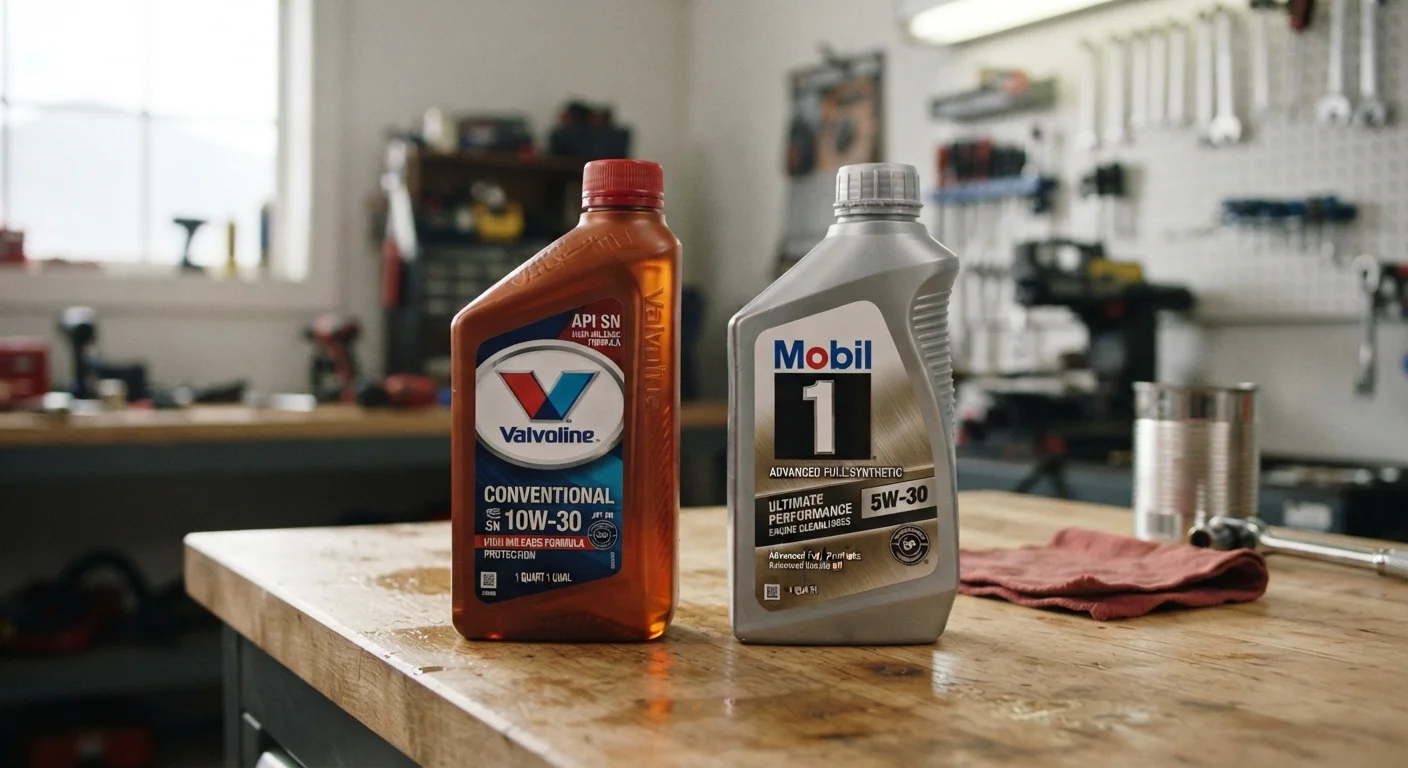
Option A
Conventional Motor Oil
The time-tested, widely available baseline.
Best for: Older vehicles, low-mileage drivers, and engines with simple operating requirements.
Option B
Synthetic Motor Oil
The engineered, high-performance alternative.
Best for: Modern engines, extreme climates, turbocharged vehicles, and drivers seeking extended oil change intervals.
Where Each Oil Comes From
The most fundamental difference between conventional and synthetic motor oil is their origin. Conventional motor oil is refined directly from crude petroleum. During refining, impurities are reduced, but the resulting oil still contains a mix of hydrocarbon molecules of varying sizes and shapes - which affects how consistently it performs under different conditions.
Synthetic motor oil, by contrast, is chemically engineered. Manufacturers start with base stock compounds - sometimes derived from natural gas or refined crude - and build oil molecules to a precise, uniform size and structure. This engineering process eliminates most of the naturally occurring impurities and creates a lubricant that behaves more predictably across a wide range of temperatures and operating conditions.
There is also a middle category: synthetic blend oil, which mixes conventional base stock with synthetic components. Blends offer some of the performance benefits of full synthetic at a lower price point, making them a common choice for drivers whose vehicles don't require full synthetic but want better protection than conventional alone.
Performance Differences That Matter Day-to-Day
For most routine driving, both oil types do their core job - lubricating engine components, reducing friction, and carrying heat away from moving parts. The real performance gaps emerge in demanding conditions.
| Criterion | Conventional Motor Oil | Synthetic Motor Oil |
|---|---|---|
| Source | Refined crude petroleum | Chemically engineered base stocks |
| Molecular consistency | Variable molecule sizes | Uniform, engineered structure |
| Cold-start performance | Slower flow in low temps | Faster flow at cold startup |
| Heat resistance | Breaks down faster under high heat | Better thermal stability |
| Sludge resistance | More prone to sludge buildup | Higher resistance to sludge |
| Typical cost per quart | Lower upfront cost | Higher upfront cost |
| Change interval potential | Generally shorter intervals | Often supports longer intervals |
Cold-weather startup is one of the most critical moments for engine wear. Conventional oil thickens more noticeably in low temperatures, meaning there's a brief period after a cold start when oil hasn't fully circulated. Synthetic oil flows faster at startup, which is why many automakers specify it for turbocharged engines and cold-climate driving.
At the other extreme, high heat causes conventional oil to break down and oxidize more quickly. Synthetic's uniform molecular structure resists this thermal degradation, helping maintain consistent viscosity even in engines that run hot - like turbos, towing rigs, or vehicles stuck in stop-and-go traffic on summer days.
Synthetic oil also typically has better resistance to sludge formation - the thick, gel-like deposits that can accumulate when oil degrades and isn't changed on schedule. Sludge can restrict oil flow and accelerate engine wear over time. For drivers who occasionally push oil change intervals, synthetic provides a wider safety margin. That said, skipping oil changes entirely is never advisable regardless of oil type. See our guide to oil change intervals to understand what your owner's manual is really telling you.
~75%
New US vehicles specifying synthetic oil
Industry estimates suggest roughly three-quarters of new passenger vehicles sold in the US now come from the factory with full synthetic oil specified.
0W-20
Most common modern viscosity grade
This low-viscosity synthetic grade has become one of the most widely specified oil weights in current model-year vehicles for improved fuel efficiency.
Which Oil Does Your Vehicle Actually Need?
The single most reliable answer to this question lives in your owner's manual. Automakers specify oil viscosity grades (such as 5W-30 or 0W-20) and, in many cases, explicitly require full synthetic. Using the wrong grade - even a premium synthetic - can affect engine performance and may void warranty coverage in some cases.
Most vehicles manufactured in the last decade, particularly those with direct-injection or turbocharged engines, are factory-specified for full synthetic. Older, naturally aspirated engines in vehicles from the 1990s or early 2000s often ran on conventional without issue - and many still do.
One common concern is whether switching from conventional to synthetic on a high-mileage engine is safe. Generally, yes - modern synthetics are compatible with older engines. However, if an engine has pre-existing seal wear or significant deposits, the detergent properties in synthetic may loosen debris that was previously compacted, which in rare cases can cause minor leaks. If you own an older vehicle and are weighing this alongside broader ownership costs, our article on owning an older car vs. financing a new one covers the wider picture.
Viscosity Grade Matters More Than Oil Type
Whether you choose conventional or synthetic, using the correct viscosity grade is non-negotiable. The grade printed in your owner's manual reflects your engine's tolerances and operating requirements. Using a heavier or lighter viscosity than specified - regardless of oil type - can reduce protection and efficiency. When in doubt, the owner's manual and your mechanic are the right resources.
The content on this site is for informational purposes only and is not a substitute for professional advice. Always consult a qualified professional for guidance specific to your situation.