

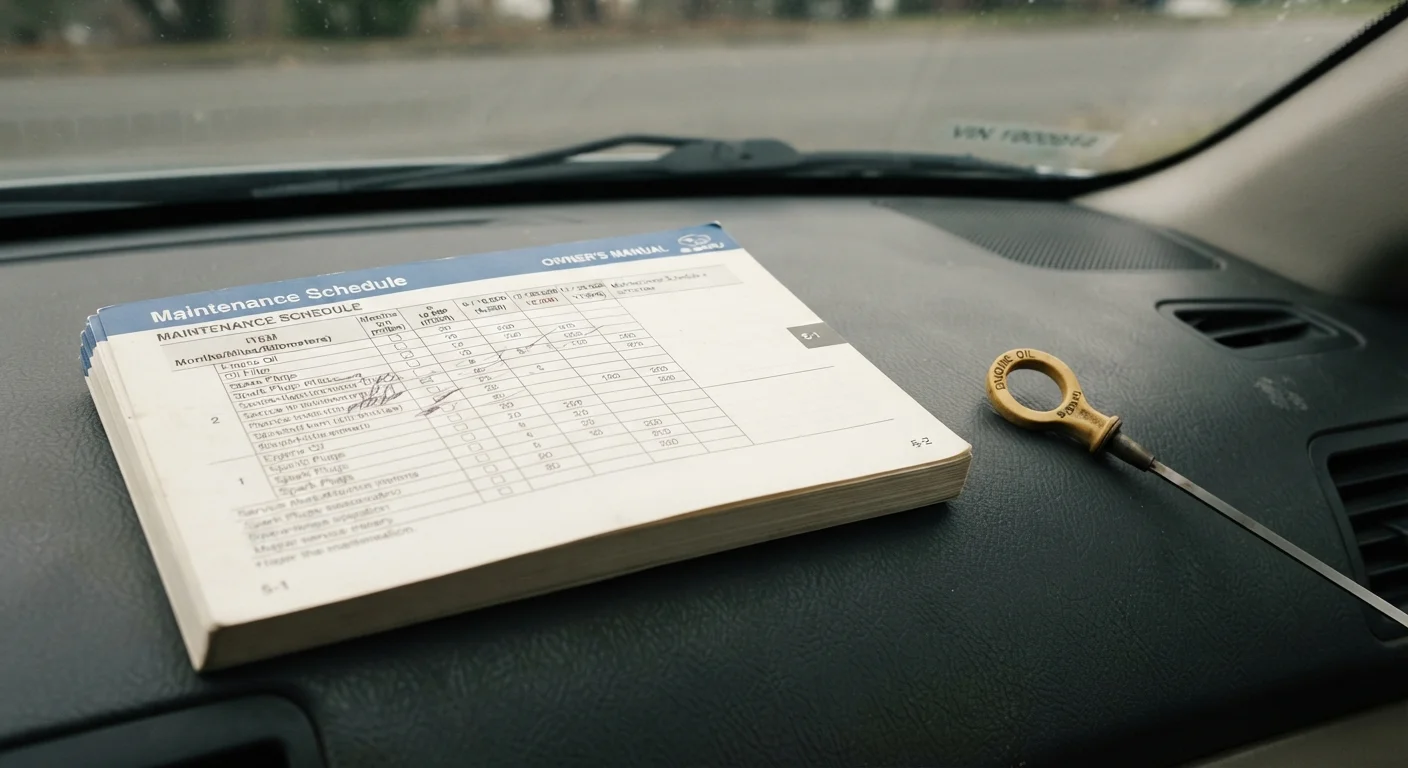
Why the Owner's Manual Is Your Starting Point
When it comes to oil change intervals, one source outranks all others: the owner's manual that came with your vehicle. Automakers spend millions engineering engines to precise tolerances, and the maintenance schedule in that manual reflects those specifications - not a one-size-fits-all rule invented for a different era of motoring.
The manual typically lists oil change intervals in two ways: by mileage (e.g., every 7,500 miles) and by elapsed time (e.g., every 12 months). Both figures matter. You should change your oil when either threshold is reached, whichever comes first. A driver who logs only 4,000 miles per year still needs to change their oil annually because oil absorbs moisture and combustion byproducts over time, regardless of distance traveled.
For a broader look at how oil changes fit into your vehicle's long-term care, see the complete service roadmap from purchase to 100,000 miles.
7,500-10,000 mi
Typical synthetic oil change interval
Most major automakers recommend full-synthetic oil change intervals in this range for normal driving conditions, per published owner's manuals.
3,000 mi
Outdated conventional oil interval
The 3,000-mile rule was standard advice for older engines using conventional motor oil and is no longer applicable to most vehicles built in the last two decades.
12 months
Maximum time between oil changes
Many manufacturers cap the oil change interval at one year regardless of mileage, since oil degrades over time even in low-mileage vehicles.
Decoding the Interval Numbers
Owner's manuals often list two separate maintenance schedules: one for normal conditions and one for severe or special conditions. The numbers you see - say, 10,000 miles under normal conditions vs. 5,000 miles under severe conditions - reflect how hard your engine is actually working.
Normal conditions generally mean consistent highway driving with moderate temperatures. Severe conditions cover a wide range of situations that stress engine oil more quickly:
- Frequent short trips of five miles or less (the engine never fully warms up, allowing moisture to accumulate in the oil)
- Heavy stop-and-go city traffic
- Towing trailers or carrying heavy cargo regularly
- Driving in extreme heat or prolonged sub-freezing temperatures
- Extended engine idling
If your driving life looks more like the severe list than the normal one, use the shorter interval - your engine will thank you for it.
Check Both Schedules in Your Manual
If your manual has a 'normal' and 'severe' maintenance schedule, read both before deciding which applies to you. Many urban drivers who assume they follow normal conditions actually qualify as severe due to frequent short trips and stop-and-go traffic. Using the correct schedule prevents premature engine wear.
Oil Life Monitors: What They Actually Measure
Many vehicles produced in the last decade include an oil life monitoring system (OLMS) - a dashboard indicator that tracks when you need your next oil change. These systems do not actually test the oil. Instead, they run algorithms that account for engine revolutions, temperature cycles, load, and idle time to estimate oil degradation.
An OLMS is a genuinely useful tool, but it works best when treated as a complement to your manual's time-based guidance, not a replacement for it. A long stretch of easy highway driving might push the monitor to read 40% oil life remaining after 8,000 miles - but if 12 months have passed, the time threshold still applies.
Oil Life Monitors Reset Manually
After an oil change, the oil life monitor must be manually reset - it does not detect fresh oil automatically. If the reset is skipped (a common oversight at quick-lube shops), the system will display inaccurate information. Your owner's manual includes the reset procedure, typically a sequence of ignition and accelerator inputs.
When the oil life indicator reaches 0% or illuminates a warning, treat it as urgent. Continuing to drive risks engine damage that can be expensive to repair.
Putting It All Together for Your Driving Life
Reading your owner's manual doesn't have to feel like deciphering a legal document. Look for the section titled "Scheduled Maintenance" or "Maintenance Schedule" - it's usually within the first 100 pages or in a dedicated supplement booklet. Find the row for engine oil and filter, note the mileage and time thresholds, then identify whether your driving habits qualify as normal or severe.
Write both thresholds somewhere accessible - a note in your phone or on the inside of your glove box - and set a calendar reminder if you're on the time-based schedule. Including oil change tracking in your annual car ownership checklist is an easy way to stay ahead of the schedule year after year.
If you're uncertain whether to use conventional or full-synthetic oil, or which viscosity grade your engine requires, a qualified mechanic can guide you based on your specific vehicle and climate. Making an informed decision at each oil change - rather than defaulting to habit or marketing - is one of the most practical things any driver can do to protect their engine over the long haul.
Frequently Asked Questions
For most modern vehicles, no. The 3,000-mile rule was developed for older engines using conventional oil. Today's full-synthetic oils and tighter engine tolerances allow most vehicles to go 5,000-10,000 miles or more between changes. Always check your owner's manual for the manufacturer's actual recommendation.
Delaying an oil change allows oil to break down, accumulate contaminants, and lose its lubricating properties. Over time this can cause increased engine wear, sludge buildup, and potentially costly damage. Occasional mild overages are unlikely to cause immediate harm, but making a habit of it shortens engine life.
Both matter, and whichever threshold comes first should trigger your oil change. If you drive very few miles but let a year pass, the oil has still aged and absorbed moisture and combustion byproducts. Your manual typically lists both a mileage and a time limit - follow the one that occurs first.
Severe conditions typically include frequent short trips under five miles, stop-and-go city driving, towing or hauling heavy loads, driving in extreme heat or cold, and extended idling. These conditions stress the oil more than highway driving and may require a shorter interval - your owner's manual usually defines this clearly.
Oil life monitors are generally reliable - they use algorithms based on engine revolutions, temperature, and load to estimate oil condition. However, they are not infallible. Use them as a helpful guide alongside the time-based interval in your owner's manual, and never ignore a warning light.
Most vehicles can use either, and modern engines can safely transition between them. However, switching oil types can affect your change interval - synthetic oil typically lasts longer. Always confirm the oil type and viscosity grade your manual specifies before switching, and consult a qualified mechanic if unsure.
The content on this site is for informational purposes only and is not a substitute for professional advice. Always consult a qualified professional for guidance specific to your situation.