

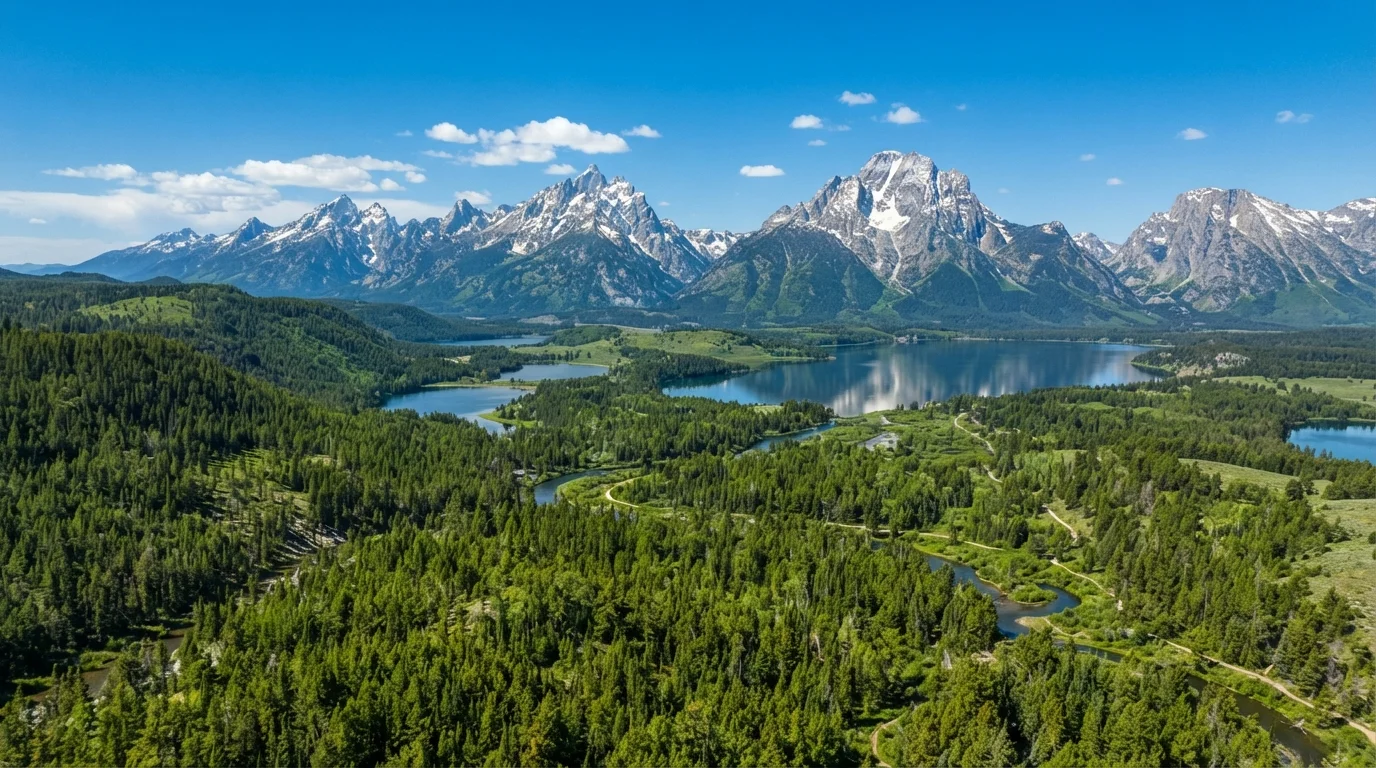
Option A
National Parks
The preserved, experience-first destination.
Best for: Visitors seeking protected natural landmarks, guided programming, and iconic scenery with clear visitor infrastructure.
Option B
National Forests
The flexible, multi-use outdoor playground.
Best for: Adventurers wanting dispersed camping, off-road access, hunting, fishing, and fewer restrictions on recreational use.
Two Different Agencies, Two Different Missions
It's an easy mix-up - both sound official, both protect wild American land, and both show up on road trip maps. But National Parks and National Forests operate under entirely different federal agencies with fundamentally different philosophies.
National Parks are managed by the National Park Service (NPS), a branch of the Department of the Interior. The NPS was created in 1916 with an explicit mandate: preserve natural and cultural resources unimpaired for future generations. That's why you can't hunt in Yellowstone or set up a campfire just anywhere in Yosemite.
National Forests, by contrast, fall under the U.S. Forest Service, which is part of the Department of Agriculture - not Interior. Their guiding principle is "multiple use and sustained yield," meaning these lands are actively managed for timber, grazing, recreation, water resources, and wildlife simultaneously. It's a more flexible, less restrictive framework by design.
| Criterion | National Parks | National Forests |
|---|---|---|
| Managing Agency | National Park Service (Dept. of Interior) | U.S. Forest Service (USDA) |
| Primary Mission | Preservation of natural/cultural resources | Multiple use and sustained yield |
| Entrance Fees | Common ($15-$35 per vehicle) | Usually free; some day-use fees |
| Dispersed Camping | Generally not permitted | Widely permitted |
| Hunting | Prohibited | Allowed with state license |
| OHV / Off-Road Use | Prohibited except designated roads | Allowed in designated areas |
| Visitor Infrastructure | Extensive (centers, paved roads, programs) | Variable; often minimal |
| Typical Crowd Level | High at popular parks | Lower; more dispersed |
Fees, Access, and What You Can Actually Do
One of the most practical differences comes down to your wallet and your itinerary. Many of the most popular National Parks - Grand Canyon, Zion, Acadia - charge entrance fees, typically ranging from $15 to $35 per vehicle. The America the Beautiful Pass (an annual interagency pass) covers entrance to both NPS sites and some Forest Service recreation areas, making it worth considering for frequent visitors.
Most National Forests, on the other hand, have no entrance fee. You can pull off a forest road, hike a trail, and pitch a tent in a dispersed camping zone at no cost - provided you follow Leave No Trace principles and any posted regulations. Some developed campgrounds within forests do charge nightly fees, but the baseline access is free.
Activity restrictions differ sharply too. National Parks prohibit hunting and generally ban off-highway vehicles (OHVs) except on designated roads. National Forests permit hunting with a valid state license, allow OHV use in designated areas, and often accommodate mountain biking on a wider range of trails. If you're planning a multi-activity outdoor trip, knowing which land type you're entering shapes everything from gear to legal requirements.
Check Local Regulations Before You Go
Rules within both systems can vary significantly by specific unit, district, or season. A National Forest in California may have different fire restrictions than one in Colorado. Always check the official NPS or Forest Service website for the specific location you plan to visit before heading out. Posted regulations, permit requirements, and seasonal closures can change - and violations can result in fines.
Crowds, Solitude, and the Smart Visitor's Calculus
Popularity is perhaps the starkest real-world difference. The NPS reported over 325 million recreation visits in a recent year, with a handful of marquee parks absorbing enormous crowds - particularly in summer. Reservations for campsites and even timed entry permits are now required at several top parks.
National Forests collectively contain roughly 193 million acres across 44 states and Puerto Rico, but see significantly less concentrated traffic. If your idea of a great weekend is hiking without a crowd at your heels, a National Forest is often the faster path to solitude.
That said, National Parks have infrastructure that forests often lack: paved roads, accessible trails, visitor centers with maps and ranger expertise, and ADA-compliant facilities. For first-time outdoor visitors or families with young children, that support network matters enormously. The right choice hinges on what kind of experience you're after - not which system sounds more impressive.
193M
Acres in the National Forest System
The U.S. Forest Service manages approximately 193 million acres across 44 states and Puerto Rico.
85M+
Acres in the National Park System
The National Park Service oversees more than 85 million acres spanning over 400 designated sites nationwide.
325M+
Annual NPS recreation visits
The National Park Service has recorded more than 325 million recreation visits in recent years, underlining high demand at popular parks.
The content on this site is for informational purposes only and is not a substitute for professional advice. Always consult a qualified professional for guidance specific to your situation.