

Why the Confusion Exists
Walk into almost any gym or scroll through fitness content online, and you'll hear mobility and flexibility used as if they mean the same thing. They don't - and conflating them can quietly stall your progress. Both matter for how well your body moves, but they describe fundamentally different qualities, and training one doesn't automatically improve the other.
Think of it this way: flexibility is a component of mobility, but mobility is the bigger picture. Understanding where one ends and the other begins gives you a smarter framework for how you train, recover, and stay active long-term.
These Terms Are Often Used Interchangeably
Even fitness professionals sometimes use 'mobility' and 'flexibility' loosely. Context matters: when a coach says 'work on your hip flexibility,' they often mean hip mobility in practice. The conceptual distinction matters most when you're designing a training program or troubleshooting why stretching alone isn't solving a movement problem.
Flexibility: Passive Length
Flexibility refers to the ability of a muscle or muscle group to lengthen - typically measured passively. When a physical therapist lifts your leg to test your hamstring range of motion while you stay relaxed, that's a flexibility assessment. The tissue is being lengthened without you actively doing anything.
High flexibility means your muscles can elongate to allow a wide range of motion at a given joint. Traditional static stretching - holding a stretch for 20-60 seconds - is the most common way to develop it. It's genuinely useful, particularly for reducing muscle tension and maintaining tissue health.
The catch? Flexibility alone doesn't tell you whether you can use that range of motion. A dancer might have extraordinary hamstring flexibility but still struggle to control a single-leg deadlift at depth because that requires strength and coordination, not just tissue length.
Mobility: Active Control
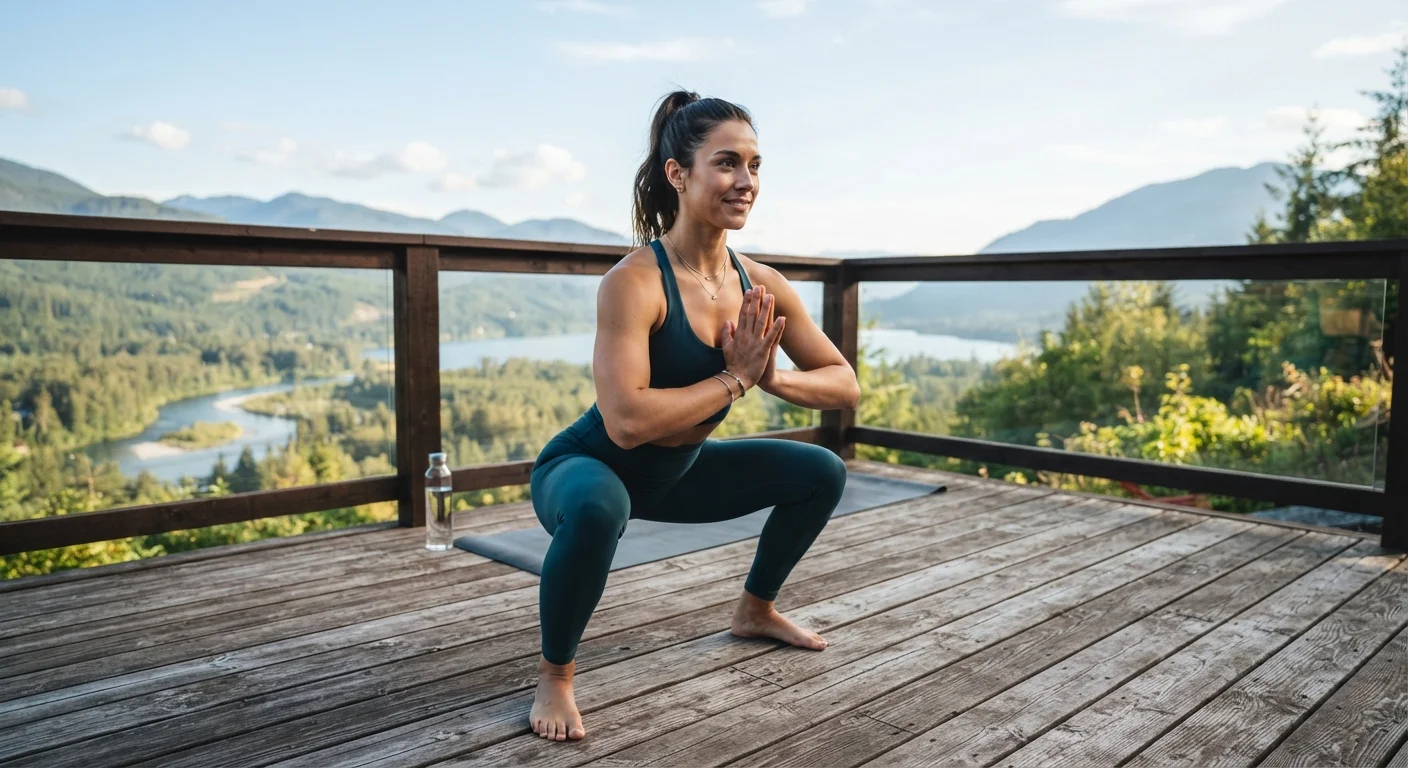
Mobility is what happens when flexibility meets strength, stability, and neuromuscular control. It's the ability to actively move a joint through its full range of motion - under load, without assistance, with intention. A deep squat with an upright torso. A shoulder rotating overhead without compensating through the lower back. Hip flexion that you can hold and control, not just fall into.
This is why coaches and physical therapists increasingly prioritize mobility over passive flexibility, especially for athletes and active adults. Movement quality in real life - bending, reaching, rotating, lifting - depends on mobility, not just how far you can stretch when lying still.
71%
Adults with activity-limiting musculoskeletal issues
According to the CDC, approximately 71% of U.S. adults report some form of musculoskeletal pain that affects their physical activity, with limited joint range of motion cited as a contributing factor.
2x
Injury risk reduction with mobility training
Research published in sports medicine literature suggests that structured mobility and movement-quality training can significantly reduce soft-tissue injury rates compared to static stretching alone.
Mobility training often looks different from a typical stretch session. It might include controlled articular rotations (slow, active joint circles), end-range isometric holds, or strength exercises performed deliberately at ranges your body isn't used to loading.
How to Train Both - and Why It's Worth It
The good news: both flexibility and mobility respond well to consistent training, regardless of your starting point. A well-rounded approach typically combines the two rather than choosing one over the other.
- Static stretching after workouts helps maintain and gradually improve flexibility. Holding stretches for 30-60 seconds when muscles are warm is generally considered effective for increasing passive range of motion.
- Dynamic warm-ups before activity - leg swings, hip circles, arm rotations - improve mobility by taking joints through active ranges and preparing the neuromuscular system.
- Strength training through full range of motion builds the active control that turns flexibility into mobility. Romanian deadlifts, deep squats, and overhead pressing all contribute here.
Just like distinguishing between saving and investing - concepts that sound similar but serve different purposes (as we explore in our finance section) - understanding what you're actually training helps you get results more efficiently.
Start With What Feels Stiff
Not sure where to begin? Pay attention to where your body feels limited during normal activity - reaching overhead, squatting to pick something up, rotating to look behind you. Those movement restrictions are your roadmap. Targeting them with both stretching and active strengthening work tends to produce the fastest, most noticeable improvements in everyday movement quality.
This article is for general informational and educational purposes only and is not a substitute for professional medical or physical therapy advice. Consult a qualified healthcare or fitness professional before beginning any new exercise program, especially if you have existing injuries or health conditions.
Frequently Asked Questions
For most people, mobility is more practically useful because it reflects movement you can actively control. That said, adequate flexibility is often a prerequisite for good mobility, so both matter and work together.
Yes. A person might be able to passively stretch into a wide range of motion but lack the muscular strength or control to hold that position actively. This is common in people who stretch frequently but don't train strength through full ranges.
Flexibility is often trained through static or passive stretching held for extended periods. Mobility training typically adds active movement - like controlled articular rotations, dynamic stretches, and strength exercises performed at end-range positions.
Both naturally decline with age, but research consistently shows that regular movement training can meaningfully preserve and even improve both qualities well into older adulthood. Consistency matters more than age.
Yoga develops both, depending on the style. Holding poses builds flexibility, while transitioning between them and supporting your own bodyweight builds active control - which is a core element of mobility.
The content on this site is for informational purposes only and is not a substitute for professional advice. Always consult a qualified professional for guidance specific to your situation.