

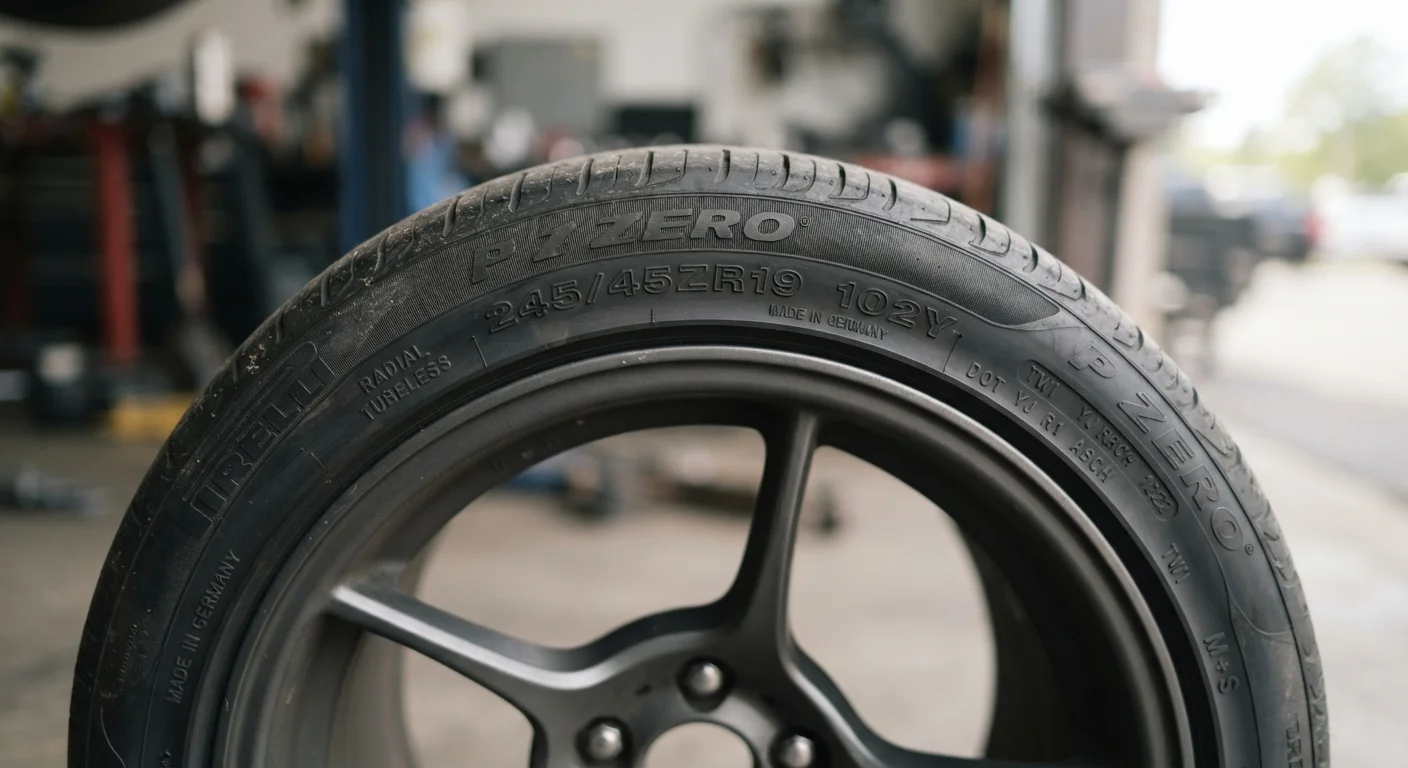
The Code on Your Tire, Explained
Pick any tire and look at the sidewall. You'll find a string like P215/65R16 98H. It looks like an engineering cipher, but every segment has a specific, standardized meaning. Understanding it helps you verify that a replacement tire actually matches your vehicle's requirements - and understand the trade-offs you're making if you deviate. For a broader look at decoding product specs across categories, see reading product specifications without getting lost in the numbers.
Here's how to read each segment left to right.
Service Type Prefix
A leading letter identifies the intended vehicle class. P stands for passenger vehicle. LT indicates light truck. ST means special trailer. Some tires carry no prefix - these are European metric tires and are sized slightly differently, which matters when cross-shopping.
Section Width
The three-digit number after the prefix (215 in the example) is the tire's section width in millimeters, measured from sidewall to sidewall at the widest point. A wider tire generally offers a larger contact patch, which can affect grip and handling - but it also affects fuel economy, wheel well clearance, and ride noise.
Aspect Ratio
The two-digit number after the slash (65) is the aspect ratio - the tire's sidewall height expressed as a percentage of its section width. A 65 aspect ratio means the sidewall height is 65% of 215 mm. Lower aspect ratios (say, 45) mean shorter, stiffer sidewalls, which tend to improve cornering response but reduce ride comfort and increase susceptibility to pothole damage.
Construction, Diameter, Load, and Speed
Construction Type
The letter after the aspect ratio describes internal construction. R (radial) is by far the most common in modern passenger tires. B (bias-belted) and D (diagonal/bias) appear on some specialty, vintage, or trailer tires. Radial construction layers the cords perpendicular to the direction of travel, which improves fuel efficiency and heat dissipation.
Rim Diameter
The number following the construction letter (16) is the wheel diameter in inches that the tire is designed to fit. This must match your wheel exactly - a 16-inch tire cannot mount on a 17-inch rim regardless of how close the other numbers are.
Load Index
The two- or three-digit number after the space (98) is the load index - a standardized code representing the maximum weight each tire can carry when properly inflated. A load index of 98 corresponds to 1,653 lbs per tire. The full load index table is published by the Tire and Rim Association. Never install a tire with a lower load index than your vehicle's door placard specifies. Tire pressure directly affects how much load a tire can safely carry, so those two specs work together.
Speed Rating
The trailing letter (H) is the speed rating - the maximum sustained speed the tire is designed to handle under its rated load. H is rated to 130 mph. Ratings run from L (75 mph) up through Y (186 mph). Matching or exceeding the speed rating of your vehicle's original equipment is generally advisable; going lower than the manufacturer's specification is not recommended.
Load Index
A standardized numeric code on the tire sidewall that represents the maximum weight a single tire can support when properly inflated. Each number maps to a specific weight value in a published reference table.
Aspect Ratio
The ratio of a tire's sidewall height to its section width, expressed as a percentage. A lower number means a shorter sidewall, which typically results in firmer handling but a stiffer ride.
Speed Rating
A letter code indicating the maximum sustained speed a tire is engineered to handle at its rated load. Ratings range from L (75 mph) to Y (186 mph) and should meet or exceed the vehicle manufacturer's specification.
UTQG
Uniform Tire Quality Grading - a U.S. government-mandated system that grades passenger tires on treadwear, traction, and temperature resistance. Grades allow relative comparisons between tires tested under the same conditions.
Three-Peak Mountain Snowflake
A symbol indicating that a tire has passed a standardized severe snow traction test. It is a more meaningful winter capability indicator than the M+S (mud and snow) designation, which is self-certified by manufacturers.
Other Markings Worth Knowing
Beyond the primary size string, sidewalls carry additional codes that affect safety decisions.
- DOT code and manufacture date: A four-digit sequence near the DOT stamp tells you when the tire was made. The first two digits are the week, the last two the year - so 2319 means the 23rd week of 2019. Tire age matters independently of tread depth; most manufacturers and safety organizations suggest evaluating tires older than six years regardless of appearance.
- UTQG ratings: The Uniform Tire Quality Grading system stamps three ratings - treadwear, traction, and temperature - on most passenger tires. Treadwear is a relative index (higher means longer-wearing on a controlled government test course). Traction grades run AA, A, B, C. Temperature grades run A, B, C.
- M+S and the three-peak mountain snowflake: M+S (mud and snow) is a self-certified marketing designation with a low bar. The three-peak mountain snowflake symbol, by contrast, indicates the tire passed a standardized severe snow traction test. These are not equivalent claims.
Reading these markings together gives you a complete picture of what a tire was built to do - and helps you have an informed conversation with a tire professional when it's time for replacement. For more on how rating systems work across product categories, understanding product ratings and standards offers useful context.
Always Check Your Door Placard First
Your vehicle's door jamb placard (usually on the driver's side door frame) lists the manufacturer-recommended tire size, load index, and inflation pressure for your specific vehicle. This is your primary reference - not the tire currently on the car, which may have been changed by a previous owner. When in doubt, consult a qualified tire professional before substituting a different size or rating.
The content on this site is for informational purposes only and is not a substitute for professional advice. Always consult a qualified professional for guidance specific to your situation.